Project Orion: Nuclear Bomb Starship That Almost Was
Project Orion: Nuclear Bomb Starship That Almost Was
Europa Clipper Radiation Vault: Surviving Jupiter
VASIMR Plasma Engine: Could It Transform Mars Travel?

Iapetus Equatorial Ridge: The Solar System's Strangest Mountain

Titan's Hidden Ocean: Ammonia Keeps Water Liquid

Mimas: How Saturn's Death Star Moon Hides an Ocean
TL;DR: Scientists decode the Milky Way's violent 13-billion-year history using stars as fossils. Chemical fingerprints and orbital patterns reveal ancient collisions with dwarf galaxies that shaped our cosmic home.

Somewhere in the Milky Way's halo, an ancient star burns with a chemical signature from 11 billion years ago - a fossilized record of our galaxy's most violent chapter. That star, along with millions of others scattered across space, preserves evidence of titanic collisions, cannibalized galaxies, and explosive star formation that forged the cosmic home we inhabit today. Scientists have learned to read these stellar fossils like archaeologists deciphering ancient texts, piecing together a dramatic origin story hidden in plain sight above our heads.
Think of the Milky Way as a crime scene 13 billion years in the making. The perpetrators - dwarf galaxies - have long since been consumed. The weapons - gravity and tidal forces - left no conventional evidence. Yet the victims, in a cosmic irony, became witnesses. Every star that survived these ancient collisions carries chemical fingerprints from the era of its birth, preserving clues about when, where, and how our galaxy assembled itself from smaller pieces.
This is galactic archaeology, and it's rewriting everything we thought we knew about cosmic history. Using data from missions like Gaia, the James Webb Space Telescope, and massive spectroscopic surveys, astronomers are reconstructing the Milky Way's family tree with unprecedented detail. The story they're uncovering isn't one of steady, peaceful growth. It's a tale of violent conquest, repeated collisions, and chaotic assembly that shaped not just our galaxy's structure, but the very elements that make up planets and life itself.
The Milky Way wasn't born peacefully - it's a cosmic crime scene where dwarf galaxies were consumed billions of years ago, leaving stars as witnesses.
What makes a star a useful fossil? Unlike organisms that decay or rocks that weather, stars preserve their birth chemistry for billions of years. When a star forms from a collapsing cloud of gas, it locks in the elemental composition of that cloud - a snapshot of all the supernovae, stellar winds, and cosmic events that enriched that particular patch of space before the star ignited.
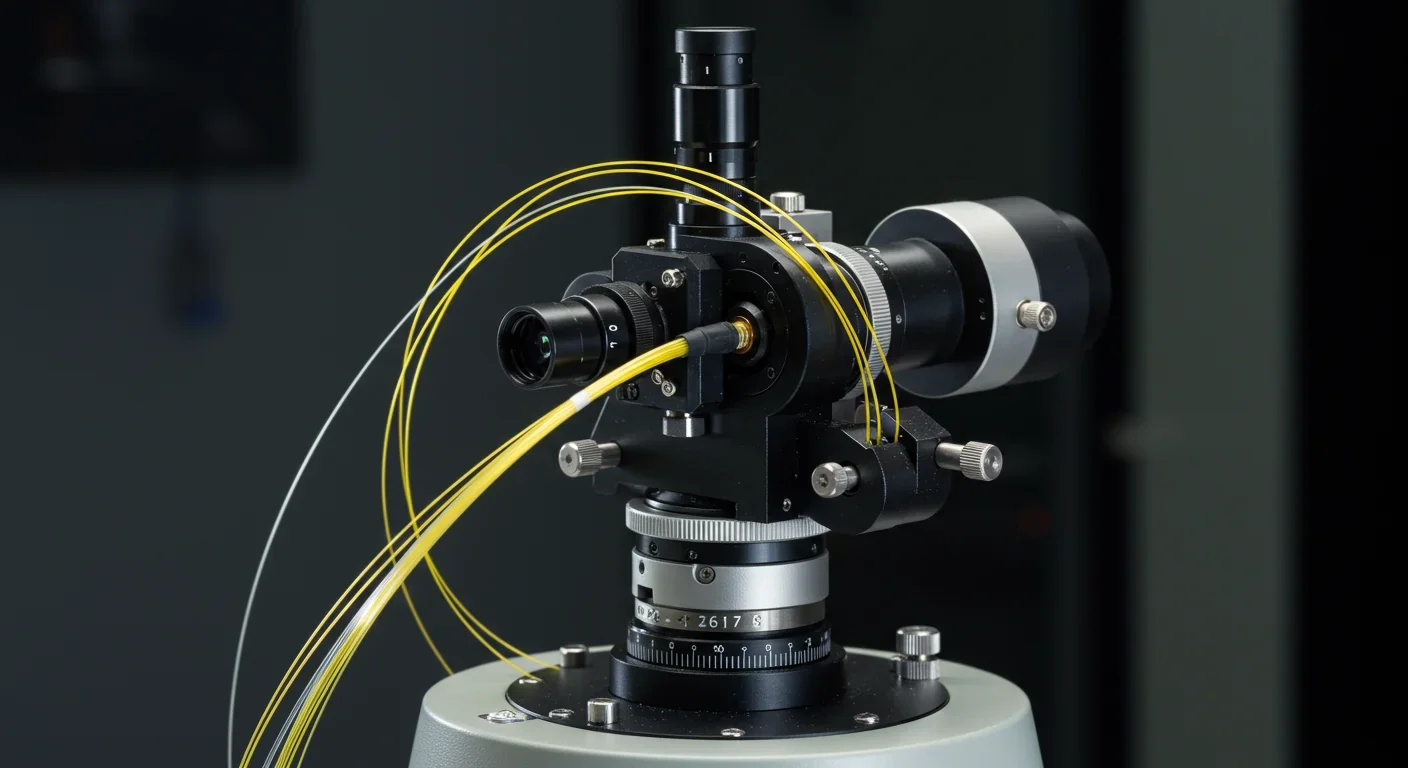
The key lies in stellar atmospheres. By splitting starlight into its component wavelengths using spectrographs, astronomers can identify absorption lines that reveal which elements are present and in what quantities. Iron, magnesium, calcium, europium, barium - each element tells part of the story. The ratios between them function like a timestamp because different types of stars and supernovae enrich the interstellar medium on different timescales.
Consider alpha elements like magnesium and silicon. These form primarily in massive stars that explode as core-collapse supernovae within tens of millions of years of birth. Iron, by contrast, comes largely from Type Ia supernovae - white dwarf explosions that can take a billion years to occur. A star with high magnesium-to-iron ratio therefore formed when the universe was young and only core-collapse supernovae had gone off. Lower magnesium-to-iron ratios indicate older environments where Type Ia supernovae had time to add their delayed iron contribution.
This chemical clock lets astronomers date stellar populations and trace their origins. But there's more: each dwarf galaxy that merged with the Milky Way had its own distinct star-formation history and therefore its own chemical signature. The Sagittarius dwarf galaxy, currently being torn apart by the Milky Way, has lower alpha-element abundances than Milky Way stars of comparable age - evidence of slower, more extended star formation before its capture. When astronomers find stars with that signature scattered through our halo, they know they're looking at immigrants from Sagittarius.
Until recently, galactic archaeology was slow, painstaking work requiring years of telescope time to measure chemical abundances for individual stars. Then came Gaia, the European Space Agency's astrometric satellite that has measured precise positions, distances, and motions for nearly two billion stars since its launch in 2013.
Gaia didn't just map where stars are; it revealed where they're going and where they've been. By tracing stellar orbits backward in time, astronomers discovered something astonishing: large populations of stars moving together through space with highly eccentric, elongated orbits - completely different from the near-circular paths of stars born in the Milky Way's disk.
The most spectacular discovery came in 2018 when multiple teams independently identified what they called the Gaia Sausage - later named Gaia-Enceladus. When plotted on a chart of radial versus azimuthal velocity, these stars formed a distinctive sausage shape in velocity space. Follow-up spectroscopy revealed they all shared similar chemistry: moderately metal-rich for halo stars, with iron abundances above -1.7 dex, and those characteristic highly eccentric orbits with values around 0.9.
"Between 8 and 11 billion years ago, a dwarf galaxy roughly a quarter the mass of the Milky Way collided with our galaxy - the violence still echoes in stellar orbits today."
- Gaia-Enceladus Discovery Research
The interpretation was unavoidable. Between 8 and 11 billion years ago, a dwarf galaxy roughly a quarter the mass of the present-day Milky Way collided with our galaxy. The collision was so violent it heated and puffed up the Milky Way's existing disk, creating the thick disk we observe today. The dwarf's stars were scattered into eccentric orbits that still betray their foreign origin. Even some of our galaxy's globular clusters - ancient spherical collections of stars like Messier 2, Messier 56, and NGC 1851 - turn out to be captured prizes from this ancient merger.
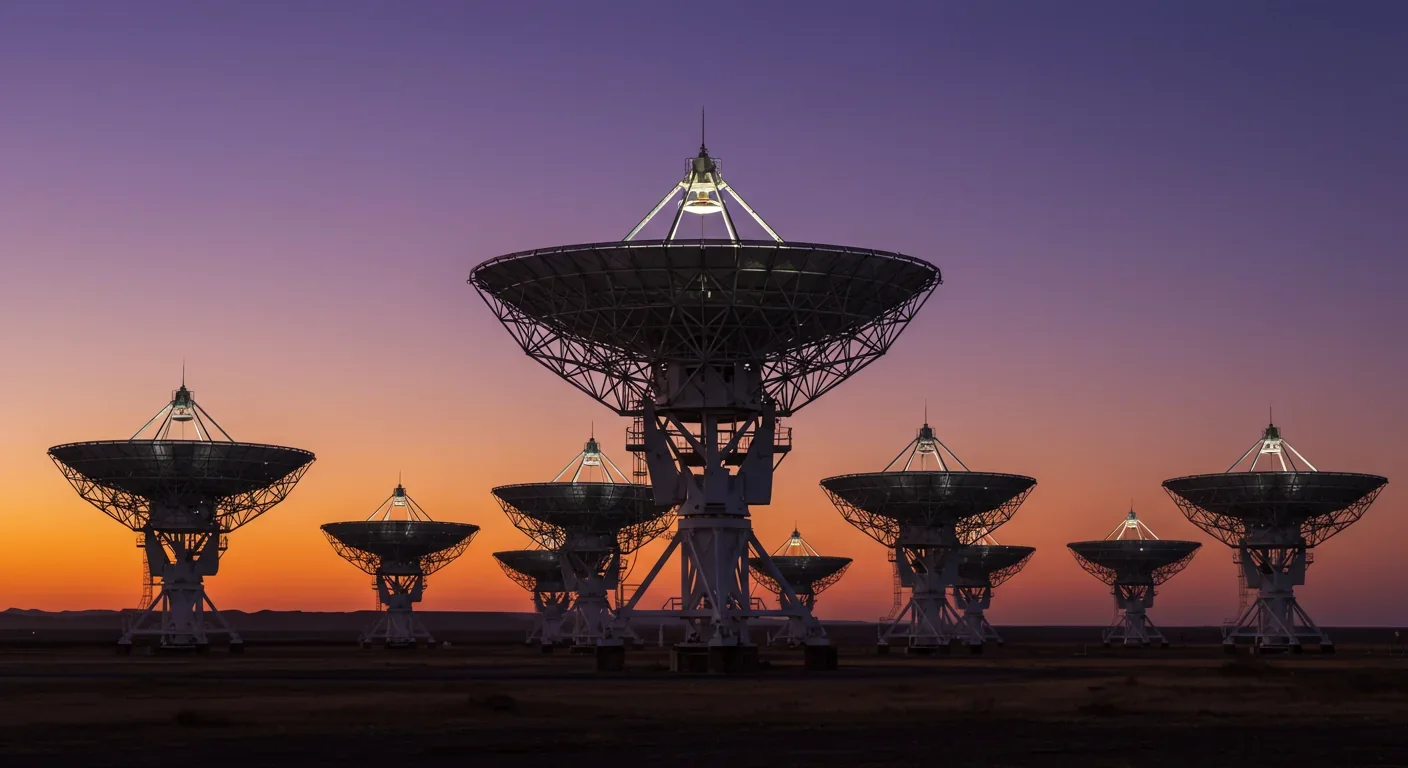
The Milky Way isn't a uniform collection of stars; it's a layered structure, and each layer tells a different chapter of the story. Sorting stars into populations based on chemistry, age, and kinematics reveals the sequence of assembly.
The Halo: This spherical distribution of old, metal-poor stars represents the galaxy's earliest component. But Gaia showed the halo isn't homogeneous - it's full of streams and substructure. Some halo stars formed in situ during the Milky Way's initial collapse. Others, like the Gaia-Enceladus stars, are debris from accreted dwarfs. Chemical fingerprinting distinguishes them: accreted populations tend to have lower alpha-element ratios because their parent dwarfs had slower star formation.
The Thick Disk: These moderately old stars (8-10 billion years) orbit relatively close to the galactic plane but with higher vertical velocities than thin disk stars. For decades astronomers debated whether the thick disk formed from the Milky Way's gas settling down, or whether it was heated by merger events. Chemical studies suggest both processes played roles, with the Gaia-Enceladus merger contributing significantly to heating the disk.
The Thin Disk: The youngest stellar population (mostly under 8 billion years old) includes the Sun and most visible stars. These stars have near-circular orbits and the highest metal content, reflecting billions of years of chemical enrichment. Their chemistry follows a clear gradient, with metallicity decreasing outward from the galactic center - evidence of inside-out formation where the inner disk assembled first.
The Bulge and Nuclear Disk: The galaxy's dense central regions harbor old, metal-rich stars with complex kinematics. Recent studies of the Nuclear Stellar Disc found that its chemical patterns closely match the inner bulge and Nuclear Star Cluster, suggesting a shared formation history involving rapid early star formation and possibly inward migration of gas driven by the galactic bar.
Spectroscopic surveys like APOGEE, GALAH, and the Pristine Survey have measured detailed abundances for hundreds of thousands of stars, revealing how these populations overlap and interact. The data show that galactic assembly wasn't a simple linear process - it involved multiple merger events, accretion from satellite galaxies, radial migration of stars, and complex gas flows that make our galaxy's history richly three-dimensional.
How exactly do astronomers reconstruct events that happened billions of years ago? The process combines multiple techniques, each providing independent constraints.
Stellar Ages: Dating stars is notoriously difficult because stars of different masses age at different rates. Astronomers use isochrone fitting, comparing a star's position on color-magnitude diagrams to theoretical evolutionary tracks. For populations of stars like globular clusters, this technique can achieve precision of about 200 million years. New methods using asteroseismology - measuring stellar oscillations - can date individual field stars with similar precision.
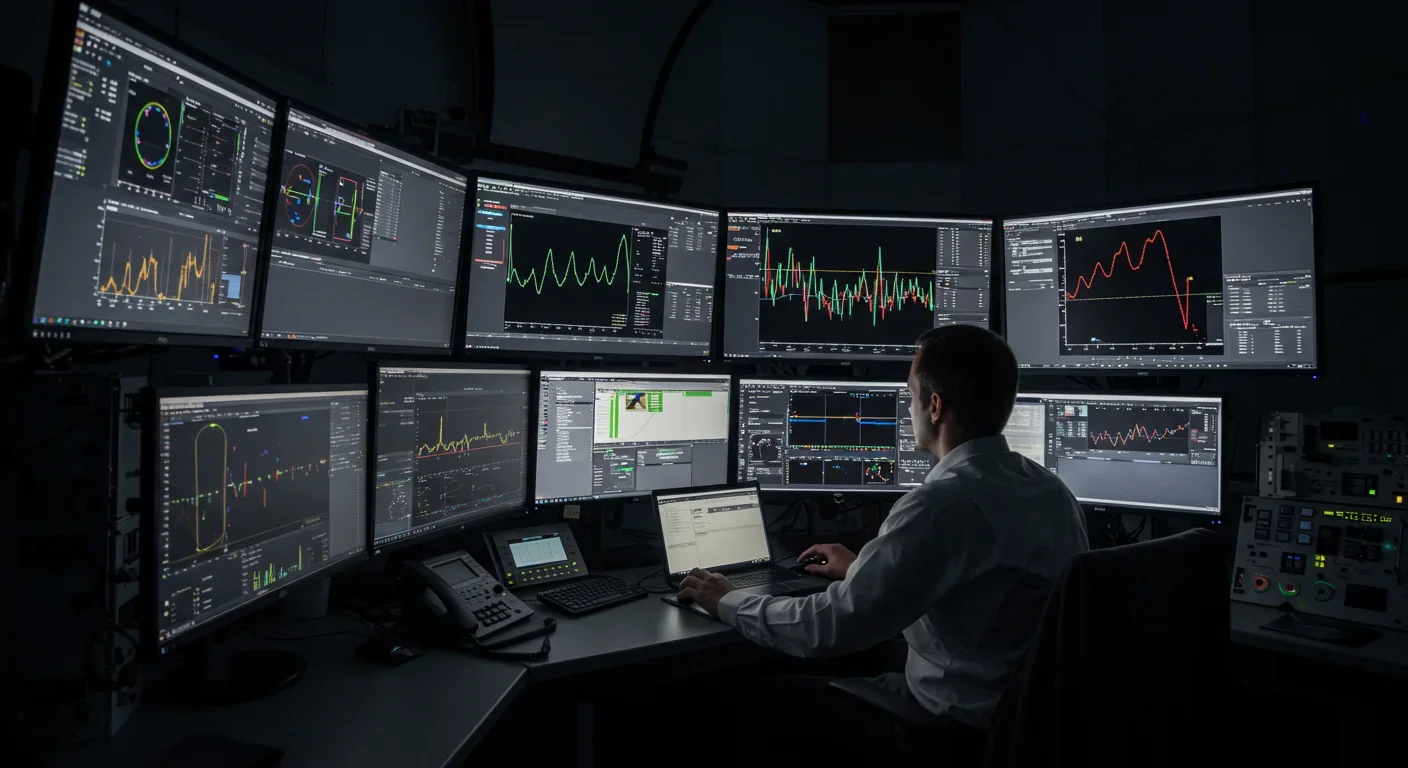
Chemical Fingerprinting: High-resolution spectroscopy reveals abundances of 15-20 elements or more in individual stars. Patterns in alpha elements (O, Mg, Si, Ca), iron-peak elements (Fe, Ni), and neutron-capture elements (Eu, Ba) constrain both age and formation environment. Enhanced europium-to-silicon ratios, for example, correlate tightly with cluster age and support models of rapid early enrichment in intense star-forming regions.
Orbital Reconstruction: Combining Gaia's precise positions and proper motions with radial velocities from spectroscopic surveys gives full six-dimensional phase-space information for millions of stars. Software packages like AGAMA integrate orbits backward and forward in time, revealing where stars have been and identifying groups that move together - signatures of common origin.
Computational Simulations: Cosmological simulations that model galaxy formation from first principles provide the theoretical framework. Simulations like Illustris, EAGLE, and Auriga start from the early universe and follow dark matter halos as they collapse, accrete gas, form stars, and merge. By comparing simulated galaxies to observations, astronomers test whether their understanding of physics can reproduce what we see.
Gravitational lensing magnifies distant galaxies, letting astronomers measure chemical abundances in systems billions of light-years away - providing context for the Milky Way's formation.
One particularly clever approach involves using gravitational lensing to magnify distant galaxies, enabling detailed spectroscopy of systems at high redshift. Studies of lensed quiescent galaxies at redshifts around 2 reveal very short star-formation timescales of about 50 million years and magnesium-to-iron ratios comparable to the plateau seen in our Galaxy's ancient stars - suggesting that rapid early star formation was universal in massive early galaxies.
The Gaia-Enceladus merger wasn't the only collision our galaxy endured. As techniques improve, astronomers are finding evidence of multiple accretion events, each leaving its own archaeological trace.
Kraken: Identified through the orbits of globular clusters, this hypothesized merger occurred perhaps 11 billion years ago, earlier than Gaia-Enceladus. The dwarf may have been even more massive, contributing clusters like NGC 2808 - a remarkable object that contains three generations of stars formed within 200 million years, possibly making it the former core of its parent galaxy.
Sequoia: Some globular clusters and halo stars don't fit the Gaia-Enceladus abundance patterns. Objects like NGC 5286 and NGC 7099 appear to come from a separate accretion event, dubbed Sequoia, that brought in stars on highly retrograde orbits - moving opposite to the galaxy's rotation.
Sagittarius: Unlike the long-consumed Gaia-Enceladus, Sagittarius is dying before our eyes. Discovered in 1994, this dwarf galaxy has been stretched into enormous stellar streams wrapping around the Milky Way. Spectroscopy of 111 giant stars from Sagittarius reveals metallicities ranging from -2.13 to -0.35 dex and characteristic low alpha-element abundances, marking stars throughout our halo as Sagittarius refugees.
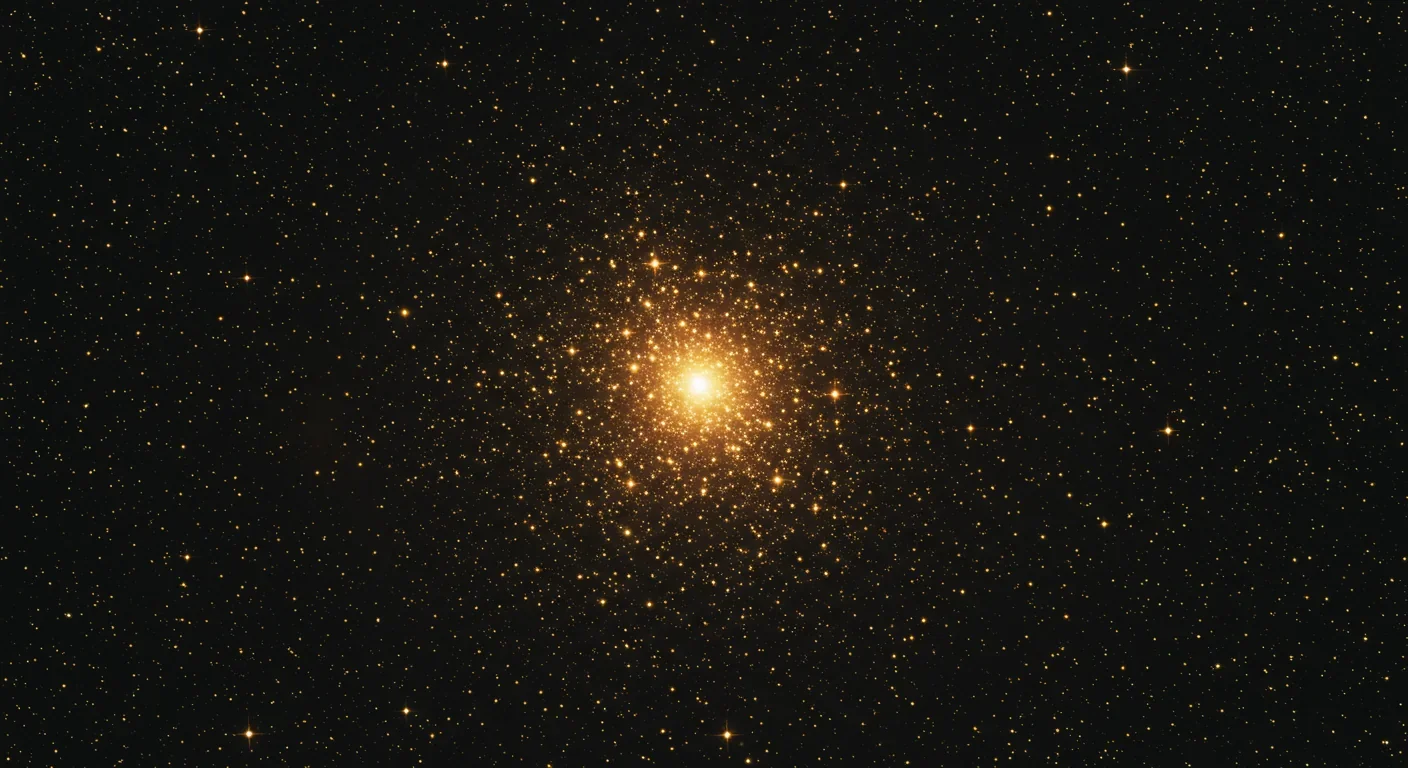
These mergers weren't random. Cosmological models predict that galaxies grow hierarchically, with small systems forming first and then merging into progressively larger ones. The Milky Way's assembly history, pieced together from its fossil stars, confirms that prediction in exquisite detail. Our galaxy accreted dozens of dwarf satellites over billions of years, each contributing stars, gas, and dark matter to the growing system.
For all its successes, galactic archaeology faces significant challenges. Different stellar population models can yield systematically different abundance measurements. A 2025 study of high-redshift galaxies found that two widely used models returned magnesium-to-iron ratios differing by 0.3 dex for the same galaxies. For a field trying to measure abundance differences of 0.1 dex to distinguish populations, this systematic uncertainty is substantial.
Age dating remains contentious for individual field stars. While isochrone fitting works well for clusters where all stars formed simultaneously, applying it to single stars requires assumptions that can shift ages by a billion years or more. New techniques like asteroseismology help, but they currently work only for relatively nearby, bright stars.
"Current spectroscopic surveys are biased toward bright, nearby stars. The faint end of the halo and stars hidden behind dust remain poorly sampled - we're missing pieces of the story."
- Galactic Archaeology Challenges
The relationship between accreted and in-situ populations in the thick disk is still debated. Some researchers argue that most thick-disk stars formed in the Milky Way but were heated by mergers. Others contend that a significant fraction were accreted directly from satellites. The answer likely involves both processes, but quantifying their relative importance requires disentangling overlapping populations with subtle chemical differences.
The next generation of instruments promises to revolutionize galactic archaeology. The Extremely Large Telescope, with its 39-meter primary mirror, will enable chemical abundance measurements of individual stars in other galaxies, letting us compare our assembly history to that of our neighbors. The James Webb Space Telescope is already revealing high-redshift galaxies caught in the act of formation, showing what the early Milky Way might have looked like.
Gaia's third and fourth data releases continue to improve the precision of stellar positions, parallaxes, and proper motions. Combined with spectroscopy from missions like WEAVE and 4MOST, astronomers will obtain full six-dimensional phase space for tens of millions of stars - enabling the identification of ever-smaller streams and relics of accretion events.
On the theoretical side, next-generation simulations are incorporating more realistic physics. Modern codes model individual star formation, supernova explosions, black hole feedback, and magnetic fields. When run on supercomputers, these simulations produce synthetic galaxies that can be analyzed exactly like observations - providing end-to-end tests of galactic archaeology methods.
One particularly exciting frontier involves extremely metal-poor stars - the oldest fossils. These rare objects formed from gas enriched by only one or a few supernovae, preserving the nucleosynthetic yields of individual Population III stars. Finding and characterizing them offers a window into the universe's first stellar generation, which formed when the cosmos was only a few hundred million years old.
Why does any of this matter? On one level, it's deeply human to want to know our origins - and the Milky Way's history is our history. The iron in your blood, the calcium in your bones, the oxygen you breathe - all were forged in stars and supernovae during the galaxy's assembly. Understanding how, when, and where those elements formed connects us to the cosmos in a tangible way.
But there are practical implications too. The distribution of elements affects planet formation and habitability. The merger history determines dark matter distribution, which influences everything from stellar orbits to the galaxy's gravitational field. Understanding our galaxy's past helps calibrate models used to interpret observations of distant galaxies, improving our understanding of cosmic evolution generally.
Every element in your body - the iron in your blood, calcium in your bones, oxygen you breathe - was forged in stars during the galaxy's violent assembly.
Perhaps most fundamentally, galactic archaeology demonstrates the power of the scientific method to uncover deep truths about nature. The ancient collisions that built the Milky Way left no eyewitnesses and occurred long before Earth existed. Yet by carefully reading the fossil record encoded in starlight, combining observations with theory, and building on decades of incremental progress, astronomers have reconstructed those events with remarkable detail.
A star shining in the night sky isn't just a distant ball of gas. It's a message from the past, carrying information about where it formed, what supernovae enriched its birth cloud, and whether it traveled across space from a now-destroyed dwarf galaxy to reach its current location. Decoding those messages requires patience, precision, and creativity - but the reward is nothing less than the story of where we came from.
The next time you look up at the Milky Way's faint band of light stretching across a dark sky, remember: you're not seeing a static structure. You're seeing the aftermath of billions of years of cosmic violence - the wreckage of cannibalized galaxies, stars displaced by ancient collisions, and the slow, magnificent process by which chaos organized itself into something beautiful enough to produce, eventually, you.
Project Orion was a real 1960s program to reach other stars by detonating 800 nuclear bombs behind a spacecraft. The physics worked and the engineering was feasible, but the 1963 nuclear test ban treaty killed it. It remains the most credible interstellar spacecraft ever designed.

The locus coeruleus, a tiny brainstem structure, degenerates decades before Alzheimer's symptoms appear. Its loss cripples the brain's inflammation control, waste clearance, and sleep regulation. New imaging tools and noradrenergic therapies offer hope for early detection and prevention.

Research shows the sharing economy often increases total resource consumption through the Jevons paradox and rebound effects. Ride-sharing adds billions of vehicle miles, co-working spaces use more energy per worker, and diffused responsibility erodes conservation behavior. Breaking the paradox requires congestion pricing, accountability design, and matching sharing models to appropriate resource types.

Psychological reactance theory explains why banning or restricting things makes people want them more. From Prohibition to the Streisand effect to scarcity marketing, research shows that threatening people's freedom reliably backfires, and autonomy-supportive communication is far more effective.

A carnivorous pitcher plant in Borneo evolved to house bats instead of trapping insects, gaining up to 95% of its nitrogen from bat guano. The plant even built an ultrasonic reflector to help bats find it, revealing that carnivory in plants is a flexible spectrum.

The quantified self movement began as a hacker-ethos pursuit of personal insight, but corporate wearables now funnel biometric data to employers, insurers, and data brokers. With 81% of Americans wrongly believing health apps are HIPAA-protected, a regulatory void enables health data to be sold for pennies while generating anxiety instead of empowerment.

CXL memory pooling lets servers dynamically share DRAM over a cache-coherent interconnect, eliminating the 40% stranded memory waste in data centers. With commercial hardware now shipping and Azure deploying CXL cloud instances, this technology promises to cut memory costs by 50% while enabling composable infrastructure.

Loading featured articles...