Project Orion: Nuclear Bomb Starship That Almost Was
Project Orion: Nuclear Bomb Starship That Almost Was
Europa Clipper Radiation Vault: Surviving Jupiter
VASIMR Plasma Engine: Could It Transform Mars Travel?
Iapetus Equatorial Ridge: The Solar System's Strangest Mountain

Titan's Hidden Ocean: Ammonia Keeps Water Liquid

Mimas: How Saturn's Death Star Moon Hides an Ocean
TL;DR: NASA's Dragonfly mission will send a nuclear-powered helicopter to Saturn's moon Titan in 2028, arriving in 2036 to explore organic dunes and impact craters where life's chemical building blocks may exist.
By 2036, a spacecraft the size of a small car will descend through the orange haze of Titan's atmosphere, powered by the radioactive decay of plutonium-238. It won't land and stay put like every other planetary probe before it. Instead, NASA's Dragonfly will unfold eight rotors, lift off, and begin humanity's first powered flights on another world - searching for the chemical signatures that preceded life on Earth.
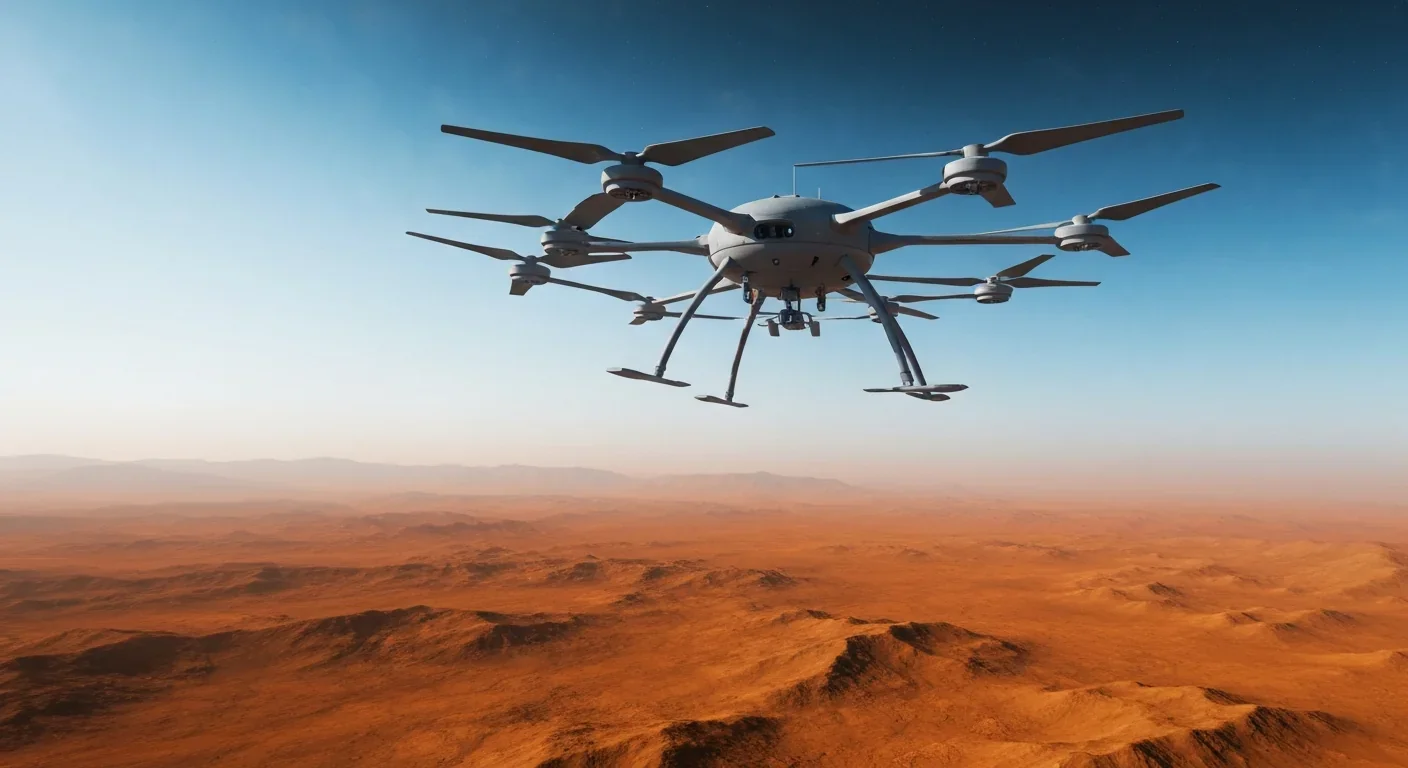
This isn't science fiction. The mission passed its critical design review in 2025, confirming that engineers have solved the seemingly impossible challenge of flying a 450-kilogram rotorcraft through an atmosphere 1.5 billion kilometers from Earth, where temperatures plunge to -179°C and sunlight is 100 times dimmer than on Earth.
Dragonfly represents a fundamental shift in how we explore other worlds. Previous missions dropped stationary landers that could only study whatever happened to be within arm's reach. NASA's Mars rovers extended that reach, but at a glacial pace - Curiosity has traveled less than 30 kilometers in over a decade. Dragonfly will cover that distance in a single Titan day.
The key to this mobility lies in Titan itself. Saturn's largest moon possesses an atmosphere four times denser than Earth's, but with gravity just one-seventh as strong. This combination creates flight conditions so favorable that Dragonfly's rotors will generate lift more easily than a helicopter on Earth. "It's like flying through water compared to our air," explains one mission engineer. The dense atmosphere means Dragonfly can carry substantial scientific instruments while using relatively modest power.
Titan's unique atmospheric conditions - four times denser than Earth's with one-seventh the gravity - create the perfect environment for powered flight, making this mission possible where it would fail on other worlds.
But there's a catch: Titan orbits Saturn at such a vast distance from the Sun that solar panels are useless. The solution comes from the same technology that powered the Curiosity and Perseverance rovers - a Multi-Mission Radioisotope Thermoelectric Generator, or MMRTG. This nuclear battery converts heat from decaying plutonium into electricity, producing a steady 70 watts of power that will sustain Dragonfly for years.
The MMRTG is more than just a battery - it's the mission's lifeline. During Titan's long nights, which last about eight Earth days, the generator continuously charges Dragonfly's lithium-ion batteries. When the craft needs to fly, those batteries deliver the high-power burst required to spin eight rotors and lift the entire vehicle off the surface.
This charging cycle is crucial because Dragonfly can't fly continuously. Instead, it operates in carefully planned hops. The rotorcraft will spend most of each Titan day stationary, running experiments and recharging. Then, when conditions are right, it will lift off for flights covering several kilometers before landing at a new site.
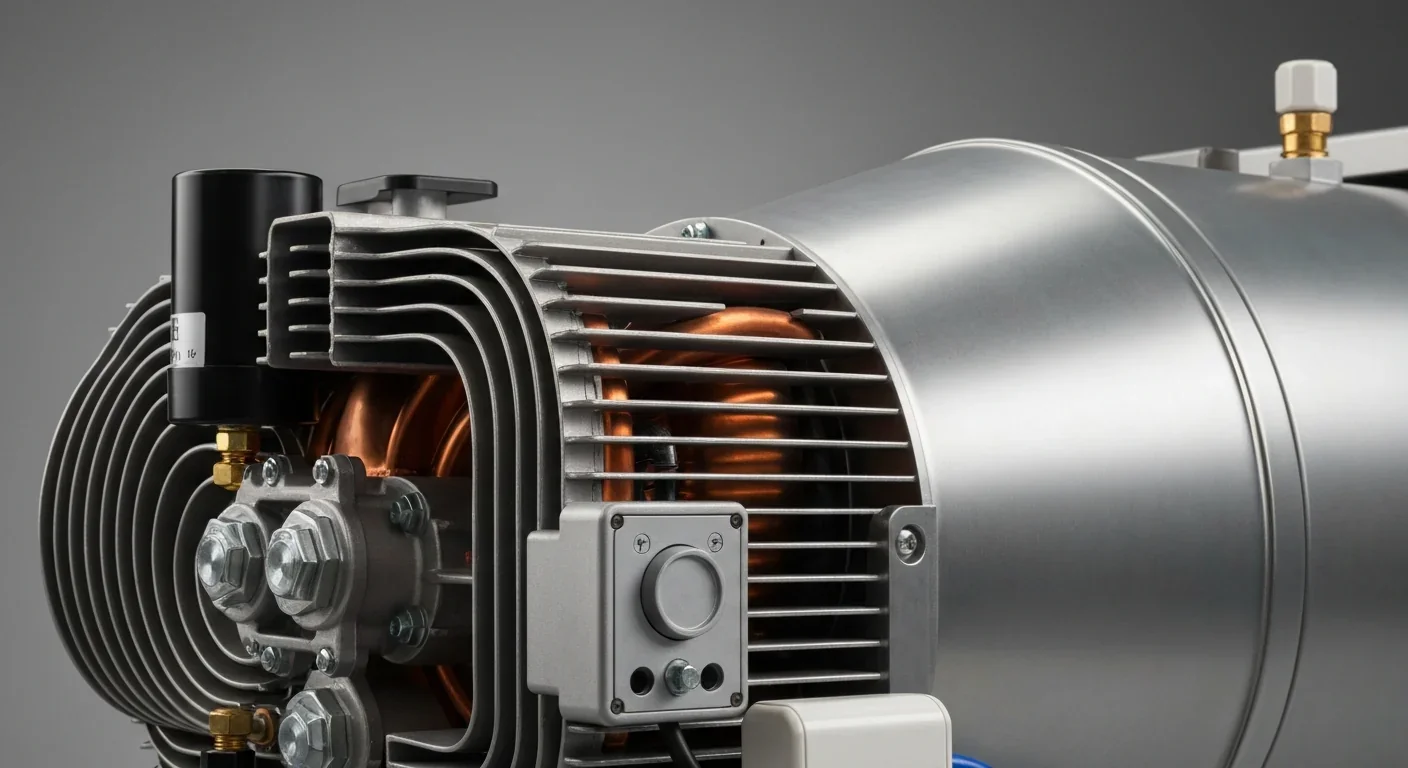
The nuclear power system also serves a second vital function: heating. Titan's surface temperature of -179°C would freeze most materials and shut down conventional electronics. The MMRTG produces about 2,000 watts of thermal energy, warming Dragonfly's instruments and keeping its systems operational in an environment that would otherwise be instantly lethal to spacecraft electronics.
This isn't NASA's first use of nuclear power in space - the technology has a proven track record stretching back to the Apollo missions. But Dragonfly will be the first aerial vehicle to rely entirely on nuclear propulsion, marking a new era where we can explore distant, dark worlds that solar power can't reach.
Among all the worlds in our solar system, Titan stands out as the most Earth-like - and simultaneously the most alien. The Cassini-Huygens mission revealed a world with weather cycles, seasonal changes, and liquid on its surface. But those liquids aren't water. Titan's lakes and rivers flow with liquid methane and ethane, creating a hydrocarbon cycle that mirrors Earth's water cycle.
This bizarre chemistry makes Titan a natural laboratory for studying prebiotic processes. When NASA scientists say they're searching for the "building blocks of life," they mean the organic molecules that, on Earth, eventually assembled themselves into the first living organisms. Titan is saturated with these molecules. Its atmosphere rains down complex organic compounds. Lightning in the clouds creates molecular chains. UV radiation from distant sunlight drives chemical reactions that wouldn't occur on Earth.
"Dragonfly isn't a mission to detect life - it's a mission to investigate the chemistry that came before biology here on Earth."
- Dr. Zibi Turtle, Principal Investigator, Johns Hopkins Applied Physics Laboratory
"Dragonfly isn't a mission to detect life - it's a mission to investigate the chemistry that came before biology here on Earth," says Dr. Zibi Turtle, the mission's Principal Investigator at Johns Hopkins Applied Physics Laboratory. That distinction is important. The mission won't be looking for microbes or their fossils. Instead, it will analyze the organic chemistry happening right now on Titan's surface and determine whether the same processes that led to life on Earth could occur there.
The Cassini mission detected ethane, propane, acetylene, benzene, and vinyl cyanide - all molecules relevant to prebiotic chemistry. Some scientists speculate that Titan might even host exotic forms of life based on liquid methane instead of water, though this remains highly speculative. What's certain is that Titan offers a unique window into the chemical processes that preceded biology on Earth billions of years ago.
The path to flying on another world has been long. The Wright brothers' 12-second flight in 1903 demonstrated powered flight was possible. Just 66 years later, humans walked on the Moon. But putting a flying machine on another celestial body took another half-century.
NASA's Ingenuity helicopter made history in 2021 by completing the first powered flight on Mars. That tiny 1.8-kilogram craft proved that aircraft could operate in alien atmospheres. But Ingenuity was a technology demonstration that rode along with the Perseverance rover. Dragonfly will be the first mission where flight is the primary mode of exploration.
The engineering challenges are immense. Mars has a thin atmosphere - less than 1% the density of Earth's - so Ingenuity needed to spin its rotors at 2,400 RPM to generate lift. Titan's dense atmosphere allows Dragonfly's rotors to spin much slower, around 300 RPM, but the moon's distance introduces other problems.
Communication delays between Earth and Titan reach 90 minutes each way when Saturn is at its farthest point from Earth. That means Dragonfly must operate autonomously. Engineers can't pilot it in real-time. Instead, they'll upload flight plans, and the rotorcraft will execute them independently, using onboard sensors to avoid obstacles and select landing sites.
With 90-minute communication delays, Dragonfly must make all flight decisions autonomously - no human can take the controls to avoid a mid-flight crisis.
This level of autonomy represents a generational leap from past missions. The Mars rovers could pause and wait for instructions when they encountered unexpected obstacles. Dragonfly won't have that luxury during flight. It must make split-second decisions about navigation and safety without any human input.
Dragonfly's design reflects decades of aerospace innovation compressed into a single vehicle. The craft uses a dual-quadcopter configuration - essentially two drones in one, each with four rotors. This setup provides redundancy and stability. If one rotor fails, the others can compensate, a crucial safety feature for a billion-dollar mission with no possibility of repair.
The rotorcraft carries a sophisticated suite of instruments designed to analyze Titan's chemistry. The Dragonfly Mass Spectrometer, or DraMS, will identify the exact molecular composition of surface samples. A drill system will extract material from beneath the surface, where radiation and weathering haven't altered the chemistry. A neutron spectrometer will detect hydrogen, revealing the presence and distribution of water ice mixed with Titan's organic material.
Perhaps most importantly, Dragonfly carries cameras - lots of them. Before each flight, the craft will capture panoramic images of its surroundings, allowing mission scientists on Earth to select the most promising destinations. During flight, cameras will navigate and avoid hazards. After landing, they'll document the new location in detail. Over the mission's planned 2.7-year surface operation, these images will build an unprecedented visual catalog of an alien moon's surface.
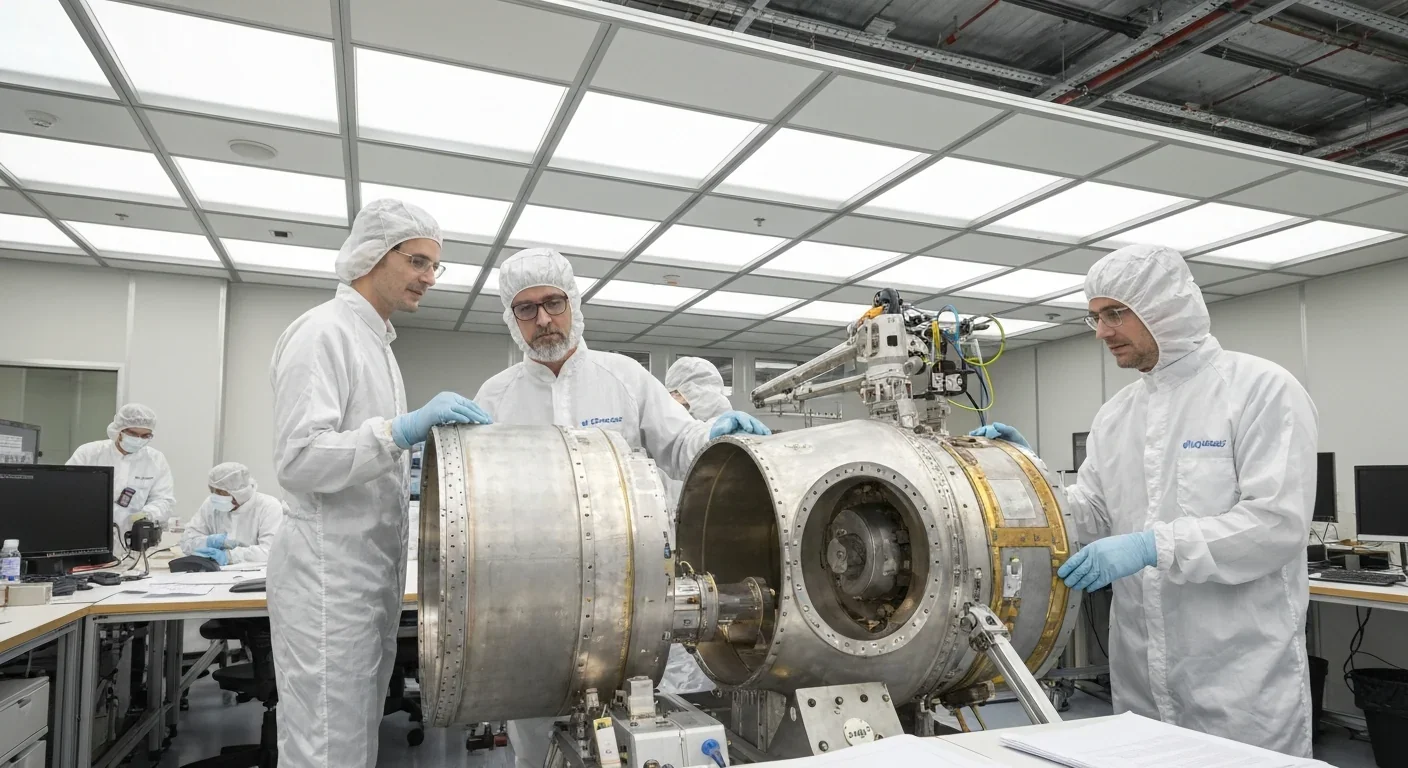
The vehicle itself must withstand conditions that would destroy most machinery. Dragonfly's electronics are housed in a heated compartment maintained by the MMRTG. Special materials and lubricants prevent parts from freezing. The rotors are designed to resist the buildup of ice and organic gunk that might accumulate in Titan's atmosphere. Every system has been tested in chambers that simulate Titan's extreme cold and atmospheric pressure.
Dragonfly will land initially in the Shangri-La dune fields near Titan's equator. These vast sand seas, observed by Cassini's radar, consist not of silicate sand but of organic grains - essentially solidified droplets of hydrocarbon compounds. The dunes represent billions of years of organic chemistry, with materials cycled through Titan's atmosphere and deposited on the surface.
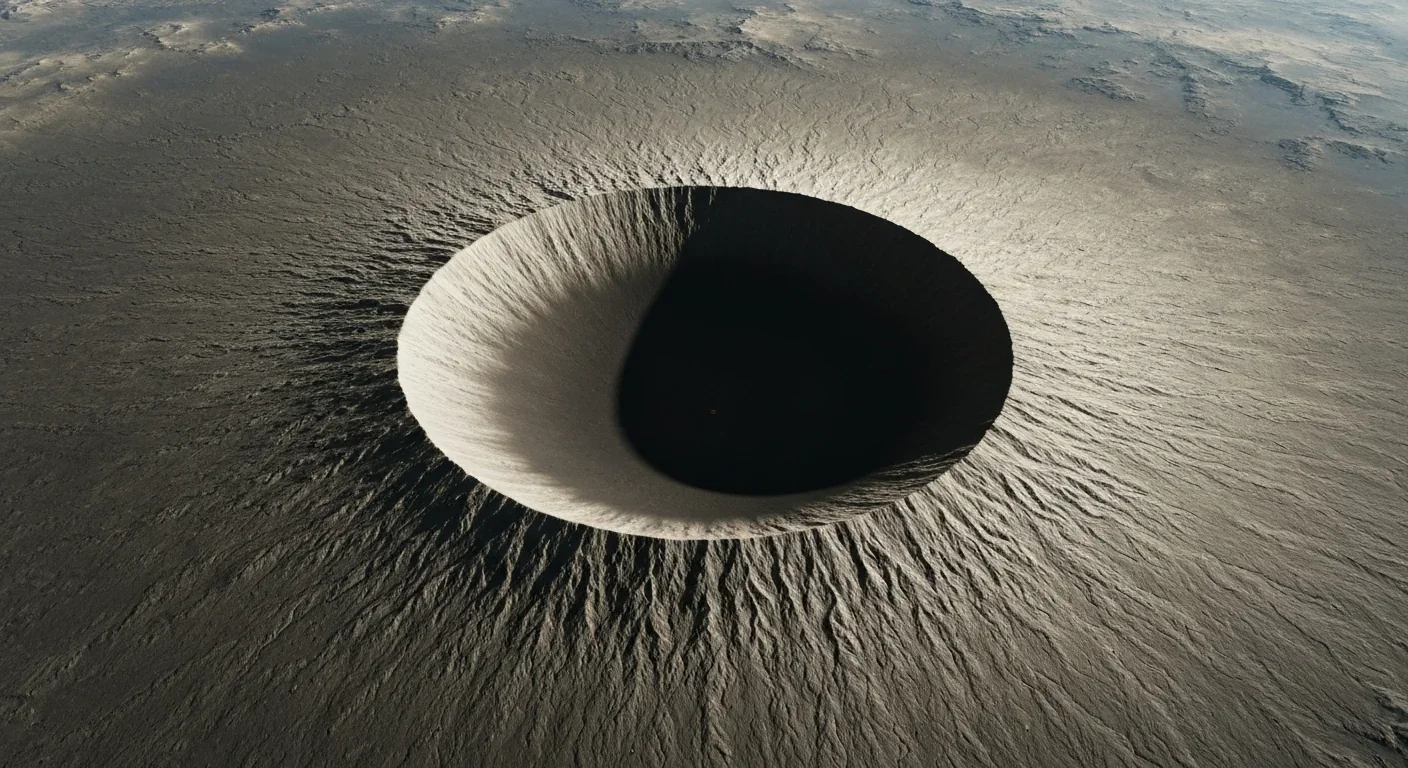
From this relatively safe landing zone, Dragonfly will work its way toward its primary science destination: Selk Crater, a 90-kilometer-wide impact structure about 1,000 kilometers from the landing site. Why travel so far to visit a crater? Because Selk represents something special - a place where liquid water once existed on Titan's surface.
When the asteroid or comet struck Titan and created Selk, the impact's heat would have melted the water ice beneath the surface. For perhaps centuries, a lake of liquid water sat at Titan's surface, mixing with the organic compounds that blanket the moon. This created exactly the conditions scientists believe necessary for complex prebiotic chemistry.
Today, that water is long frozen, but Selk's floor is littered with organic material that might preserve evidence of the chemical reactions that occurred when water and organics mixed. Scientists have compared it to a natural chemistry experiment that ran for centuries and then was flash-frozen, preserving the results.
"Selk Crater is like a time capsule - a natural chemistry experiment that ran for centuries when impact heat created liquid water, then froze solid, preserving everything that happened."
- NASA Dragonfly Mission Science Team
The crater also shows potential signs of cryovolcanism - ice volcanoes that might have erupted long after the initial impact, bringing fresh material from Titan's subsurface ocean to the surface. If Dragonfly finds evidence of recent cryovolcanic activity, it would confirm that Titan remains geologically active, with ongoing processes that transport materials between the surface and the hidden ocean below.
The path to Titan is long but straightforward. Dragonfly will launch in July 2028 aboard a SpaceX Falcon Heavy rocket. The spacecraft will then spend six years cruising through interplanetary space, covering the 1.5 billion kilometers to Saturn.
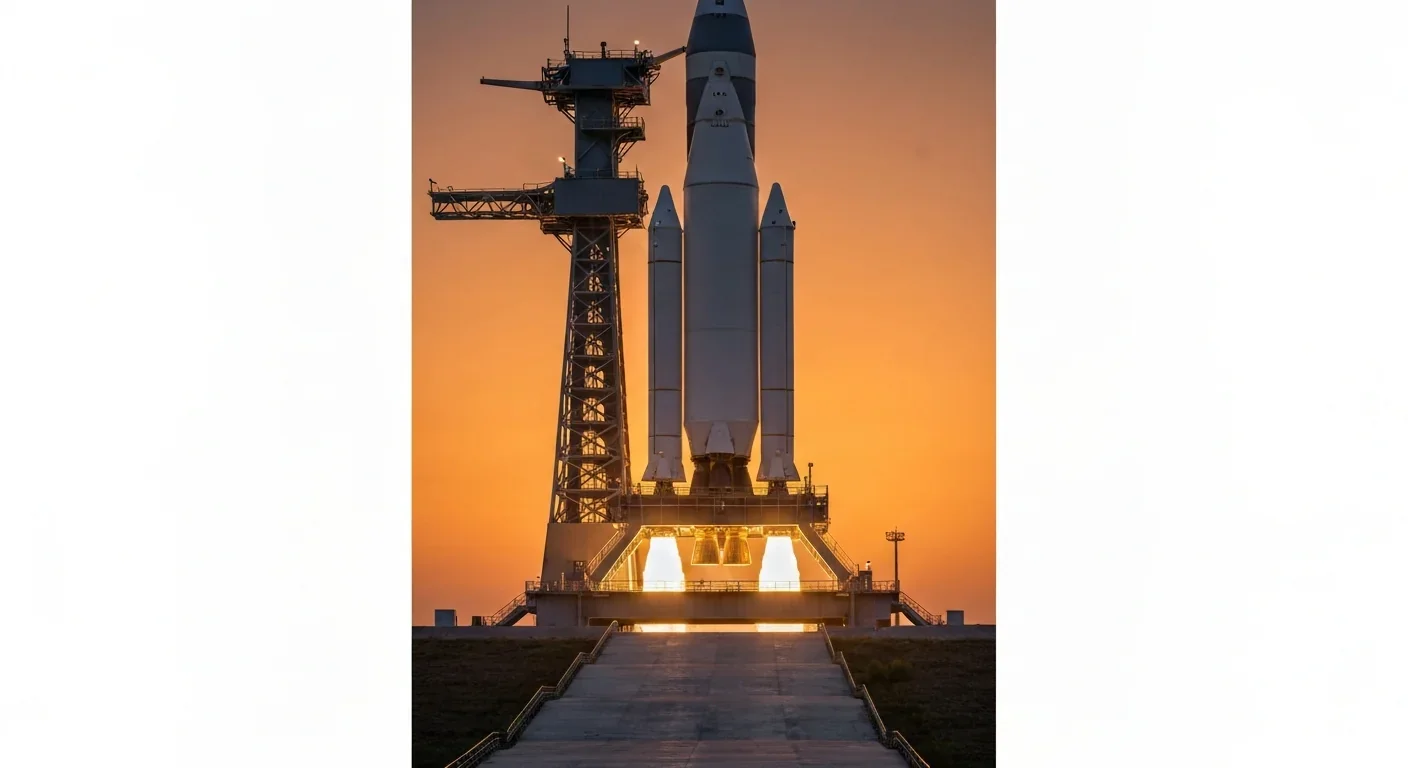
Arrival at Titan in 2034 will be one of the mission's most harrowing moments. The spacecraft will slam into Titan's atmosphere at 23,000 kilometers per hour, using a heat shield to survive temperatures reaching 1,500°C. A supersonic parachute will slow the descent, and then, about 1,000 meters above the surface, Dragonfly will separate from its protective shell, start its rotors, and fly to its landing site.
This entry, descent, and landing sequence draws heavily on lessons learned from Mars missions and the Huygens probe that landed on Titan in 2005. But flying away from the landing system is new. Previous missions descended to a gentle touchdown. Dragonfly must transition from powered descent to controlled flight in an environment where no human-made craft has ever flown.
Once on the surface, Dragonfly will begin a carefully planned exploration campaign. The first months will focus on testing systems and conducting initial science at the Shangri-La landing site. Short flights - just a few hundred meters - will verify the craft's ability to operate as designed. As confidence grows, flights will extend to several kilometers, following flight plans developed by mission scientists based on images and data returned from previous stops.
The journey to Selk Crater will happen incrementally, with multiple science stops along the way. At each location, Dragonfly will spend several Earth weeks running experiments, drilling samples, and analyzing chemistry. Then it will fly to the next waypoint. Over 2.7 years of surface operations, the mission will visit dozens of sites, building a comprehensive picture of Titan's chemistry and geology.
The mission's science objectives are both specific and open-ended. Specifically, Dragonfly will determine how far prebiotic chemistry has progressed on Titan. It will measure the ratios of different isotopes in organic molecules, revealing whether biological processes have occurred. It will search for amino acids and other building blocks of life. It will analyze the exact composition of Titan's surface materials.
But the most exciting discoveries will likely be the unexpected ones. Every planetary mission has revealed surprises. Mars turned out to have ancient river deltas and subsurface ice. Europa shows evidence of active geysers. Venus might have phosphine gas in its atmosphere, hinting at unknown chemistry or even biology.
Titan could deliver similar surprises. Perhaps Dragonfly will find evidence that Titan's subsurface ocean has broken through to the surface more recently than scientists expect. Maybe the craft will detect seasonal changes in atmospheric chemistry that suggest active biological processes. Or it might find that certain locations show unexplained chemical patterns that don't fit purely abiotic models.
The mission also serves as reconnaissance for future exploration. If Dragonfly's findings suggest that Titan harbors life - or conditions even more favorable for life than scientists currently believe - it will make the moon a prime target for follow-up missions. Future spacecraft might include submarines to explore Titan's methane seas or drills to reach the subsurface ocean.
Even negative results would be valuable. If Dragonfly determines that Titan's prebiotic chemistry hasn't progressed toward anything resembling life, that tells us something important about the conditions necessary for biology. It helps constrain our search for life in the universe by identifying which factors are truly essential and which are merely helpful.
Despite passing its critical design review, Dragonfly faces significant hurdles. A 2025 audit by NASA's Inspector General revealed that the mission has experienced delays and cost increases, with the total lifecycle cost now estimated at $3.35 billion. This is substantially higher than the original $850 million cost cap for New Frontiers missions.
The delays stem partly from the COVID-19 pandemic's impact on spacecraft development and testing. But they also reflect the mission's inherent complexity. Building a nuclear-powered rotorcraft designed to operate autonomously on a moon 1.5 billion kilometers away is genuinely difficult. Every system must work perfectly on the first try, in an environment where it can't be tested beforehand.
The project also faces political challenges. NASA's budget is finite, and expensive missions like Dragonfly compete with other priorities. The agency must justify the cost to Congress and the public, explaining why exploring Titan matters when there are so many pressing needs on Earth.
At $3.35 billion, Dragonfly costs nearly four times its original budget cap - but represents humanity's first chance to fly on another world and search for life's chemical origins.
Yet the scientific community remains enthusiastic. Dragonfly was selected from a competitive field of proposals through NASA's rigorous New Frontiers program. Scientists voted with their expertise, choosing this mission as one of the most likely to deliver transformative discoveries about our solar system.
Dragonfly represents more than just a scientific mission - it's a proof of concept for a new era of exploration. If this nuclear-powered rotorcraft succeeds on Titan, similar vehicles could explore Venus's highlands, Jupiter's moon Io, or even the outer planets' mysterious moons like Triton and Enceladus.
The mission also demonstrates humanity's expanding technological reach. We're moving beyond simple landers and rovers to sophisticated vehicles capable of covering vast distances and making complex autonomous decisions. Each mission pushes the boundaries, making the next one possible.
For the public, Dragonfly offers something rare: a mission designed to answer one of humanity's most profound questions. Are we alone? Not by detecting alien civilizations, but by understanding whether the chemistry that led to life on Earth is common throughout the universe or vanishingly rare.
The answer won't come quickly. Dragonfly won't launch for three more years, won't arrive at Titan until the mid-2030s, and will spend years conducting its exploration. The scientists and engineers working on the mission today may be retired by the time the most exciting results come back. But that's always been how great explorations work - someone plants the seeds, and future generations harvest the knowledge.
When Dragonfly finally lifts off from Titan's surface for the first time, spinning its rotors in an atmosphere of nitrogen and methane under orange skies, it will mark a moment when humanity's presence extends not just to other worlds, but into their very skies. That eight-rotor rotorcraft, powered by nuclear decay and guided by algorithms, will be our emissary to a world as strange and distant as any imagined by science fiction - searching for the chemical echoes of our own origins.
Project Orion was a real 1960s program to reach other stars by detonating 800 nuclear bombs behind a spacecraft. The physics worked and the engineering was feasible, but the 1963 nuclear test ban treaty killed it. It remains the most credible interstellar spacecraft ever designed.

The locus coeruleus, a tiny brainstem structure, degenerates decades before Alzheimer's symptoms appear. Its loss cripples the brain's inflammation control, waste clearance, and sleep regulation. New imaging tools and noradrenergic therapies offer hope for early detection and prevention.

Research shows the sharing economy often increases total resource consumption through the Jevons paradox and rebound effects. Ride-sharing adds billions of vehicle miles, co-working spaces use more energy per worker, and diffused responsibility erodes conservation behavior. Breaking the paradox requires congestion pricing, accountability design, and matching sharing models to appropriate resource types.

Psychological reactance theory explains why banning or restricting things makes people want them more. From Prohibition to the Streisand effect to scarcity marketing, research shows that threatening people's freedom reliably backfires, and autonomy-supportive communication is far more effective.

A carnivorous pitcher plant in Borneo evolved to house bats instead of trapping insects, gaining up to 95% of its nitrogen from bat guano. The plant even built an ultrasonic reflector to help bats find it, revealing that carnivory in plants is a flexible spectrum.

The quantified self movement began as a hacker-ethos pursuit of personal insight, but corporate wearables now funnel biometric data to employers, insurers, and data brokers. With 81% of Americans wrongly believing health apps are HIPAA-protected, a regulatory void enables health data to be sold for pennies while generating anxiety instead of empowerment.

CXL memory pooling lets servers dynamically share DRAM over a cache-coherent interconnect, eliminating the 40% stranded memory waste in data centers. With commercial hardware now shipping and Azure deploying CXL cloud instances, this technology promises to cut memory costs by 50% while enabling composable infrastructure.

Loading featured articles...