Project Orion: Nuclear Bomb Starship That Almost Was
Project Orion: Nuclear Bomb Starship That Almost Was
VASIMR Plasma Engine: Could It Transform Mars Travel?
Iapetus Equatorial Ridge: The Solar System's Strangest Mountain
Titan's Hidden Ocean: Ammonia Keeps Water Liquid
Mimas: How Saturn's Death Star Moon Hides an Ocean
How Solar Sails Tack on Sunlight Like Ocean Ships
TL;DR: Europa Clipper's 150-kilogram titanium radiation vault protects its electronics from Jupiter's lethal radiation during 49 Europa flybys. Building on lessons from Galileo's failures and Juno's success, the vault enables the search for habitable conditions beneath Europa's ice.
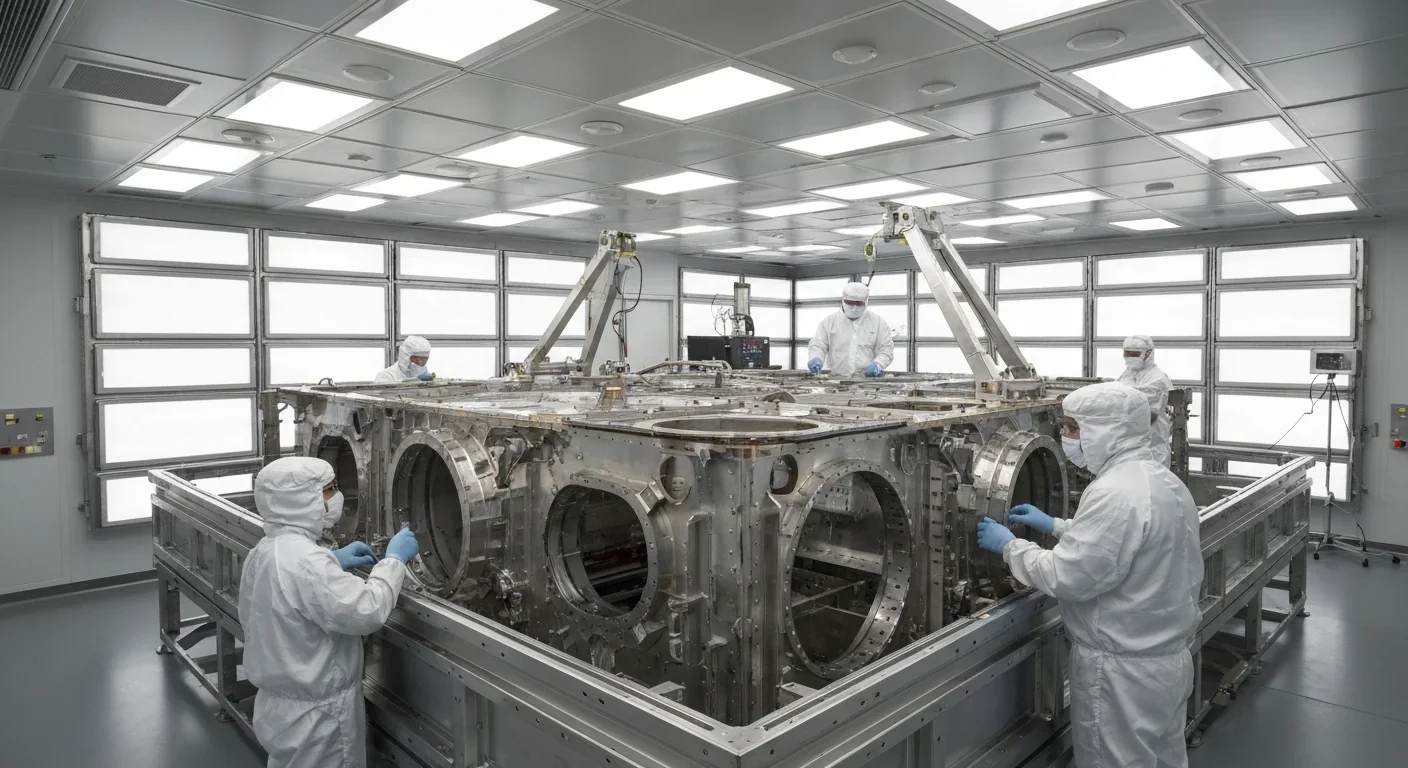
Right now, hurtling through deep space at thousands of miles per hour, a spacecraft the size of a basketball court is carrying a box roughly the size of your car's trunk. That box might be the most important piece of engineering on the entire vehicle. Because when Europa Clipper arrives at Jupiter in April 2030, everything outside that box is basically disposable. Everything inside it is the mission's brain, its nervous system, its reason for existing. And Jupiter wants to fry all of it.
The radiation environment around Jupiter isn't just harsh. It's the most extreme in the entire solar system. Jupiter's magnetic field is roughly 20,000 times stronger than Earth's, and it acts like a colossal particle accelerator, trapping charged particles from the solar wind and volcanic eruptions on the moon Io, then whipping them up to energies exceeding 100 MeV. Near Europa's orbit, unshielded electronics would absorb more than 20,000 rads per day. For context, 500 rads is enough to kill a person.
Over the course of its mission, Europa Clipper will perform 49 close flybys of Europa between 2030 and 2034, swooping as close as 25 kilometers above the moon's icy surface. During that time, the spacecraft will accumulate a total ionizing dose of approximately 2.8 megarads (28 kilograys), roughly equivalent to a million chest X-rays, according to NASA. That's about 1,000 times the lethal dose for a human body.
The charged particles doing this damage are predominantly high-energy electrons. JPL radiation scientist Insoo Jun, co-chair of Europa Clipper's radiation focus group, confirmed that "electrons dominate the Europa environment." These electrons slam into electronics, ionize semiconductor materials, degrade transistors, corrupt memory, and eventually destroy circuits entirely.
This isn't a theoretical concern. NASA has been here before, and the results were ugly.
The Galileo spacecraft, which orbited Jupiter from 1995 to 2003, received cumulative radiation damage four times beyond its design specifications. Its on-board data recorder failed because of radiation exposure that overwhelmed its tolerances. Galileo's engineers had used localized shielding, including a 10-millimeter-thick layer of tantalum around the CCD camera sensor, and radiation-hardened silicon-on-sapphire CPUs running at 1.6 MHz. But no one had built a comprehensive radiation vault for the mission's core electronics. The damage was survivable only because Galileo's engineering teams improvised workarounds for years.
The lesson was clear: you can harden individual components, but Jupiter will find the weak points. What you need is a fortress.
When NASA launched Juno to Jupiter in 2011, they built one. Juno's radiation vault was a roughly cube-shaped enclosure with walls made of 1-centimeter-thick titanium, each side about a square meter, weighing approximately 200 kilograms. It housed the spacecraft's most sensitive electronics, including the RAD750 radiation-hardened microprocessor.
"Without its protective shield, or radiation vault, Juno's brain would get fried on the very first pass near Jupiter."
- Juno's Principal Investigator
Juno's vault reduced radiation exposure by a factor of roughly 800 against an anticipated 20 million rads. And it worked. The spacecraft has been operating at Jupiter since 2016, far beyond its original mission plan.
Europa Clipper's designers took Juno's proof of concept and evolved it. The radiation vault on Europa Clipper is constructed primarily from titanium and aluminum, with walls approximately 9.2 millimeters thick. Some sources describe the outer walls as an aluminum-zinc alloy, while Wikipedia notes a composite of titanium, zinc, and aluminum. The vault weighs roughly 150 kilograms, about 330 pounds, and is approximately the volume of a car trunk.
That 50-kilogram reduction from Juno's 200-kilogram vault wasn't accidental. Every kilogram saved on shielding is a kilogram available for instruments, fuel, or structural support. Europa Clipper launched on October 14, 2024 aboard a SpaceX Falcon Heavy from Kennedy Space Center, and at 6,000 kilograms total launch mass, the vault represents about 2.5% of the spacecraft's weight. That's a staggering engineering investment for a single component, but it protects everything that matters.
At 150 kilograms, Europa Clipper's radiation vault accounts for 2.5% of the spacecraft's total launch mass, yet it protects 100% of the mission's critical electronics, including command systems, power distribution, communications, and all nine science instruments.
The vault houses the spacecraft's command and data handling electronics, power distribution systems, and communications hardware. NASA describes these systems as "the spacecraft's central nervous system." The electronics from all nine science instruments are also installed inside the vault. Sensors and detectors may sit outside, exposed to the environment, but their brains are safely tucked behind titanium walls.
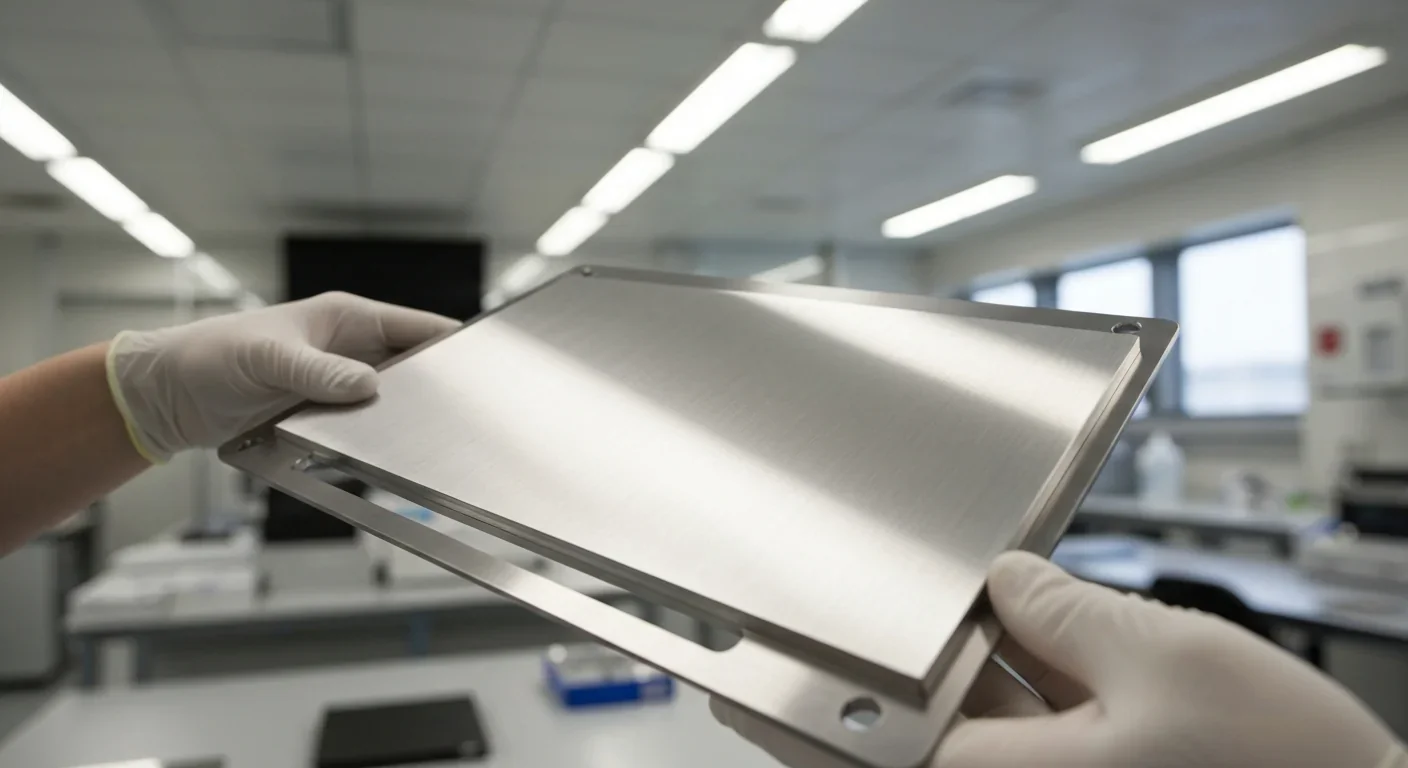
The choice of titanium over alternatives like lead wasn't obvious. Lead is denser and better at absorbing gamma rays. But titanium was chosen because it handles launch stresses far better. A spacecraft must survive the violence of rocket launch, with acceleration forces, vibrations, and acoustic loads that would crack or deform softer metals. Titanium offers a density of 4.5 grams per cubic centimeter, roughly 1.5 times aluminum but significantly less than steel, combined with exceptional strength-to-weight ratio and corrosion resistance.
Titanium alloys also retain their strength at temperatures exceeding 500 degrees Celsius and perform reliably across the extreme thermal range of deep space, from -150 to 1200 degrees Celsius. For a mission lasting over a decade in the vacuum of space, followed by years in Jupiter's radiation bath, that kind of material durability is non-negotiable.
The vault also includes a special cultural touch. An engraved tantalum plate, about 1 millimeter thick and measuring 18 by 28 centimeters, is mounted on the vault. This plate bears sound-wave representations of the word "water" in 103 spoken languages, a poem by U.S. Poet Laureate Ada Limon, and a silicon chip etched with 2.6 million signatures from people worldwide. It's a reminder that even the most hardened engineering can carry human meaning.
The vault alone isn't enough. Europa Clipper's entire mission architecture is designed around radiation avoidance. Rather than orbiting Europa directly, which would park the spacecraft permanently in the worst radiation zone, Clipper will orbit Jupiter and execute close flybys of Europa during each orbit. Each pass brings the spacecraft into the intense radiation belts for just a few hours before retreating to safer distances.
This flyby-and-retreat strategy spreads 3 million rads of exposure over thousands of individual hours rather than continuous bombardment. The spacecraft's trajectory also uses gravity assists from Callisto and Ganymede to shape its orbit and minimize time in the most intense radiation zones.
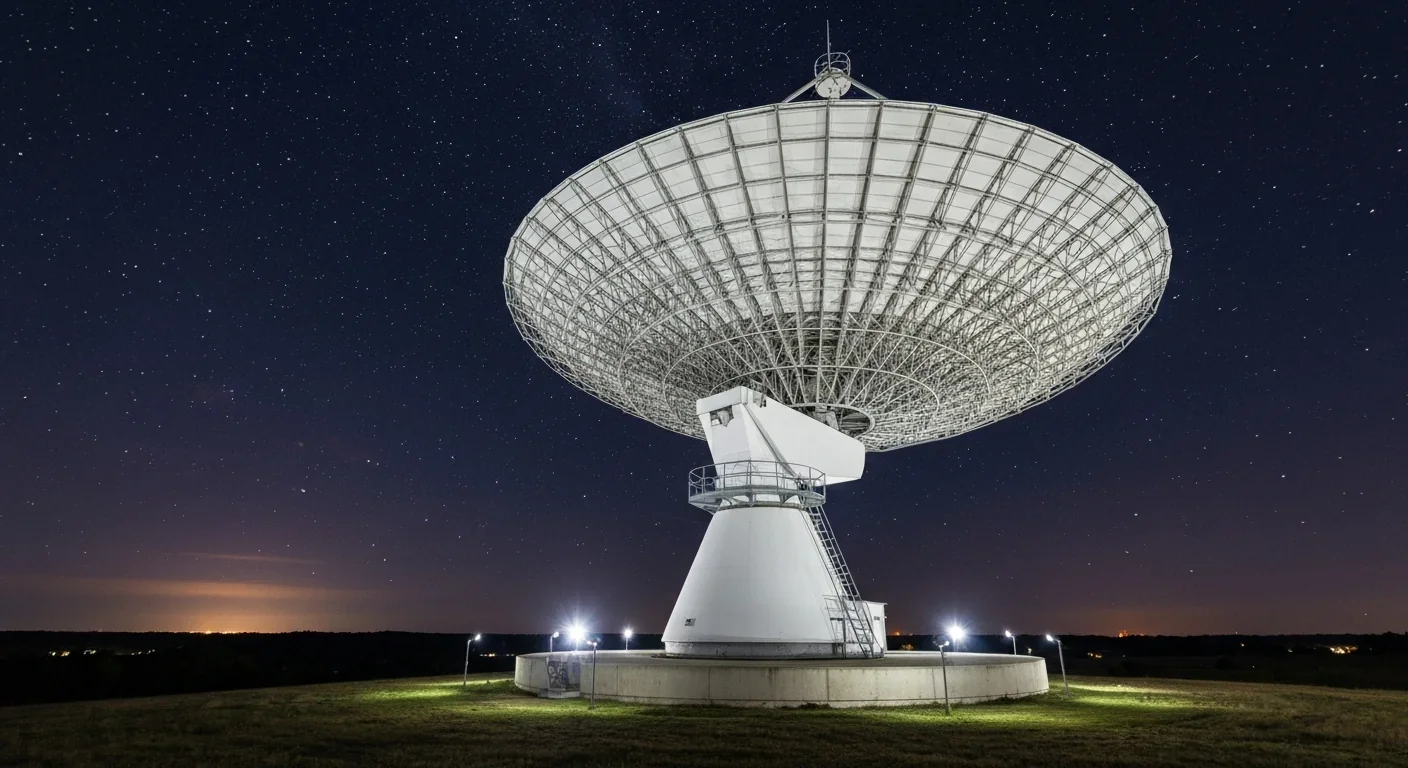
Juno pioneered this approach with its elliptical polar orbit around Jupiter, dipping into the radiation belts and then pulling away. Juno also used its navigation cameras, the Advanced Stellar Compass, in an unexpected way. Professor John Leif Jorgensen of the Technical University of Denmark discovered that high-energy electrons leave "firefly-like" trails in the camera images.
"Every quarter-second the ASC takes an image of the stars... the instrument is programmed to count the number of these fireflies, giving us an accurate calculation of the amount of radiation."
- John Leif Jorgensen, Technical University of Denmark
This technique produced the first complete 3D radiation map of the Jupiter system, revealing that a low-radiation corridor to Europa exists, and that high-energy electrons are more concentrated on the moon's leading hemisphere than scientists had expected.
The radiation protection strategy goes deeper than a single box. Europa Clipper employs what engineers call a multi-layered approach. The titanium vault provides the primary physical barrier. Inside, the electronics themselves are radiation-hardened components, designed to withstand higher doses than commercial parts. Wires running out of the vault have sheaths of braided copper and stainless steel for additional protection.
The spacecraft also carries radiation sensors at more than a dozen locations to measure total ionizing dose and electron intensity in real time. Engineers even incorporated a "canary box" that continuously monitors transistor health as an early warning system for radiation degradation.
In mid-2024, NASA discovered that some transistors on Europa Clipper might not withstand Jupiter's radiation at expected levels, highlighting a gap in industry-standard radiation qualification that sent engineers scrambling to test and validate every critical component.
This canary box exists for good reason. In mid-2024, NASA discovered that some transistors on Europa Clipper might not withstand Jupiter's radiation at the levels expected. An industry alert was issued, and extensive testing was conducted at JPL, APL, and Goddard Space Flight Center. The problem highlighted a gap in standard radiation qualification processes for transistor wafer lots, a reminder that even "radiation-hardened" doesn't mean bulletproof.
The point of all this engineering isn't just survival. It's science. Europa Clipper carries nine science instruments designed to work in concert during every flyby: the Europa Imaging System, Europa Thermal Emission Imaging System, Europa Ultraviolet Spectrograph, Mapping Imaging Spectrometer for Europa, Europa Clipper Magnetometer, Plasma Instrument for Magnetic Sounding, ice-penetrating radar (REASON), a mass spectrometer (MASPEX), and a Surface Dust Analyzer.
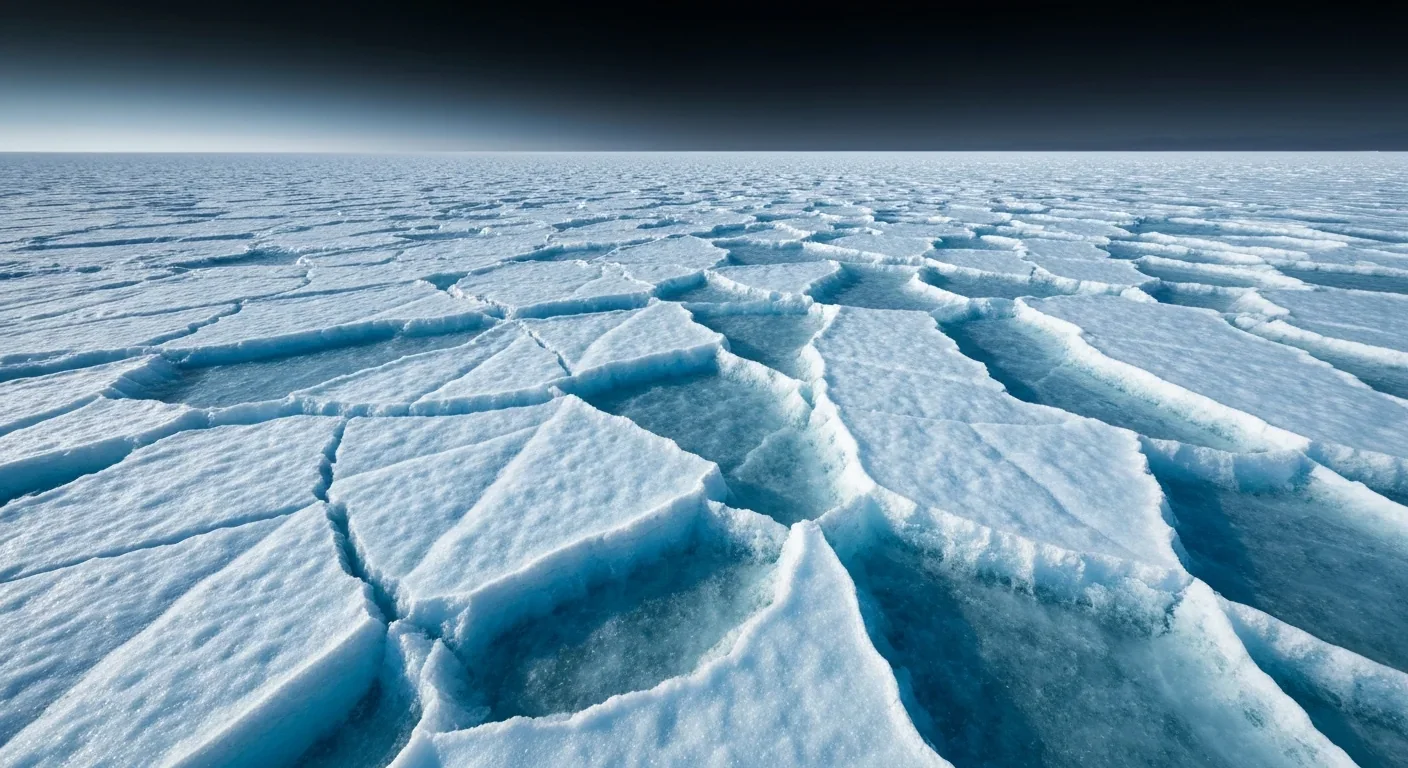
Together, these instruments will investigate whether Europa currently has habitable conditions. Beneath the moon's cracked ice shell lies a global ocean of liquid water, likely containing more water than all of Earth's oceans combined. The radiation study will also analyze how Jupiter's radiation affects Europa's surface chemistry, which may influence the moon's potential habitability.
Europa Clipper's vault represents more than a solution to one mission's problems. It's a template for how humanity explores the most hostile environments in the solar system. Future missions to Europa's surface, to the moons of Saturn, or deeper into Jupiter's system will build on these lessons. The progression from Galileo's improvised shielding to Juno's titanium cube to Europa Clipper's optimized multi-material vault traces a clear engineering evolution, each generation learning from the failures and successes of the last.
The Jovian magnetosphere extends 600,000 to 2 million miles toward the Sun, a vast bubble of trapped energy that will test every spacecraft we send through it. But tucked inside a 150-kilogram box of titanium and aluminum, Europa Clipper's electronic brain will keep thinking, keep recording, keep transmitting. And if the ice of Europa holds what scientists suspect, that vault will have protected the instruments that found evidence of a second genesis of life in our solar system.
That's worth a titanium fortress.
Project Orion was a real 1960s program to reach other stars by detonating 800 nuclear bombs behind a spacecraft. The physics worked and the engineering was feasible, but the 1963 nuclear test ban treaty killed it. It remains the most credible interstellar spacecraft ever designed.
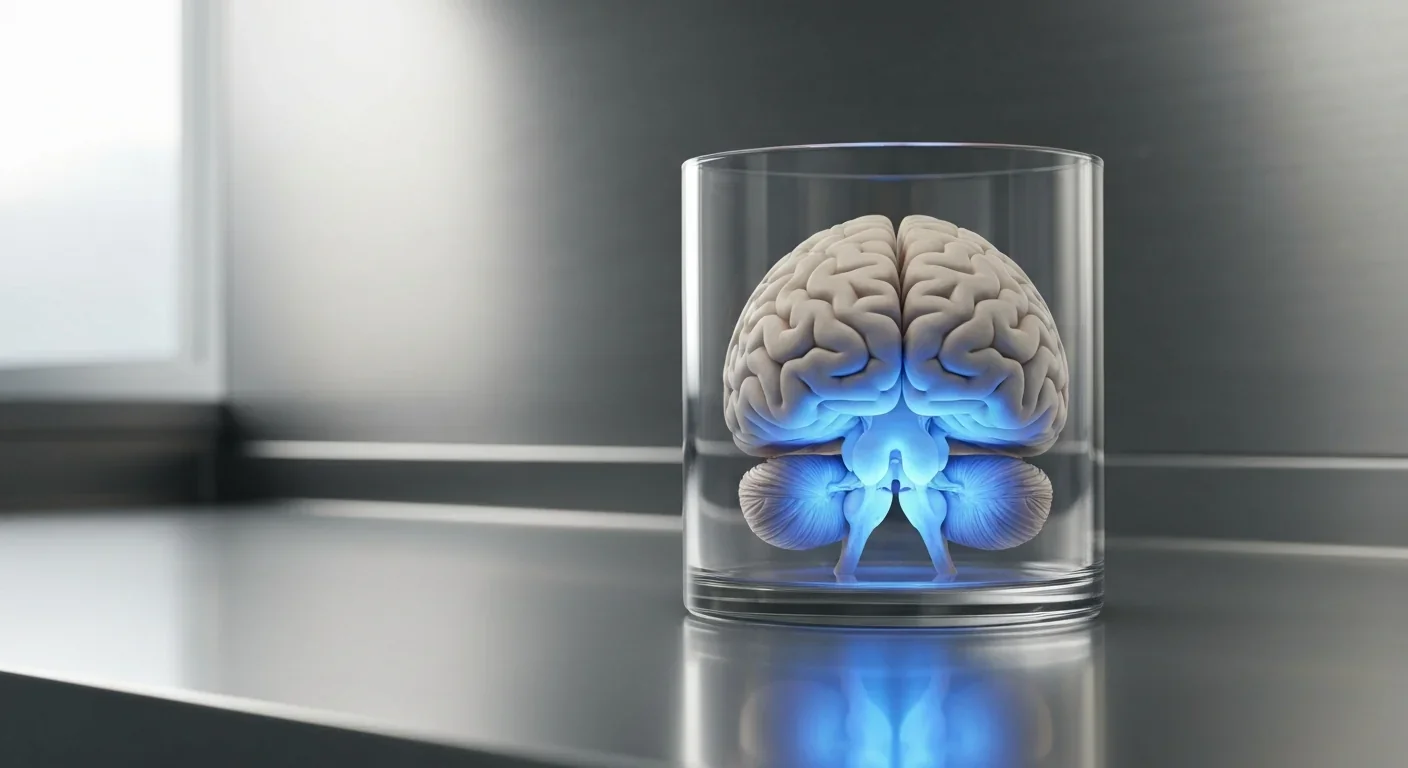
The locus coeruleus, a tiny brainstem structure, degenerates decades before Alzheimer's symptoms appear. Its loss cripples the brain's inflammation control, waste clearance, and sleep regulation. New imaging tools and noradrenergic therapies offer hope for early detection and prevention.

Research shows the sharing economy often increases total resource consumption through the Jevons paradox and rebound effects. Ride-sharing adds billions of vehicle miles, co-working spaces use more energy per worker, and diffused responsibility erodes conservation behavior. Breaking the paradox requires congestion pricing, accountability design, and matching sharing models to appropriate resource types.

Psychological reactance theory explains why banning or restricting things makes people want them more. From Prohibition to the Streisand effect to scarcity marketing, research shows that threatening people's freedom reliably backfires, and autonomy-supportive communication is far more effective.

A carnivorous pitcher plant in Borneo evolved to house bats instead of trapping insects, gaining up to 95% of its nitrogen from bat guano. The plant even built an ultrasonic reflector to help bats find it, revealing that carnivory in plants is a flexible spectrum.

The quantified self movement began as a hacker-ethos pursuit of personal insight, but corporate wearables now funnel biometric data to employers, insurers, and data brokers. With 81% of Americans wrongly believing health apps are HIPAA-protected, a regulatory void enables health data to be sold for pennies while generating anxiety instead of empowerment.

CXL memory pooling lets servers dynamically share DRAM over a cache-coherent interconnect, eliminating the 40% stranded memory waste in data centers. With commercial hardware now shipping and Azure deploying CXL cloud instances, this technology promises to cut memory costs by 50% while enabling composable infrastructure.

Loading featured articles...