Project Orion: Nuclear Bomb Starship That Almost Was
Project Orion: Nuclear Bomb Starship That Almost Was
Europa Clipper Radiation Vault: Surviving Jupiter
Iapetus Equatorial Ridge: The Solar System's Strangest Mountain

Titan's Hidden Ocean: Ammonia Keeps Water Liquid
Mimas: How Saturn's Death Star Moon Hides an Ocean
How Solar Sails Tack on Sunlight Like Ocean Ships
TL;DR: VASIMR is a plasma rocket engine that can shift between high thrust and high fuel efficiency mid-flight, with impressive ground test results at 200 kW. But it has never flown in space, needs megawatt-scale nuclear power for its boldest Mars transit claims, and faces stiff competition from proven Hall thrusters.
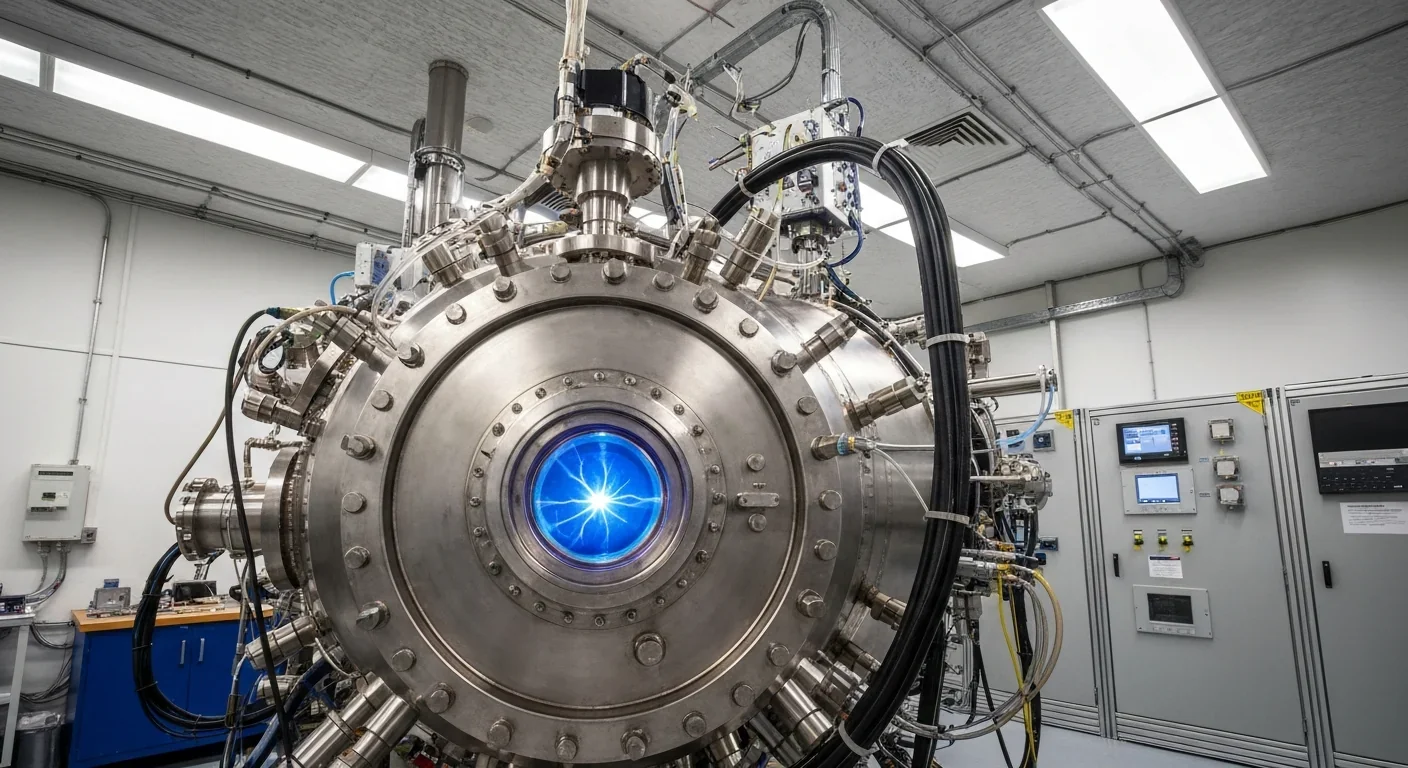
The next technological revolution in space travel won't come from bigger explosions. It will come from something quieter, hotter, and far more elegant: a tube of superheated plasma, steered by magnets, burning at temperatures that make the surface of the sun look chilly. The Variable Specific Impulse Magnetoplasma Rocket, or VASIMR, promises to do what no propulsion system has done before, shift gears in space the way a car does on a highway. And if its creators are right, it could cut a Mars trip from six months to just 45 days.
But can it actually deliver?
To understand why VASIMR matters, you need to understand the problem it's trying to solve. Every rocket ever launched into orbit has relied on the same basic principle: burn something, throw the exhaust out the back, and ride the reaction forward. Chemical rockets, from the Saturn V to SpaceX's Falcon 9, are spectacularly powerful. They can hurl hundreds of tons off the launchpad. But they're also spectacularly wasteful. Most of a rocket's mass at launch is fuel, and that fuel burns up in minutes.
Electric propulsion flips that equation. Instead of burning chemicals, electric thrusters use electromagnetic fields to accelerate charged particles. The thrust is tiny compared to a chemical rocket, but the efficiency is extraordinary. Where a chemical engine might achieve a specific impulse of 300 to 450 seconds, an ion thruster can reach 3,000 seconds or more. Specific impulse, measured in seconds, is essentially how long one kilogram of fuel can produce one newton of thrust. Higher numbers mean you need less fuel to go the same distance.
Hall-effect thrusters, the workhorses of today's electric propulsion, have been flying in space since December 1971. Over 240 have operated in orbit with a perfect success record. They typically achieve specific impulses of 1,100 to 1,600 seconds and produce 30 to 70 millinewtons of thrust. They're proven, reliable, and increasingly popular for satellite station-keeping and deep-space missions like ESA's SMART-1 lunar probe.
But Hall thrusters have limits. Their specific impulse tops out around 2,000 seconds, and once you set the operating parameters, you're locked in. You can't trade thrust for efficiency mid-flight.
That's where VASIMR enters the picture.
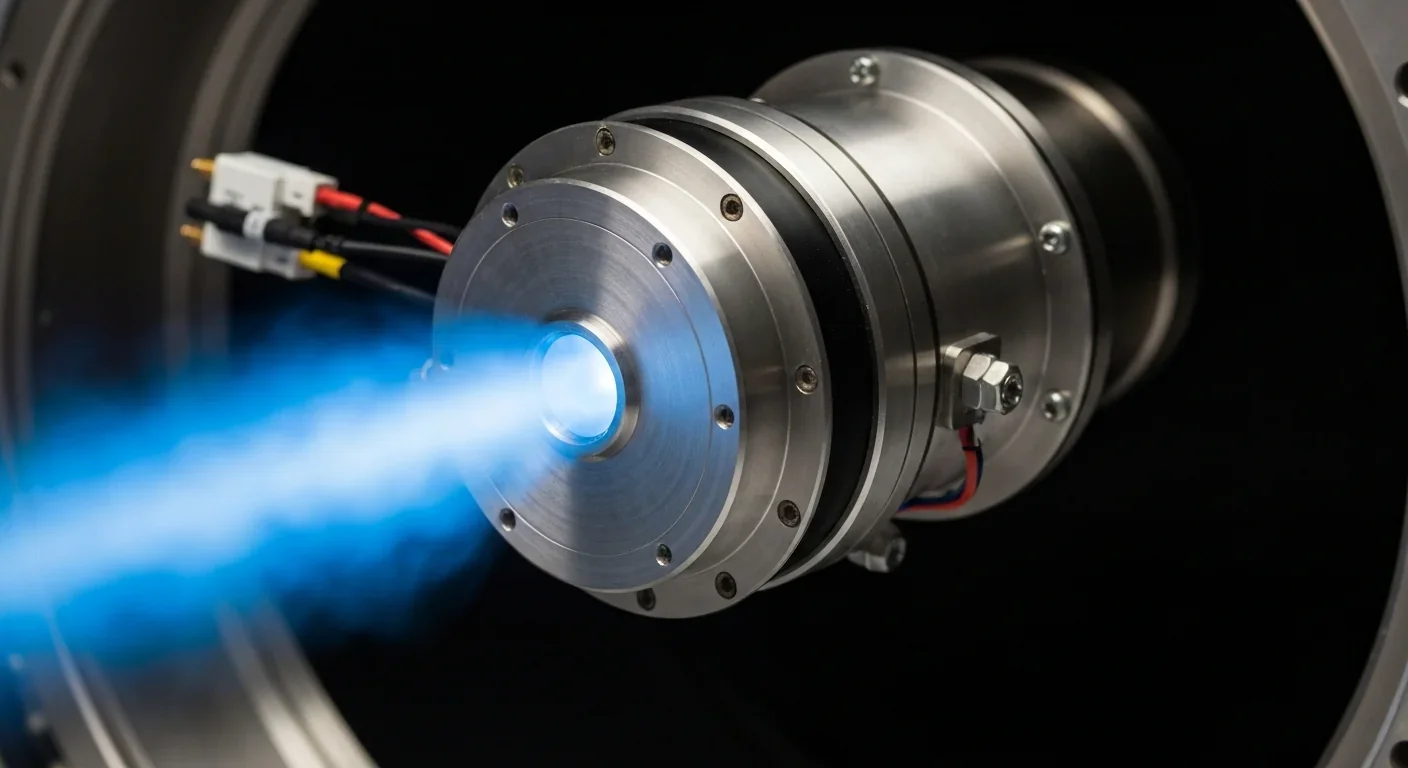
VASIMR's design is borrowed from nuclear fusion research, and it's built around a beautifully simple idea: heat plasma in two stages, then let magnets do the steering.
In the first stage, a helicon antenna pumps radio-frequency energy at 6.78 MHz into a neutral gas, typically argon, ionizing it into a cold plasma at around 10 electron volts. This stage operates at up to 40 kW with roughly 92% efficiency, creating a dense plasma with particle densities exceeding 10^18 per cubic meter.
The second stage is where things get interesting. An ion cyclotron resonance heating coupler, operating at around 500 kHz, selectively energizes the ions while leaving electrons relatively cool. This pushes ion temperatures past one million degrees Celsius, dramatically increasing the exhaust velocity.
VASIMR's plasma never touches any physical surface inside the engine. Its magnetic nozzle eliminates electrode erosion, the primary failure mode of conventional ion engines, potentially enabling operational lifetimes measured in decades rather than months.
Finally, a magnetic nozzle channels and accelerates the plasma outward. And here's the critical advantage: because the plasma never touches any physical surface, there's no electrode erosion. The engine could theoretically operate for thousands of hours, maybe even decades, without wearing out. That's a genuine engineering breakthrough compared to conventional ion engines where grid erosion limits operational life.
The "variable" in VASIMR's name is its most compelling trick. By adjusting how much RF power goes to the helicon stage versus the ion cyclotron stage, operators can trade between high thrust and high efficiency during a single mission. Need a quick orbital boost? Dial up thrust. Settling into a long interplanetary cruise? Switch to maximum fuel efficiency. No other electric propulsion system can do this with a single engine.
The VX-200SS prototype, built by Ad Astra Rocket Company, has demonstrated some genuinely impressive results in ground testing. At 200 kW of RF power input, the engine has produced approximately 5.7 newtons of thrust at a specific impulse of 4,900 seconds, with an overall thruster efficiency between 70% and 72%. The power breakdown is elegant: 30 kW goes to the helicon stage for ionization, while the remaining 170 kW drives the ion cyclotron acceleration.
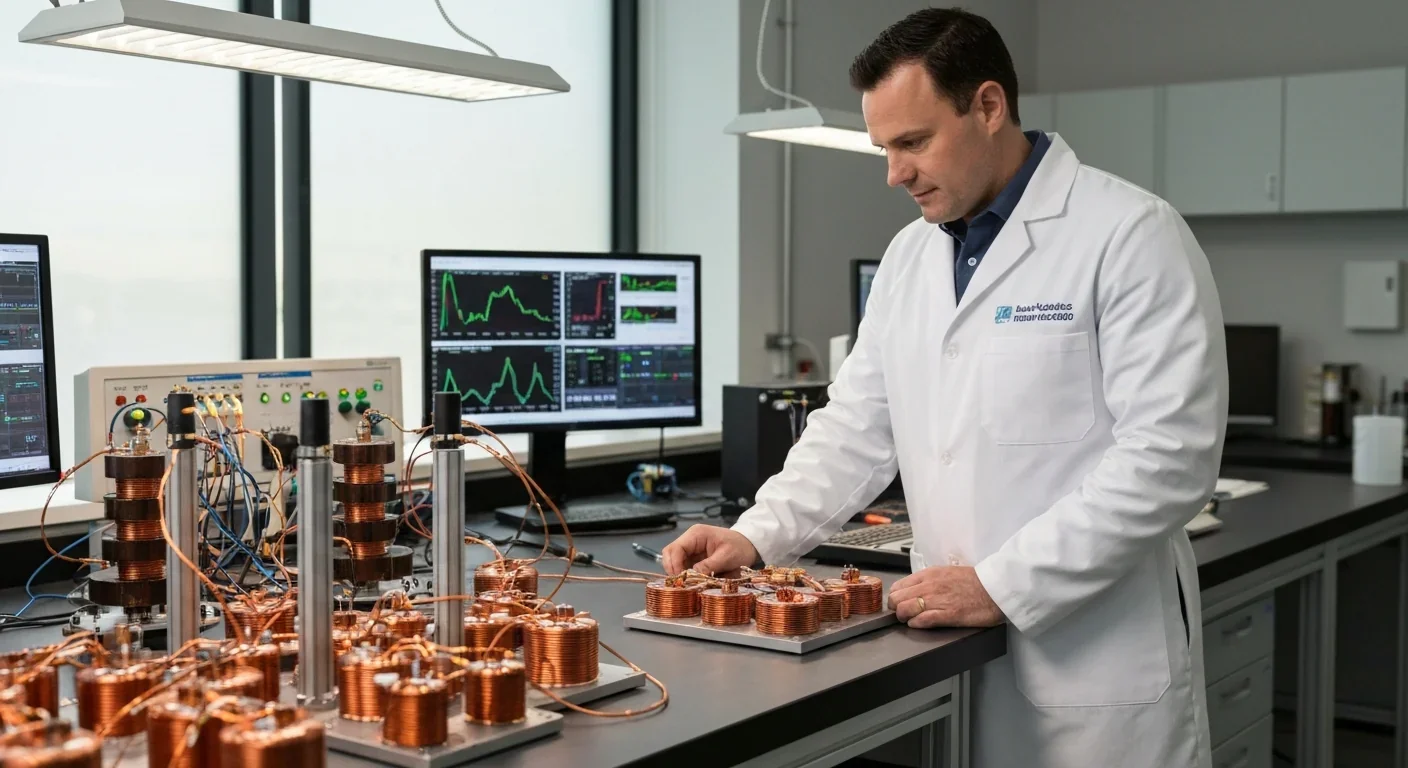
In 2021, Ad Astra completed a record-breaking 88-hour high-power endurance test. The company later achieved a 100-hour continuous firing at 200 kW in vacuum chamber conditions. These are real milestones that demonstrate the engine can sustain operation over extended periods.
But context matters. The VX-200 requires 200 kW of electrical power to produce just 5 newtons of thrust, which works out to 40 kW per newton. For comparison, the University of Michigan's X3 nested-channel Hall thruster demonstrated 5.4 newtons at 100 kW, roughly twice the thrust-to-power ratio. Hall thrusters also have decades of flight heritage that VASIMR completely lacks.
"VASIMR is intended to bridge the gap between high thrust, low specific impulse chemical rockets and low thrust, high specific impulse electric propulsion, but has not yet demonstrated high thrust."
- Wikipedia, Variable Specific Impulse Magnetoplasma Rocket
And there's an uncomfortable truth buried in these numbers. While Ad Astra claims potential specific impulses of 10,000 to 30,000 seconds, the demonstrated performance sits at 4,900 seconds. That's excellent, but it's not the transformative leap the marketing suggests. The engine's actual performance, while good, sits closer to what existing systems can achieve than the theoretical ceiling that dominates press coverage.
Here's the question that makes or breaks VASIMR's grandest ambitions: where does all that electricity come from?
For the 39-day Mars transit that captured headlines when NASA Administrator Charles Bolden mentioned it in 2010, VASIMR would need a 200 megawatt nuclear-electric power source. To put that in perspective, the International Space Station's solar arrays generate about 120 kilowatts. A 200 MW space reactor would need to be roughly 1,700 times more powerful than anything currently operating in orbit.
The history of nuclear power in space is real but modest. The SNAP-10A, launched by the United States in 1965, produced about 1 kilowatt. Soviet TOPAZ reactors managed a few kilowatts. NASA's Kilopower project, tested in 2018, demonstrated a 10-kilowatt modular reactor. The gap between 10 kilowatts and 200 megawatts is not a step. It's a canyon.
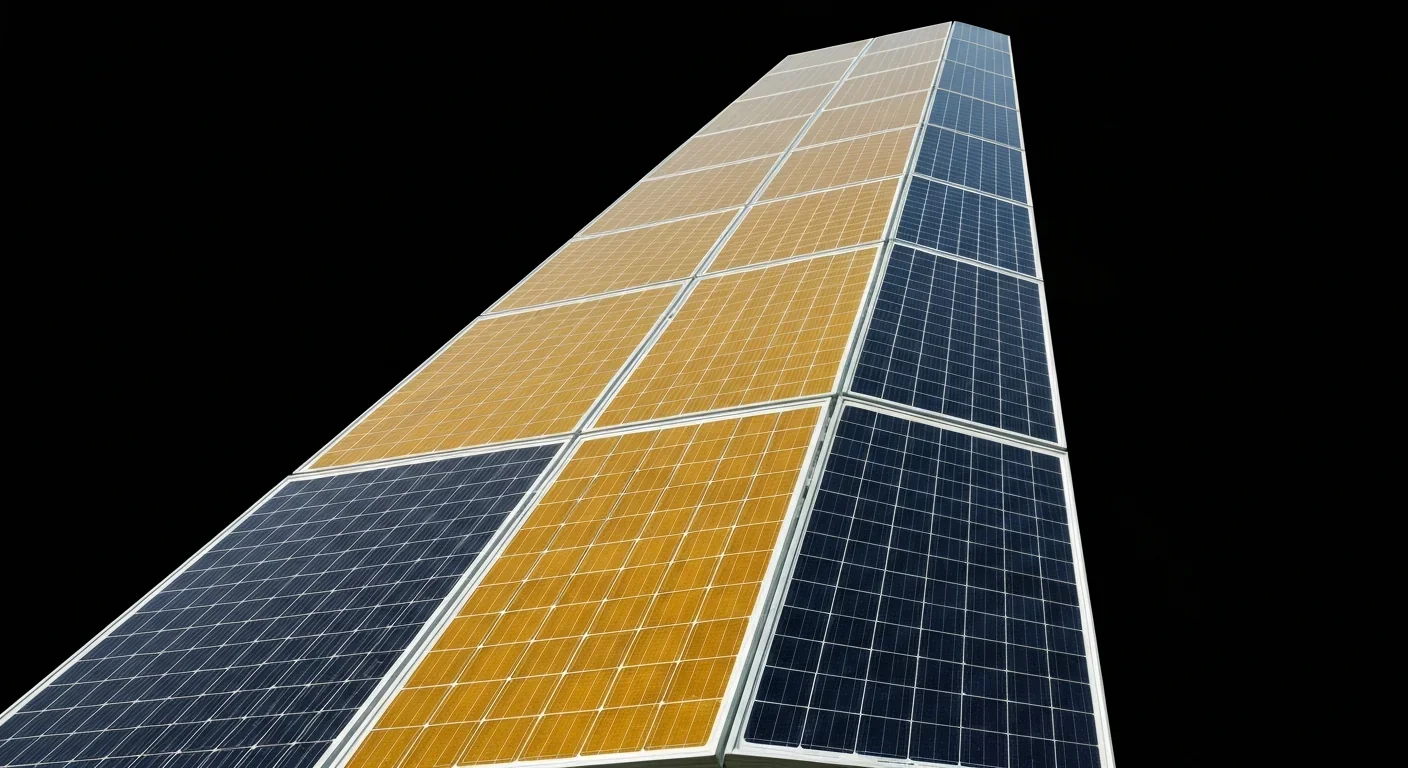
The 200 megawatt power requirement for a 39-day Mars transit is roughly 1,700 times greater than the most powerful system currently operating in space. No country has launched, let alone operated, a megawatt-class nuclear reactor in orbit.
In December 2024, Ad Astra announced a partnership with SpaceNukes to develop a nuclear-powered VASIMR system that could theoretically propel spacecraft at speeds up to 123,000 mph, reaching Mars in about 45 days. SpaceNukes claims to be the only U.S. company to have designed, built, and tested a new nuclear reactor concept in the past 50 years, so the partnership has credibility. But a working megawatt-class space reactor remains years, possibly decades, from reality.
For near-term applications, solar electric power could work for lower-power VASIMR configurations. The engine is designed to be compatible with solar panels, nuclear reactors, or even beamed power. But the transformative Mars missions everyone talks about? Those absolutely require nuclear, and nuclear-electric propulsion at the megawatt scale simply doesn't exist yet.
No discussion of VASIMR is complete without Robert Zubrin. The president of the Mars Society published a scathing critique calling VASIMR "neither revolutionary nor particularly promising" and describing it as just another addition to the family of electric thrusters. Zubrin's core argument is mathematical: at the power levels currently achievable, VASIMR doesn't offer enough thrust advantage over proven systems to justify its complexity and development cost.
Zubrin also pointed to what he described as an efficiency gap, citing approximately 50% efficiency for VASIMR after decades of research, compared to 70% for mature ion engines. Ad Astra's more recent data showing 70-72% efficiency at high-Isp settings challenges this specific claim, but the broader criticism stands: VASIMR has been in development since the 1980s and has never flown in space.
"[VASIMR] is neither revolutionary nor particularly promising. Rather, it is just another addition to the family of electric thrusters."
- Robert Zubrin, President of the Mars Society
The planned ISS demonstration tells a revealing story. A 2008 Space Act Agreement with NASA called for testing a 200 kW VASIMR engine on the International Space Station. The Costa Rican Aerospace Alliance announced exterior support structures for the installation, targeting 2016. Neither happened. The demonstration has been repeatedly delayed, and the focus has shifted toward the SpaceNukes nuclear-electric partnership rather than the ISS test.
NASA has continued modest support. A $9 million NextSTEP contract funded initial development, and in August 2017, Ad Astra completed Year 2 milestones including a 10-hour cumulative test at 100 kW. NASA approved the company to proceed with Year 3. More recently, a $4 million NASA contract awarded in October 2025 aims to advance VASIMR toward Technology Readiness Level 6, which means a system-level demonstration in a relevant environment.
VASIMR doesn't exist in a vacuum (well, it does, but only during testing). The broader landscape of advanced propulsion is intensely competitive and increasingly international. China has invested heavily in Hall-effect thrusters for its satellite constellation programs. Europe's electric propulsion heritage stretches back to SMART-1 and continues with newer programs. Japan and Russia have their own plasma thruster programs.
What makes VASIMR uniquely interesting from a geopolitical perspective is its potential as a cargo tug for Mars missions. Pre-positioning supplies at Mars using slow but ultra-efficient electric propulsion could dramatically reduce the cost and risk of crewed missions. VASIMR's variable thrust would allow the same engine to perform orbital maneuvers around Earth, cruise efficiently through deep space, and then brake into Mars orbit.
There's also a practical near-term application that gets overlooked: station-keeping for large space structures. The ISS currently consumes about 7.5 tons of propellant per year for orbital reboost. Ad Astra estimates VASIMR could reduce that to 0.3 tons, saving NASA millions annually. As commercial space stations replace the ISS, and as the Lunar Gateway takes shape in cislunar space, efficient electric station-keeping becomes increasingly valuable.
One often-overlooked advantage is cost. VASIMR runs on argon, which costs roughly $5 per kilogram. Most ion engines use xenon, which is far more expensive and increasingly scarce as satellite constellations gobble up supply. If VASIMR reaches operational status, its fuel economics could give it a significant edge for long-duration missions.
The story of VASIMR is inseparable from Franklin Chang Diaz. Born in Costa Rica, he earned a PhD in applied plasma physics from MIT in 1977 and went on to fly seven Space Shuttle missions, tying the record for the most spaceflights by any individual at that time. He wasn't just a pilot. He was the director of NASA's Advanced Space Propulsion Laboratory at Johnson Space Center from 1994 to 2005, where VASIMR was conceived and initially developed.
After retiring from NASA, Chang Diaz founded Ad Astra Rocket Company in 2005 to commercialize the technology. He received the AIAA Wyld Propulsion Award in 2001 for his VASIMR research. His combination of operational spaceflight experience and deep plasma physics expertise gives the project a credibility that purely theoretical ventures lack.
Franklin Chang Diaz flew seven Space Shuttle missions and holds a PhD in plasma physics from MIT. He spent over a decade directing NASA's Advanced Space Propulsion Laboratory before founding Ad Astra to bring VASIMR to market.
VASIMR sits at a fascinating inflection point. The ground-test data is real and genuinely impressive. The 100-hour firing at 200 kW proves the core technology works in a laboratory. The variable specific impulse concept has been validated, and the magnetic nozzle's erosion-free design addresses one of electric propulsion's oldest problems.
But the gap between a vacuum chamber in Houston and the void between Earth and Mars is enormous. VASIMR needs flight heritage it doesn't have. It needs a power source that doesn't exist yet for its most ambitious applications. And it needs to prove it can compete on thrust-to-power ratio with Hall thrusters that have been flying successfully for over five decades.
The realistic path forward probably isn't the 39-day Mars sprint. It's more likely to start with orbital maintenance and station-keeping, then progress to cargo hauling in cislunar space, and eventually, with nuclear-electric power systems that are still being developed, graduate to deep-space missions. That trajectory might take another decade or two, but it's honest about where the technology actually stands.
VASIMR might not be the silver bullet for Mars. But if it works as advertised in space, even at a fraction of its theoretical potential, it represents a genuine shift in how we think about moving through the solar system. Not with brute force and explosive chemistry, but with patience, precision, and superheated plasma guided by invisible magnetic hands. And that's a future worth paying attention to.
Project Orion was a real 1960s program to reach other stars by detonating 800 nuclear bombs behind a spacecraft. The physics worked and the engineering was feasible, but the 1963 nuclear test ban treaty killed it. It remains the most credible interstellar spacecraft ever designed.

The locus coeruleus, a tiny brainstem structure, degenerates decades before Alzheimer's symptoms appear. Its loss cripples the brain's inflammation control, waste clearance, and sleep regulation. New imaging tools and noradrenergic therapies offer hope for early detection and prevention.
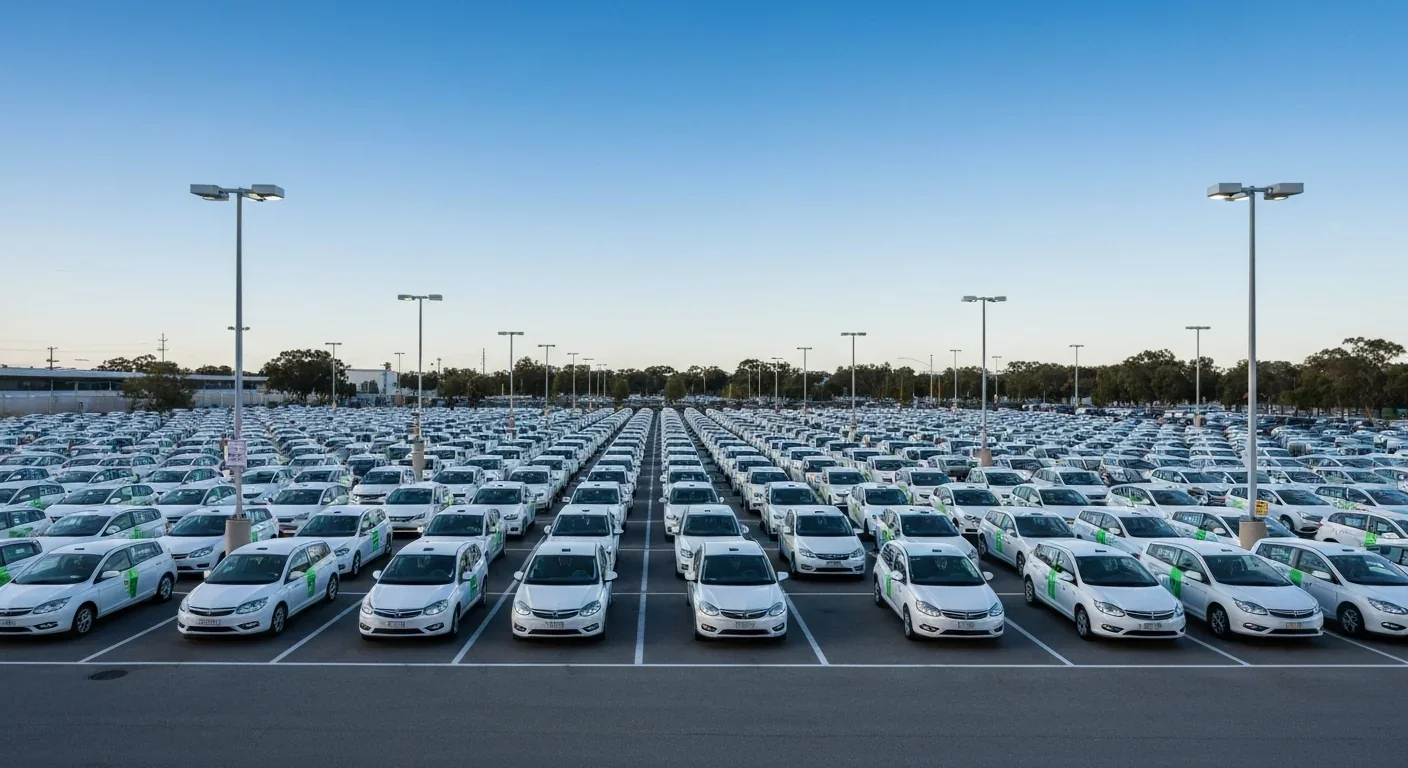
Research shows the sharing economy often increases total resource consumption through the Jevons paradox and rebound effects. Ride-sharing adds billions of vehicle miles, co-working spaces use more energy per worker, and diffused responsibility erodes conservation behavior. Breaking the paradox requires congestion pricing, accountability design, and matching sharing models to appropriate resource types.

Psychological reactance theory explains why banning or restricting things makes people want them more. From Prohibition to the Streisand effect to scarcity marketing, research shows that threatening people's freedom reliably backfires, and autonomy-supportive communication is far more effective.

A carnivorous pitcher plant in Borneo evolved to house bats instead of trapping insects, gaining up to 95% of its nitrogen from bat guano. The plant even built an ultrasonic reflector to help bats find it, revealing that carnivory in plants is a flexible spectrum.

The quantified self movement began as a hacker-ethos pursuit of personal insight, but corporate wearables now funnel biometric data to employers, insurers, and data brokers. With 81% of Americans wrongly believing health apps are HIPAA-protected, a regulatory void enables health data to be sold for pennies while generating anxiety instead of empowerment.

CXL memory pooling lets servers dynamically share DRAM over a cache-coherent interconnect, eliminating the 40% stranded memory waste in data centers. With commercial hardware now shipping and Azure deploying CXL cloud instances, this technology promises to cut memory costs by 50% while enabling composable infrastructure.

Loading featured articles...