Europa Clipper Radiation Vault: Surviving Jupiter
Europa Clipper Radiation Vault: Surviving Jupiter
VASIMR Plasma Engine: Could It Transform Mars Travel?
Iapetus Equatorial Ridge: The Solar System's Strangest Mountain

Titan's Hidden Ocean: Ammonia Keeps Water Liquid

Mimas: How Saturn's Death Star Moon Hides an Ocean
How Solar Sails Tack on Sunlight Like Ocean Ships
TL;DR: Project Orion was a real 1960s program to reach other stars by detonating 800 nuclear bombs behind a spacecraft. The physics worked and the engineering was feasible, but the 1963 nuclear test ban treaty killed it. It remains the most credible interstellar spacecraft ever designed.
The next technological revolution won't be what you expect. While today's space agencies celebrate reusable rockets that land on drone ships, a group of Cold War physicists once sketched out something so audacious it makes modern rocketry look timid. Their plan? Strap a crew of 200 onto a ship the size of an ocean liner, point it at another star, and get there by setting off 800 hydrogen bombs, one after another, right behind them.
This wasn't science fiction. It was Project Orion, a classified U.S. government program funded by DARPA and the Air Force, staffed by some of the most brilliant physicists alive, and killed not by any failure of engineering but by a treaty signed in Moscow.
In 1958, physicist Ted Taylor walked into General Atomics in San Diego with a radical proposal. Taylor wasn't some dreamer. He had designed both the smallest and largest nuclear weapons in the American arsenal, including the Davy Crockett, a nuclear warhead that weighed just 23 kilograms. His new idea was deceptively simple: what if you could harness the raw destructive power of nuclear explosions and convert it into thrust?
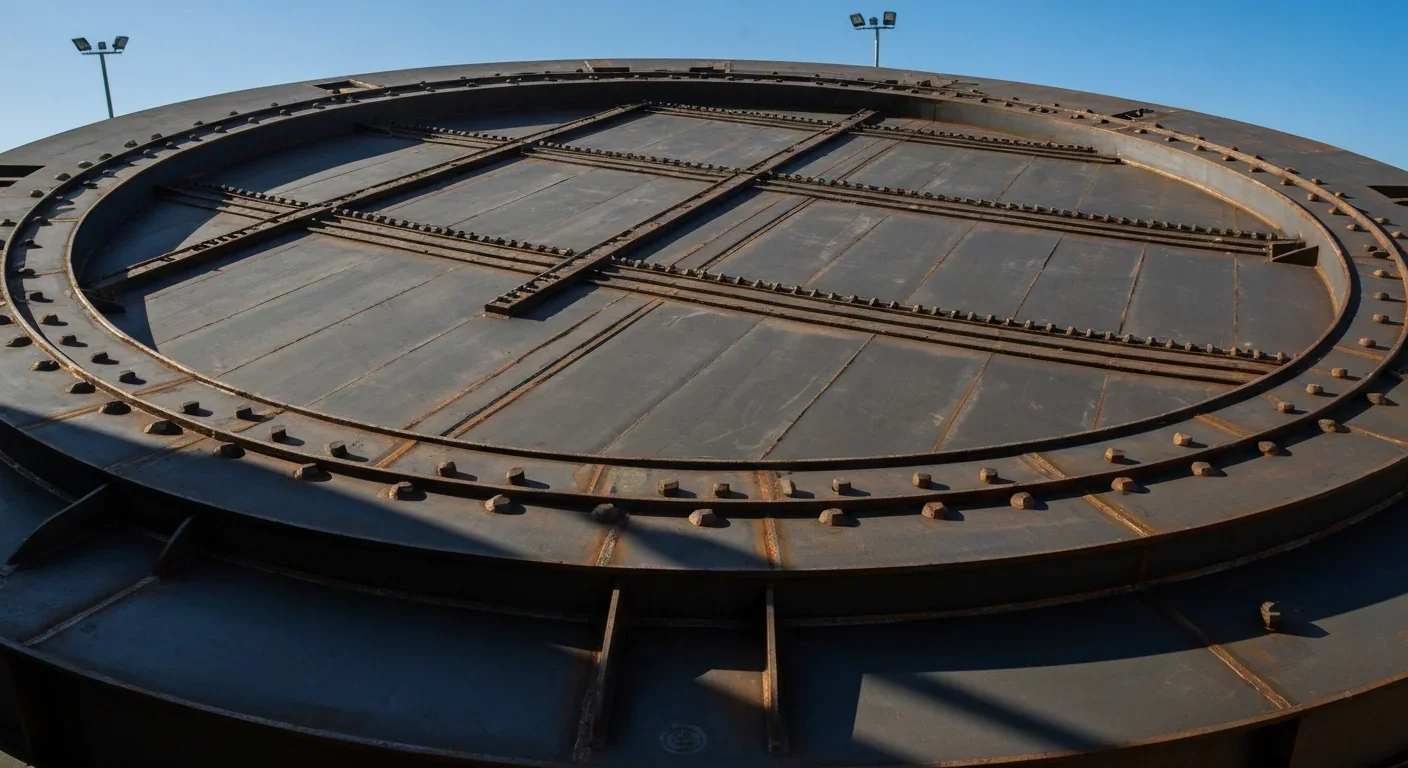
The concept, called nuclear pulse propulsion, worked like this. A spacecraft would eject a small nuclear bomb out the back. The bomb would detonate about 60 meters behind a massive steel pusher plate mounted on the ship's base. The explosion would produce a shockwave of superheated plasma that slammed into the plate, shoving the entire vessel forward.
A system of enormous shock absorbers, essentially giant pneumatic pistons, would smooth out each violent kick into a manageable acceleration for the crew. Then you'd drop another bomb and do it again. And again. Hundreds of times.
It sounds insane. But the physics was unimpeachable. A nuclear explosion releases millions of times more energy per kilogram than any chemical reaction. Where the best chemical rockets like the RS-25 engine top out at around 450 seconds of specific impulse, a measurement of propellant efficiency, Orion's nuclear pulse drive could theoretically achieve between 6,000 and 100,000 seconds. That's not an incremental improvement. That's like comparing a bicycle to a fighter jet.
Freeman Dyson, already famous for his work in quantum electrodynamics, joined the Orion team in 1957. Where Taylor brought weapons expertise, Dyson brought mathematical rigor and sheer imagination. He later called Orion "the most exciting thing I ever worked on."

Together, Taylor and Dyson led a team that grew to about 40 specialists by late 1959. They weren't just theorizing. They built actual hardware. In November 1959, at Point Loma in San Diego, engineers constructed a one-meter fiberglass model nicknamed "Hot Rod" and set off a series of chemical explosive charges beneath it.
The little vehicle rode the blasts cleanly to an altitude of 56 meters before deploying its parachute and floating back to Earth. The pusher plate survived every detonation. An accidental discovery revealed that coating the plate with ordinary oil prevented it from ablating at all.
Those "putt-putt" tests, as the team called them, proved something critical: the concept worked mechanically. A plate could absorb repeated explosive shocks without disintegrating. The shock absorbers could smooth the acceleration. The subscale models withstood over 500 simulated pulses without structural failure.
Project Orion's specific impulse of 6,000 to 100,000 seconds was roughly 13 to 220 times more efficient than the best chemical rockets ever built. No propulsion concept since has matched that combination of high thrust and high efficiency using proven technology.
Orion's smaller variants were impressive enough. The team designed configurations that could reach Mars in weeks rather than months, carrying payloads that dwarfed anything chemical rockets could lift. But it was the interstellar variant that captured the imagination.
In his landmark 1968 paper "Interstellar Transport," published in Physics Today, Dyson laid out the math for a ship that could actually reach another star system within a human lifetime. The numbers were staggering. The ship would weigh 400,000 tons. It would carry approximately 800 thermonuclear bombs, each yielding about one megaton. The pusher plate alone would span roughly 20 meters in diameter.
By detonating these weapons in sequence, the ship could accelerate to roughly 3% to 10% of the speed of light. At the high end, 0.1c, Alpha Centauri sat just 44 years away. Even at the conservative estimate of 0.03c, the journey would take about 130 years, still within the realm of a multi-generational mission.
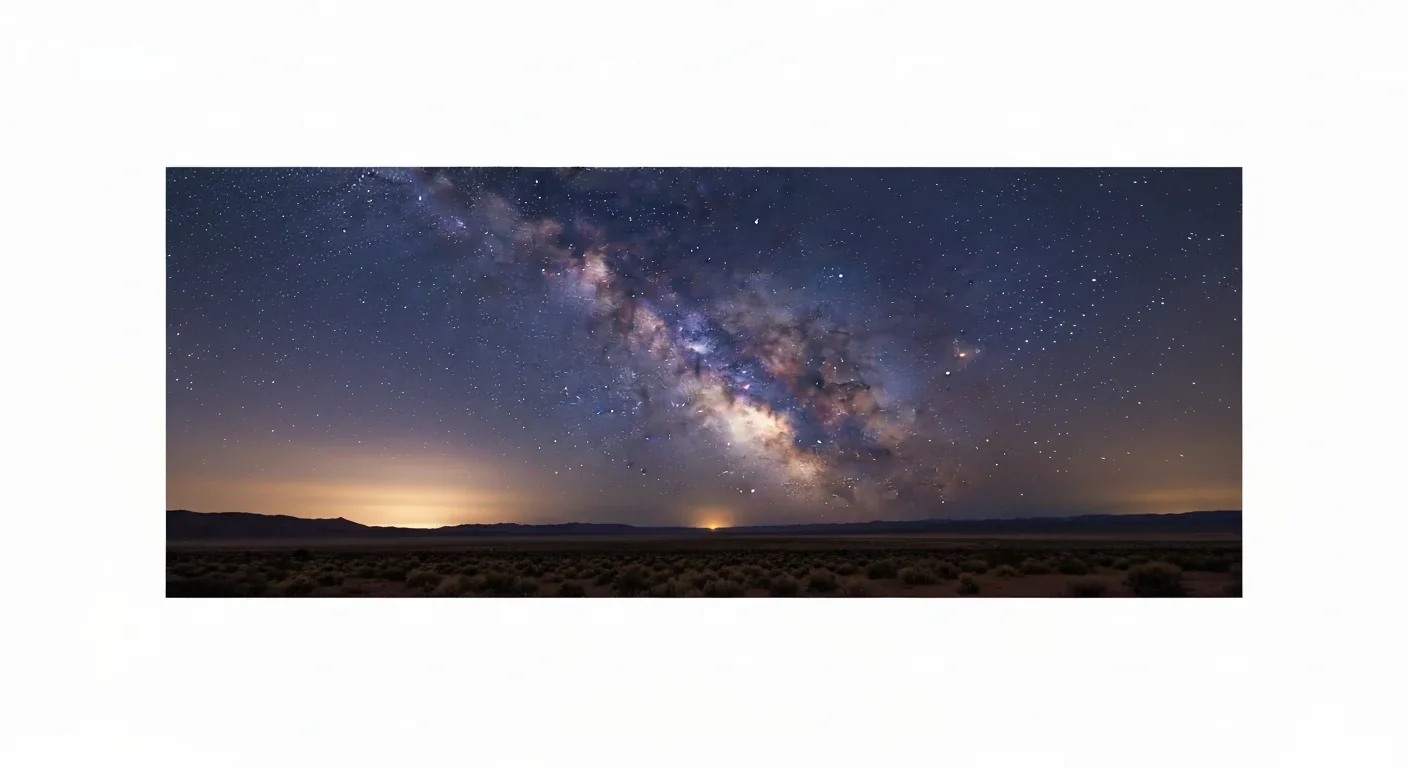
The theoretical maximum cruise velocity for a thermonuclear Orion, if you burned every bomb without saving any for deceleration, was 8% to 10% of light speed.
The crewed version could carry more than 200 people in a vehicle built from steel, heavy and rugged by design. This wasn't a delicate probe. It was an interstellar ark, the kind of ship you'd build if you wanted to plant a human settlement around another star.
Here's what sets Orion apart from every other interstellar concept that's been proposed before or since: it required no new physics and no undiscovered materials. Every component, the nuclear bombs, the steel plate, the shock absorbers, could have been built with 1960s technology.
The program was funded by DARPA and the U.S. Air Force, not exactly institutions known for funding fantasies. The estimated cost ran to roughly $100 billion in 1960s dollars, comparable to the Apollo program, expensive but not impossible for a superpower that had just put a man on the Moon.
"An excellent use for existing nuclear stockpiles."
- Carl Sagan, on Project Orion
The elegance was brutal but logical: take the most destructive weapons ever created and redirect their power toward the most ambitious exploration ever attempted.
On August 5, 1963, the United States, the Soviet Union, and the United Kingdom signed the Partial Nuclear Test Ban Treaty in Moscow. The treaty, driven by public anxiety over radioactive fallout from tests like Castle Bravo, prohibited all nuclear explosions in the atmosphere, underwater, and in outer space. Only underground testing remained legal.

The treaty wasn't aimed at Orion. It was aimed at stopping the escalating pace of atmospheric nuclear weapons testing that was contaminating the global environment. But the effect on Orion was devastating. Every single detonation that the spacecraft required, from ground launch through orbital acceleration, was now illegal under international law.
In a deeply ironic twist, Dyson himself had supported the treaty. He understood that the PTBT was essential for global safety, even as it killed his greatest engineering ambition. The program limped along until 1965, when funding was finally cut.
By October 2018, 125 nations had ratified the treaty. The 1967 Outer Space Treaty added another layer, explicitly forbidding nuclear weapons in orbit.
The Partial Nuclear Test Ban Treaty didn't just ban weapons testing. It created a legal architecture that separated nuclear energy from space propulsion, a separation that persists more than 60 years later and continues to shape what interstellar concepts are politically viable.
There were other concerns too. Launching an Orion from Earth's surface would create substantial radioactive fallout. Even with protective measures like sacrificial coatings on the pusher plate and high-altitude detonation profiles, the environmental and public health risks were enormous. Public opposition would have been fierce.
More than 60 years later, no proposed interstellar propulsion system has matched Orion's combination of high thrust and high specific impulse. Consider the alternatives.
Breakthrough Starshot, funded by Yuri Milner, proposes using ground-based lasers to push gram-scale probes to 20% of light speed. It's elegant, but it can only launch tiny chip-sized sensors, not humans. There's no way to decelerate at the destination.
Modern fusion drive concepts like the Medusa variant and other Orion-heritage designs promise specific impulses of 50,000 to 100,000 seconds, but they depend on achieving controlled fusion ignition with mini-charges, a technology that doesn't yet exist.
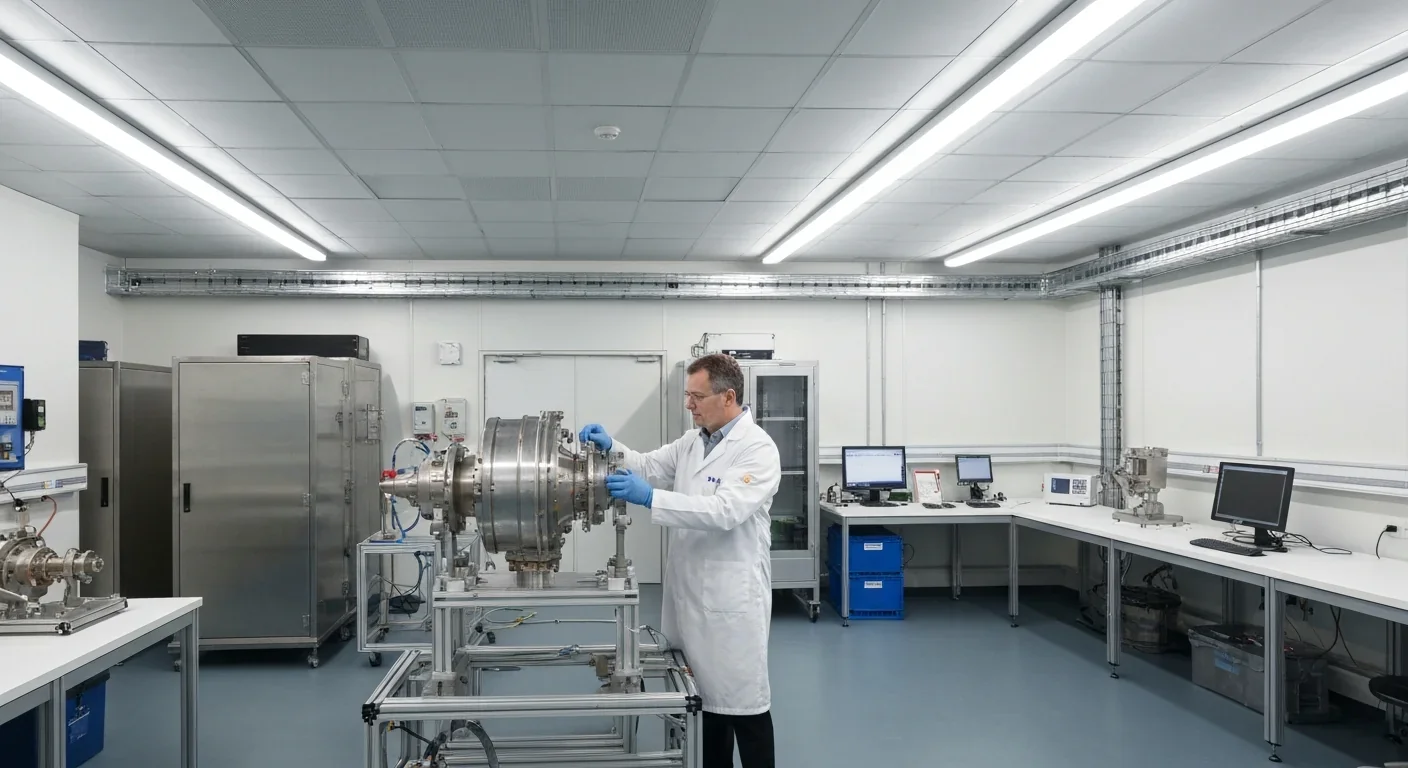
Ion drives and solar sails can achieve impressive efficiency but provide tiny amounts of thrust. Getting a crewed ship to even a fraction of light speed with these technologies remains firmly in the realm of theory.
Orion sits in a unique position in the history of propulsion engineering. It's the only interstellar concept that was technically feasible with existing technology at the time it was proposed. That distinction hasn't changed.
The engineering challenges were real but solvable. The team designed radiation shielding using sacrificial ablative layers on the pusher plate. They calculated that crew exposure could be kept within tolerable limits during the acceleration phase.
But the political problem was unsolvable. Nuclear detonations in the atmosphere, even for peaceful purposes, were unacceptable to a world that had watched mushroom clouds rise over the Pacific for two decades. The fallout from atmospheric nuclear testing had already contaminated milk supplies, triggered cancer clusters, and generated massive public protests. No amount of engineering elegance could overcome that political reality.
The treaty didn't simply prohibit nuclear testing. It created a legal framework that fundamentally separated nuclear energy from space propulsion, a separation that persists to this day. Any future Orion-type vehicle would need to contend not just with physics and engineering, but with the entire architecture of international nuclear law.
"Any intelligent fool can make things bigger, more complex, and more violent. It takes a touch of genius, and a lot of courage, to move in the opposite direction."
- E. F. Schumacher, quoted in context of the Orion program's dual-use dilemma
Orion matters because it proved something that the space community still struggles to accept: we had the technology to reach another star, and we chose not to use it. That choice was probably the right one, given the environmental costs. But it means the barrier to interstellar travel has never been purely technical. It's political, legal, and ethical.
Every serious analysis of interstellar propulsion still uses Orion as a benchmark. When physicists model the energy requirements for a crewed mission to Alpha Centauri, Orion's numbers define the floor of what's achievable. Its specific impulse of 6,000 to 100,000 seconds remains the standard against which newer concepts are measured.
The story of Project Orion is ultimately a story about the tension between what we can build and what we're willing to build. In the 1960s, humanity had the raw capability to send a crewed spacecraft to another star system. The bombs existed. The engineering worked. The math checked out. What we lacked was the political will to accept the consequences of using nuclear explosions as a transportation technology.
That tension hasn't gone away. As new propulsion concepts emerge, from laser sails to antimatter drives, each one will face its own version of Orion's dilemma: the gap between technical capability and social acceptance. The physicists at General Atomics learned this lesson the hard way. The rest of us are still learning it.
Project Orion was a real 1960s program to reach other stars by detonating 800 nuclear bombs behind a spacecraft. The physics worked and the engineering was feasible, but the 1963 nuclear test ban treaty killed it. It remains the most credible interstellar spacecraft ever designed.

The locus coeruleus, a tiny brainstem structure, degenerates decades before Alzheimer's symptoms appear. Its loss cripples the brain's inflammation control, waste clearance, and sleep regulation. New imaging tools and noradrenergic therapies offer hope for early detection and prevention.

Research shows the sharing economy often increases total resource consumption through the Jevons paradox and rebound effects. Ride-sharing adds billions of vehicle miles, co-working spaces use more energy per worker, and diffused responsibility erodes conservation behavior. Breaking the paradox requires congestion pricing, accountability design, and matching sharing models to appropriate resource types.

Psychological reactance theory explains why banning or restricting things makes people want them more. From Prohibition to the Streisand effect to scarcity marketing, research shows that threatening people's freedom reliably backfires, and autonomy-supportive communication is far more effective.

A carnivorous pitcher plant in Borneo evolved to house bats instead of trapping insects, gaining up to 95% of its nitrogen from bat guano. The plant even built an ultrasonic reflector to help bats find it, revealing that carnivory in plants is a flexible spectrum.

The quantified self movement began as a hacker-ethos pursuit of personal insight, but corporate wearables now funnel biometric data to employers, insurers, and data brokers. With 81% of Americans wrongly believing health apps are HIPAA-protected, a regulatory void enables health data to be sold for pennies while generating anxiety instead of empowerment.

CXL memory pooling lets servers dynamically share DRAM over a cache-coherent interconnect, eliminating the 40% stranded memory waste in data centers. With commercial hardware now shipping and Azure deploying CXL cloud instances, this technology promises to cut memory costs by 50% while enabling composable infrastructure.

Loading featured articles...