Project Orion: Nuclear Bomb Starship That Almost Was
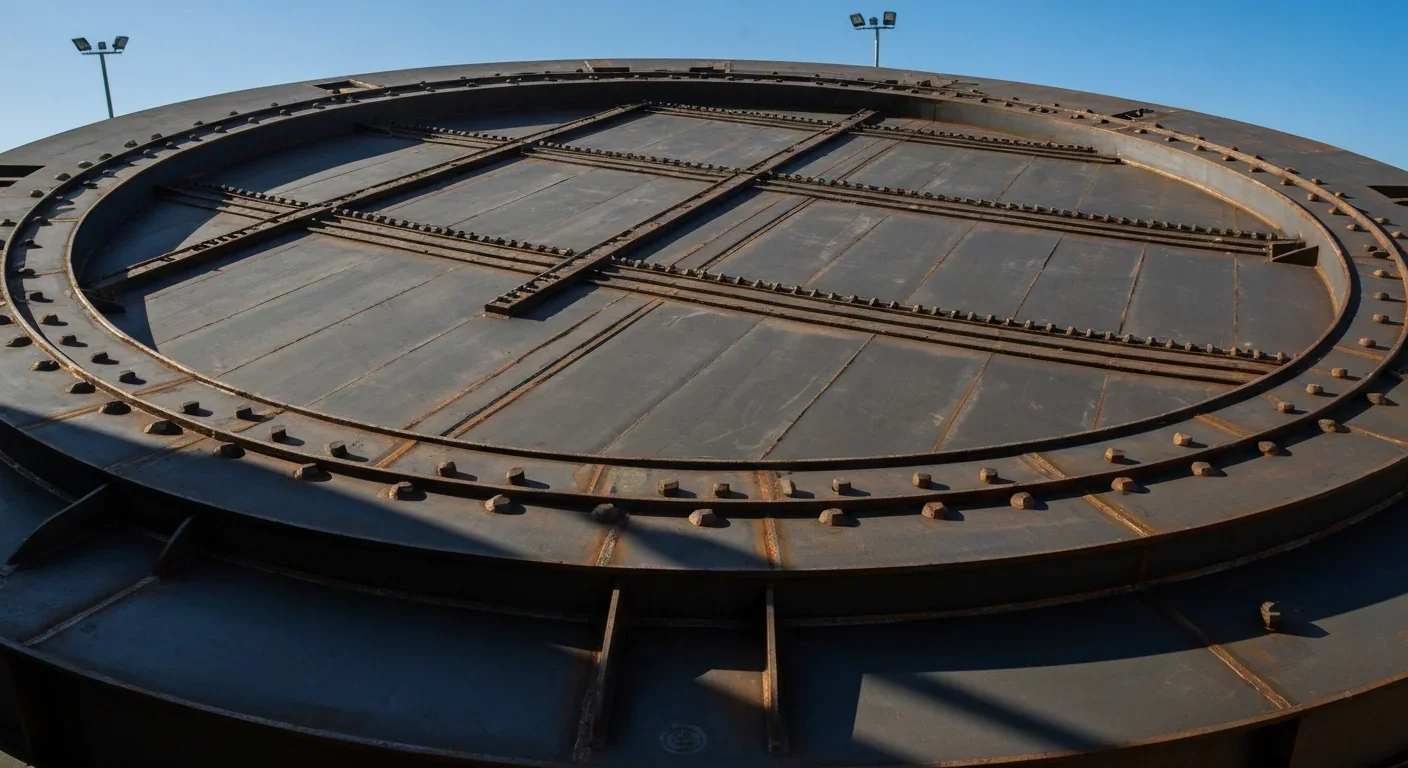
Project Orion: Nuclear Bomb Starship That Almost Was
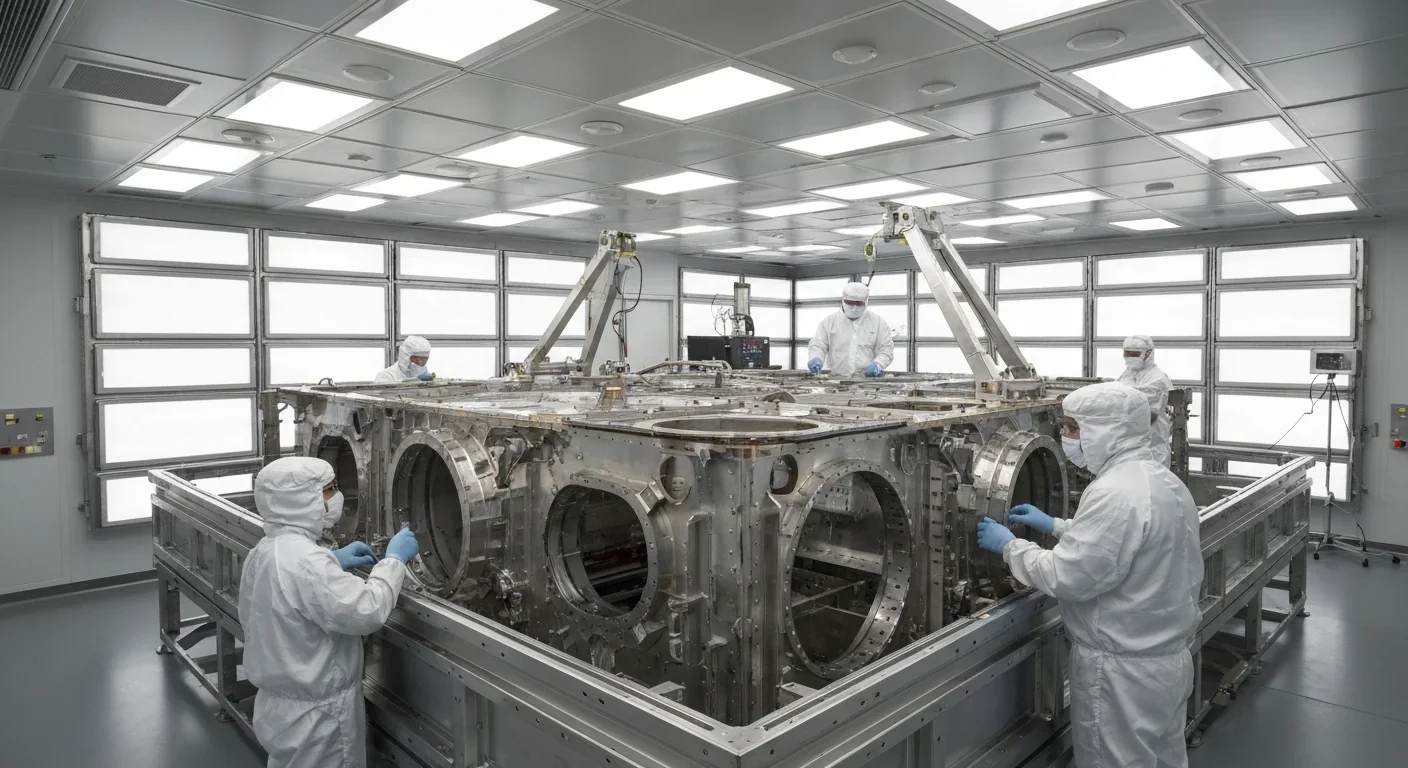
Europa Clipper Radiation Vault: Surviving Jupiter
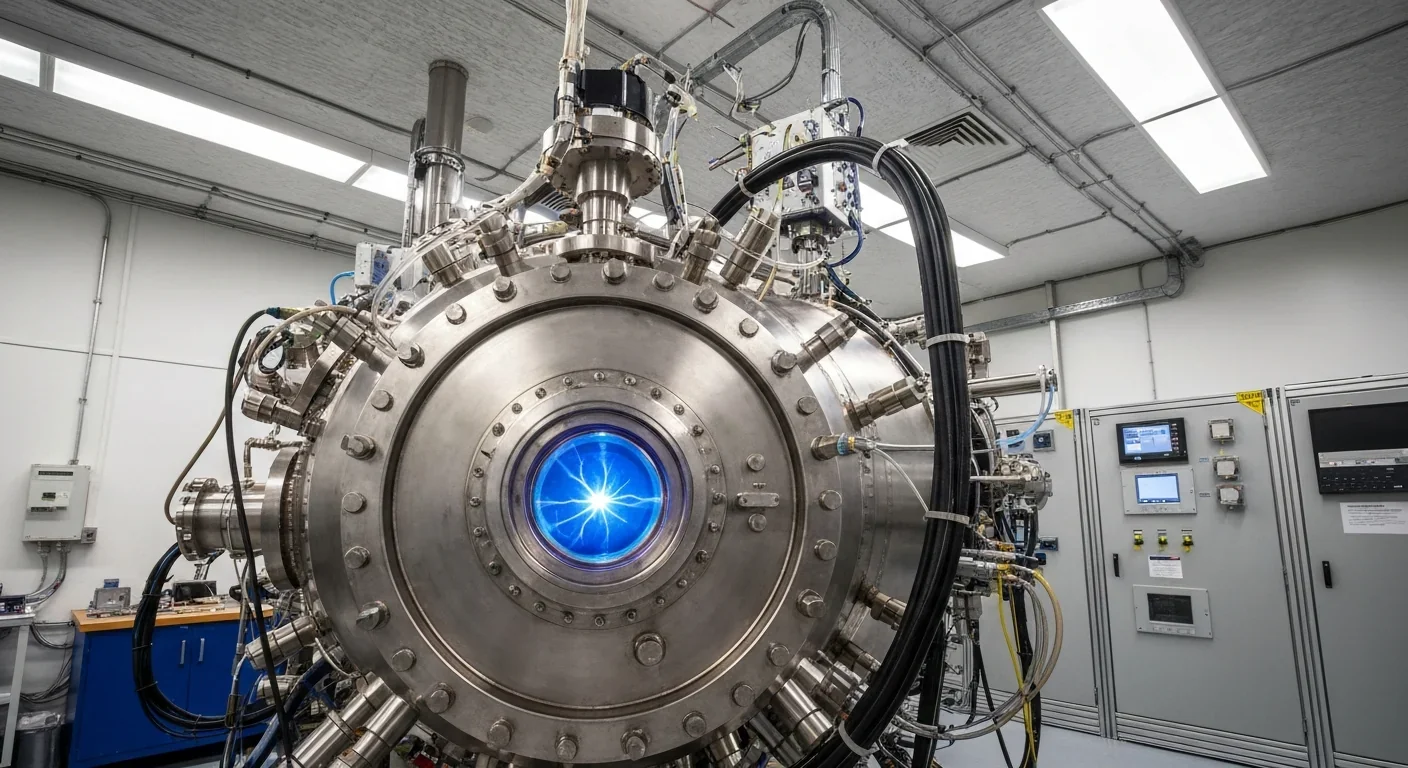
VASIMR Plasma Engine: Could It Transform Mars Travel?
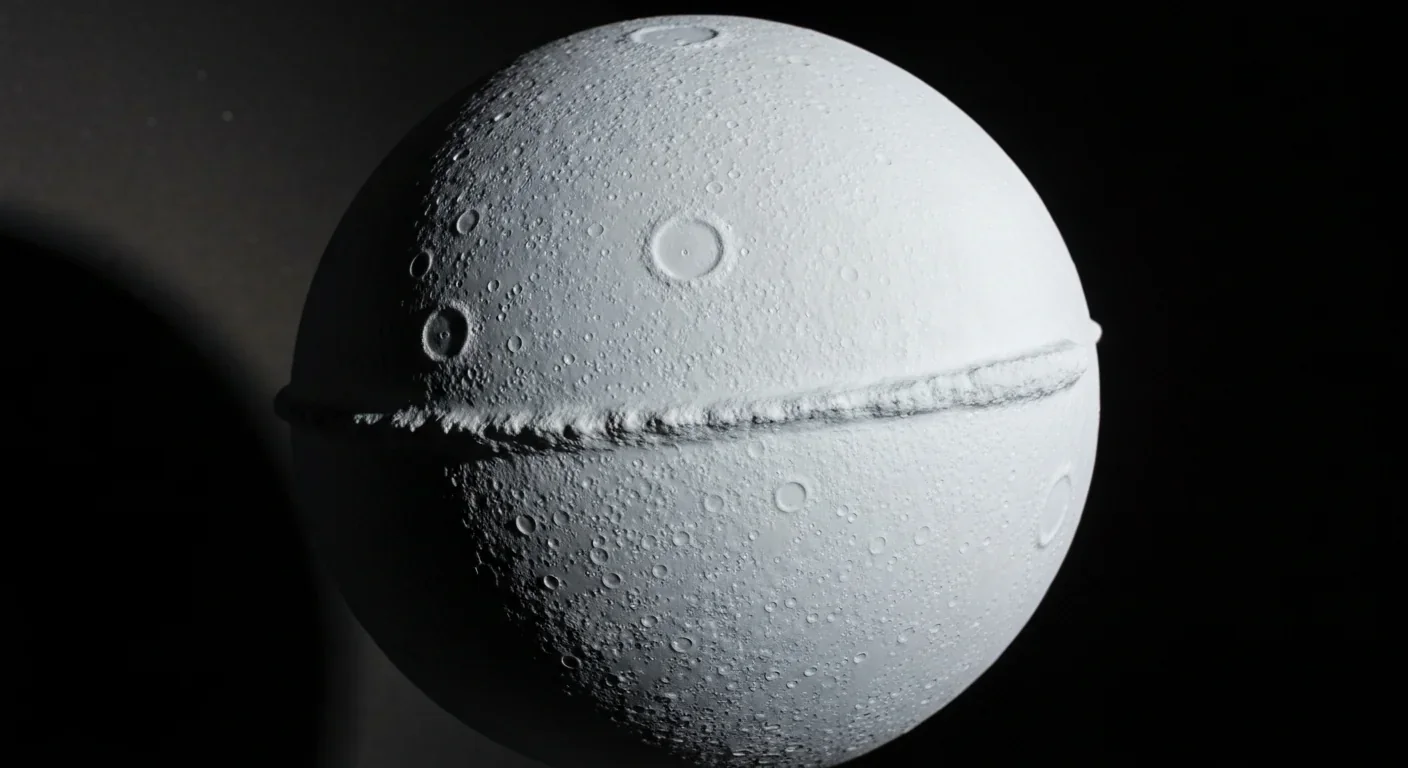
Iapetus Equatorial Ridge: The Solar System's Strangest Mountain
Titan's Hidden Ocean: Ammonia Keeps Water Liquid
How Solar Sails Tack on Sunlight Like Ocean Ships
TL;DR: Saturn's moon Mimas survived a colossal impact that carved the Herschel crater across one-third of its surface, giving it a Death Star appearance. Scientists discovered in 2024 that this battered moon hides a young subsurface ocean, challenging everything we thought we knew about where liquid water can exist.
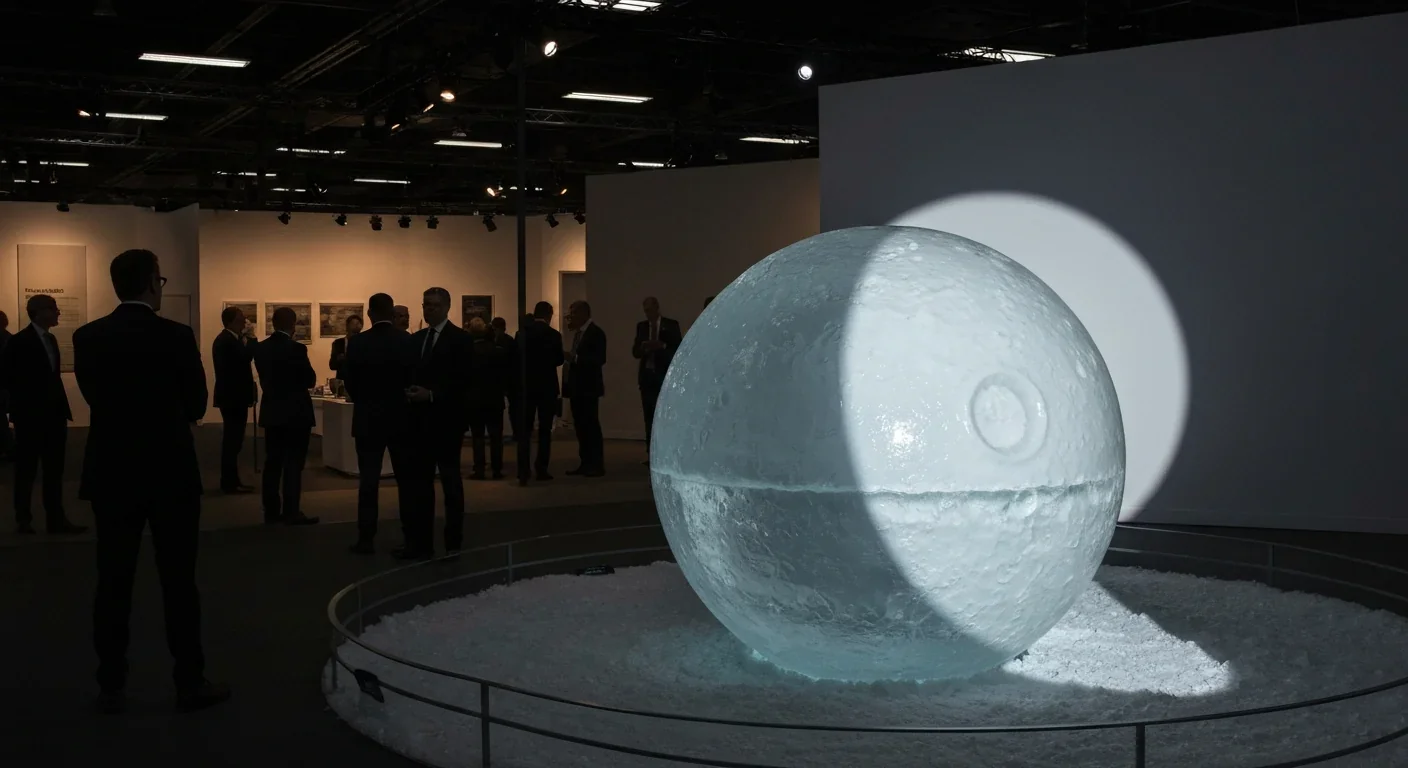
Imagine a rock the size of a small city slamming into a world so small you could drive across it in four hours. Now imagine that world surviving. That's exactly what happened to Mimas, Saturn's innermost major moon, and the scar it left behind is so massive, so perfectly circular, that when NASA's Voyager 1 finally photographed it in 1980, scientists did a double take. They were staring at what looked like the Death Star from Star Wars, a film released three years before anyone had seen this moon up close. The resemblance was pure coincidence, but the story behind that crater is anything but fiction.
The Herschel crater stretches 130 kilometers across Mimas's surface, a moon with a mean diameter of just 396 kilometers. To put that ratio in perspective, if you scaled Herschel up to Earth, the resulting crater would span more than 4,000 kilometers, wider than the entire continent of Australia. The crater's outer walls rise roughly 5 kilometers high, its floor plunges 10 kilometers deep, and a central peak juts 6 kilometers above the crater floor, taller than most mountains on our own planet.
These dimensions make Herschel one of the most proportionally extreme impact craters anywhere in the solar system. The Odysseus crater on Tethys, another of Saturn's moons, is larger in absolute terms but doesn't dominate its host body the way Herschel dominates Mimas. And the Stickney crater on Mars's moon Phobos comes close in proportional terms, but Phobos isn't rounded by its own gravity. Mimas is the smallest astronomical body known to have achieved that threshold, sitting right at the edge of hydrostatic equilibrium with its slightly egg-shaped dimensions of 416 by 393 by 381 kilometers.
The crater was named after the man who discovered the moon itself. English astronomer William Herschel spotted Mimas on September 17, 1789, using his enormous 40-foot reflecting telescope. For nearly two centuries after that, ground-based astronomers could see Mimas as nothing more than a dot. It took robotic explorers to reveal the drama written on its surface.
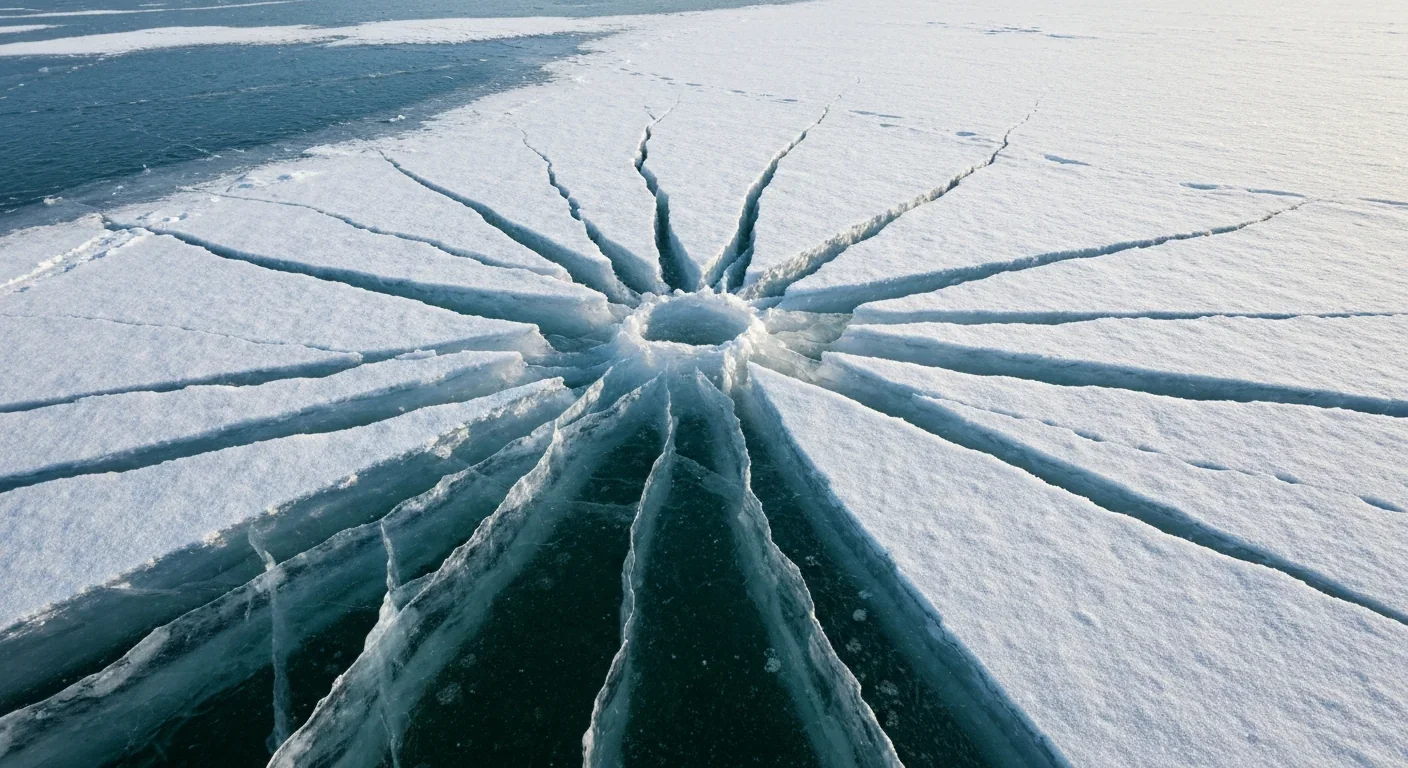
The physics here are extraordinary. When an object slammed into Mimas at hypervelocity speeds, it released enough energy to send shock waves propagating through the entire body of the moon. We know this because scientists have mapped fractures, called chasmata, on the surface directly opposite Herschel, on the far side of the globe. Those antipodal fractures are the geological fingerprint of seismic energy that traveled through Mimas's core and focused on the other side, like sound waves converging inside a bell.
NASA's own assessment is blunt: "The impact that blasted this crater out of Mimas probably came close to breaking the moon apart." That's not hyperbole. Planetary scientists have calculated that the impactor delivered energy perilously near the catastrophic disruption threshold, the point at which a collision doesn't just crater a body but shatters it into rubble. Had the impactor been slightly larger, or struck at a steeper angle, Mimas might have ended up as another ring of debris around Saturn.
If the Herschel crater were scaled to Earth, it would span more than 4,000 kilometers, wider than Australia. The impact that created it came perilously close to shattering Mimas into rubble.
What saved it? Part of the answer lies in what Mimas is made of. With a density of just 1.15 grams per cubic centimeter, this moon is composed almost entirely of water ice with only a small fraction of rock. Ice behaves differently from stone under extreme stress. At the pressures and temperatures inside a small icy body, the material can absorb and redistribute shock energy in ways that a rocky world cannot, fracturing and deforming plastically rather than shattering catastrophically.
The crater floor itself tells this story. Cassini spacecraft imaging revealed hummocky terrain where melted ice flowed back after the impact, bright crater walls contrasting with darker floors where ice evaporated and impurities slid downward, and a notably less cratered interior suggesting a temporary pool of liquid water existed briefly in the aftermath. The impact didn't just gouge a hole. It briefly melted part of the moon.
For most of human history, Mimas was invisible. Even after William Herschel's discovery, no telescope on Earth could resolve its surface. Pioneer 11 flew past Saturn in 1979 but passed Mimas at a distance of over 100,000 kilometers, too far for detailed imaging. Everything changed when Voyager 1 arrived in 1980, followed by Voyager 2 in 1981. Those spacecraft returned the first clear images of Herschel crater, and the resemblance to the Death Star became instantly iconic.
The timing creates a delicious irony. George Lucas released Star Wars in 1977. Three years later, a real moon turned up looking almost exactly like his fictional weapon. NASA has officially embraced the comparison, noting that Herschel "stretches a third of the way across the face of the moon, making it look like the Death Star." The resemblance is so striking that it has become Mimas's defining cultural identity, a gateway that draws casual audiences into the serious science underneath.
But the real revolution came with Cassini. When the spacecraft entered Saturn's orbit in 2004, it began a 13-year campaign of observation that transformed our understanding of the entire Saturn system. Cassini conducted a close flyby of Mimas at just 9,500 kilometers in February 2010, capturing high-resolution images that revealed geological details invisible to the Voyagers. It mapped the fracture patterns opposite Herschel, measured the moon's wobble as it orbited Saturn, and collected the gravitational data that would eventually upend everything we thought we knew about this small, battered world.
Here's where the story takes a genuinely surprising turn. For decades, planetary scientists treated Mimas as the solar system's most obvious example of a geologically dead world. Its surface is one of the most heavily cratered in the Saturn system, showing no signs of the geological resurfacing that would indicate internal heat. Compare that to Enceladus, Saturn's famous ocean moon, which shoots geysers of water vapor into space from cracks in its south polar ice. Mimas and Enceladus sit in neighboring orbits, but they couldn't look more different.
This contrast created what scientists called the Mimas Test: any theory claiming to explain why Enceladus has a subsurface ocean must also explain why Mimas doesn't. It was a benchmark, a logical constraint, a pillar of planetary science. And then, on February 7, 2024, researchers at the Paris Observatory knocked it down.
By analyzing years of Cassini data tracking Mimas's orbital motion, Valéry Lainey and colleagues discovered something unexpected. Mimas's orbit precesses, or rotates, slower than it should if the moon were solid ice all the way through. The only explanation consistent with the data: a subsurface ocean lurking beneath 20 to 30 kilometers of ice. The findings were published in Nature, one of the most prestigious scientific journals in the world.
"When we look at Mimas, we don't see any of the things that we're accustomed to seeing in an ocean world."
- Alyssa Rhoden, Planetary Scientist, Southwest Research Institute
Enceladus and Europa, the usual suspects for subsurface oceans, are covered with cracks and crevasses that betray volume changes as ice melts and refreezes. Mimas has none of that. Its craters look ancient and immutable.
So how can a moon with such a pristine, dead-looking surface hide an ocean? The answer is timing. The ocean is incredibly young, perhaps less than 25 million years old, possibly as young as 2 to 3 million years. In a solar system that's 4.5 billion years old, that's the geological equivalent of yesterday afternoon. The ocean simply hasn't existed long enough to leave marks on the surface.
The connection between the giant crater and the hidden ocean turns out to be surprisingly direct. Planetary scientist Adeene Denton at the Southwest Research Institute ran computer simulations of how the Herschel crater would have formed under different internal conditions. Her team modeled scenarios ranging from a completely solid, frozen Mimas to one with a fully liquid interior.
The results were revealing. A collision into completely solid, cold ice would have produced a flat-floored crater with no central peak. A collision into a moon already harboring a liquid ocean couldn't have formed the towering central peak either, because "water can't make a structure like that." Only one scenario reproduced what we actually see: ice that was warm, on the verge of melting, but not yet liquid. "Mimas needs to be right on the tipping point," Denton explained. "It can stay on that tipping point for millions of years, but it needs to be close."
The Herschel crater acts as a frozen thermometer, recording the exact thermal state of Mimas's interior at the moment of impact. The crater that nearly destroyed the moon has become the primary scientific tool for understanding what lies beneath its surface.
This means the Herschel crater is more than a spectacular scar. It's a frozen thermometer, recording the exact thermal state of Mimas's interior at the moment of impact. The crater that nearly destroyed the moon has become the primary scientific tool for understanding what lies beneath its surface. Denton's work, published in Earth and Planetary Science Letters, expanded the possible formation window for Herschel from just one million years to ten million years, making the timeline fit with models of when tidal heating began.
The mechanism powering Mimas's ocean is elegantly simple. At some point in the geologically recent past, something perturbed Mimas's orbit, kicking it from a roughly circular path into a more eccentric, elliptical one. From this new orbit, Saturn's gravity flexes the moon unevenly as it swings closer and farther from the planet during each 22-hour orbital period. That flexing generates heat, and that heat melts ice into liquid water.
Rhoden's team modeled the orbital eccentricity change and determined it likely occurred within the last 10 to 15 million years. They also discovered an important constraint: if the orbital shift had been too dramatic, it would have generated enough heat to melt the entire surface, wiping out every crater. The fact that Mimas's surface craters remain intact sets an upper limit on how much tidal heating occurred.
But here's the catch. Saturn's gravity is simultaneously working to circularize Mimas's orbit again. When the orbit becomes circular, tidal flexing stops, heat generation ceases, and the ocean will slowly refreeze. Mimas's ocean is temporary, a fleeting episode in the moon's history. We may be catching it in a window that opened just millions of years ago and will close again in the geological near future.
"All of these things are now building a coherent narrative about Mimas as a young ocean world."
- Adeene Denton, Planetary Scientist, Southwest Research Institute
The implications reach far beyond Saturn. Before the Mimas discovery, scientists had a reasonably clear checklist for identifying ocean worlds in the outer solar system: look for cracked surfaces, geysers, geological youth, signs of internal heat reaching the surface. Europa has those signs. Enceladus has them in abundance. Mimas has none of them, and it has an ocean anyway.
This forces a rethinking. If a moon can harbor a subsurface ocean while looking completely dead on the surface, how many other worlds have we dismissed too quickly? The Mimas Test assumed a frozen interior and used it as a benchmark. Now that the assumption is wrong, the test itself needs revision. Quiet surfaces may not mean dead interiors. The universe of potential ocean worlds just got larger.
The South Pole region of Mimas offers an intriguing hint. NASA has noted that craters there are generally smaller than 20 kilometers in diameter, suggesting more recent resurfacing compared to the rest of the moon. This pattern mirrors what scientists see on Enceladus's active south pole, raising the possibility that Mimas's ocean may already be subtly influencing its surface even without dramatic geysers.
Could a future mission confirm the ocean? Rhoden thinks so, though she acknowledges the challenge. Her team's heat flow modeling suggests an orbiter could potentially detect the ocean by measuring thermal signatures through the ice. "It would be hard, but may be doable," she said. The non-uniform thickness of the ice shell creates both difficulties and opportunities, since thinner patches would be easier to probe.
There's a fitting poetic layer to all of this. In Greek mythology, Mimas was a giant who was struck down by Mars in the war between the Titans and the Olympian gods. Even after death, the myth says, his serpentine legs continued to seek vengeance. John Herschel, William's son, chose the name deliberately when he named Saturn's moons after Titans and their kin.
The parallel writes itself. A moon named after a giant who refused to stay dead took a hit that should have shattered it, survived, and has been hiding a secret ocean inside its battered shell ever since. The very crater that nearly destroyed Mimas is now the instrument scientists use to understand what's happening deep below its frozen surface. The weapon of near-destruction became the key to discovery.
We're used to thinking of the solar system's most exciting destinations as the big, flashy ones. Jupiter's Europa with its cracked ice rafts. Saturn's Enceladus with its spectacular geysers. But Mimas teaches a different lesson: sometimes the most interesting worlds are the ones that don't look interesting at all. Beneath the ancient, battered, crater-scarred surface of Saturn's smallest major moon, an ocean is quietly forming, the youngest known body of liquid water in the outer solar system, and we almost missed it entirely.
The next time you see an image of Mimas and think "Death Star," remember: the real story is better than science fiction. A moon that survived its own near-destruction is alive inside, and we caught it at exactly the right moment to notice.
Project Orion was a real 1960s program to reach other stars by detonating 800 nuclear bombs behind a spacecraft. The physics worked and the engineering was feasible, but the 1963 nuclear test ban treaty killed it. It remains the most credible interstellar spacecraft ever designed.

The locus coeruleus, a tiny brainstem structure, degenerates decades before Alzheimer's symptoms appear. Its loss cripples the brain's inflammation control, waste clearance, and sleep regulation. New imaging tools and noradrenergic therapies offer hope for early detection and prevention.

Research shows the sharing economy often increases total resource consumption through the Jevons paradox and rebound effects. Ride-sharing adds billions of vehicle miles, co-working spaces use more energy per worker, and diffused responsibility erodes conservation behavior. Breaking the paradox requires congestion pricing, accountability design, and matching sharing models to appropriate resource types.

Psychological reactance theory explains why banning or restricting things makes people want them more. From Prohibition to the Streisand effect to scarcity marketing, research shows that threatening people's freedom reliably backfires, and autonomy-supportive communication is far more effective.
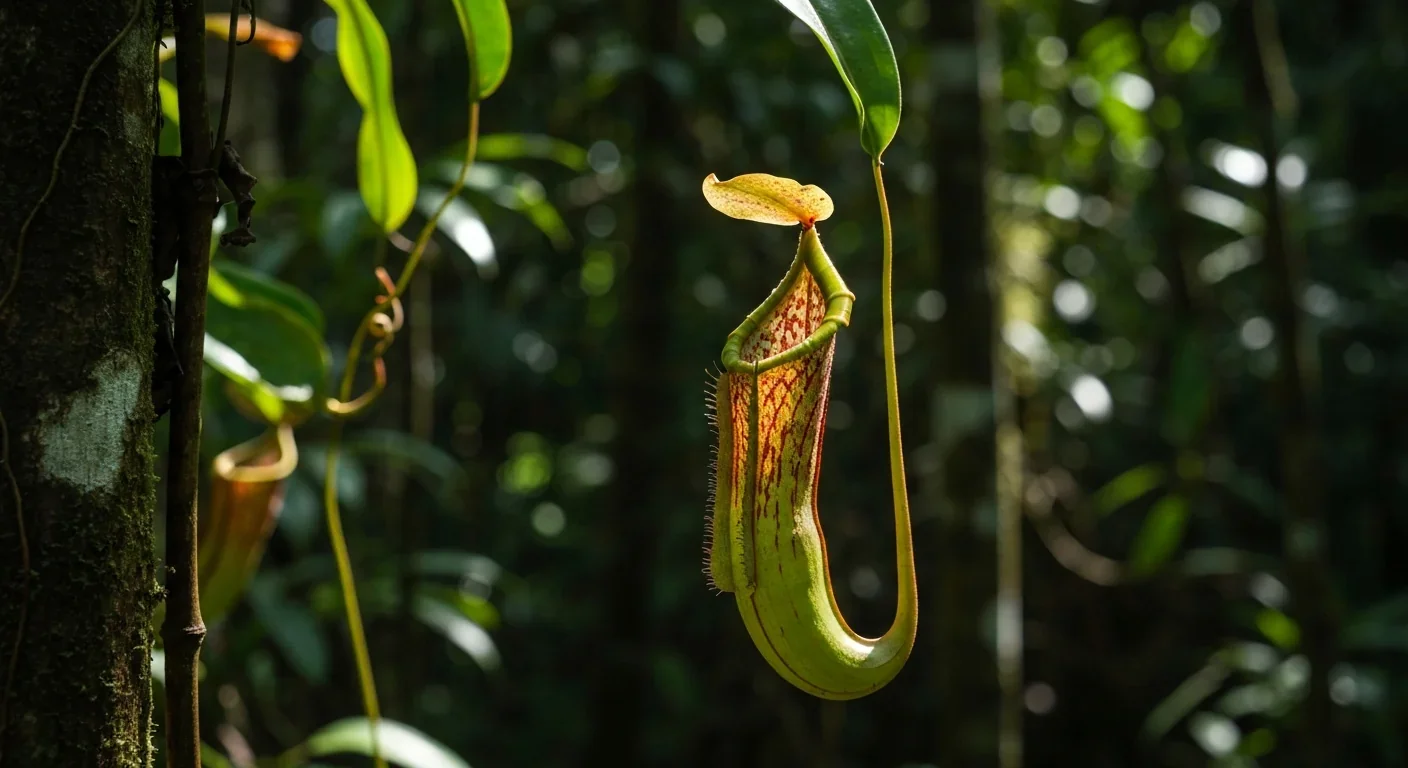
A carnivorous pitcher plant in Borneo evolved to house bats instead of trapping insects, gaining up to 95% of its nitrogen from bat guano. The plant even built an ultrasonic reflector to help bats find it, revealing that carnivory in plants is a flexible spectrum.

The quantified self movement began as a hacker-ethos pursuit of personal insight, but corporate wearables now funnel biometric data to employers, insurers, and data brokers. With 81% of Americans wrongly believing health apps are HIPAA-protected, a regulatory void enables health data to be sold for pennies while generating anxiety instead of empowerment.

CXL memory pooling lets servers dynamically share DRAM over a cache-coherent interconnect, eliminating the 40% stranded memory waste in data centers. With commercial hardware now shipping and Azure deploying CXL cloud instances, this technology promises to cut memory costs by 50% while enabling composable infrastructure.

Loading featured articles...