Project Orion: Nuclear Bomb Starship That Almost Was
Project Orion: Nuclear Bomb Starship That Almost Was
Europa Clipper Radiation Vault: Surviving Jupiter
VASIMR Plasma Engine: Could It Transform Mars Travel?
Iapetus Equatorial Ridge: The Solar System's Strangest Mountain

Titan's Hidden Ocean: Ammonia Keeps Water Liquid
Mimas: How Saturn's Death Star Moon Hides an Ocean
TL;DR: Hall effect thrusters have become the dominant propulsion technology in space, powering Starlink and NASA's Psyche. Magnetic shielding breakthroughs promise 50,000-hour lifetimes, enabling decade-long deep space missions for the next generation of exploration.
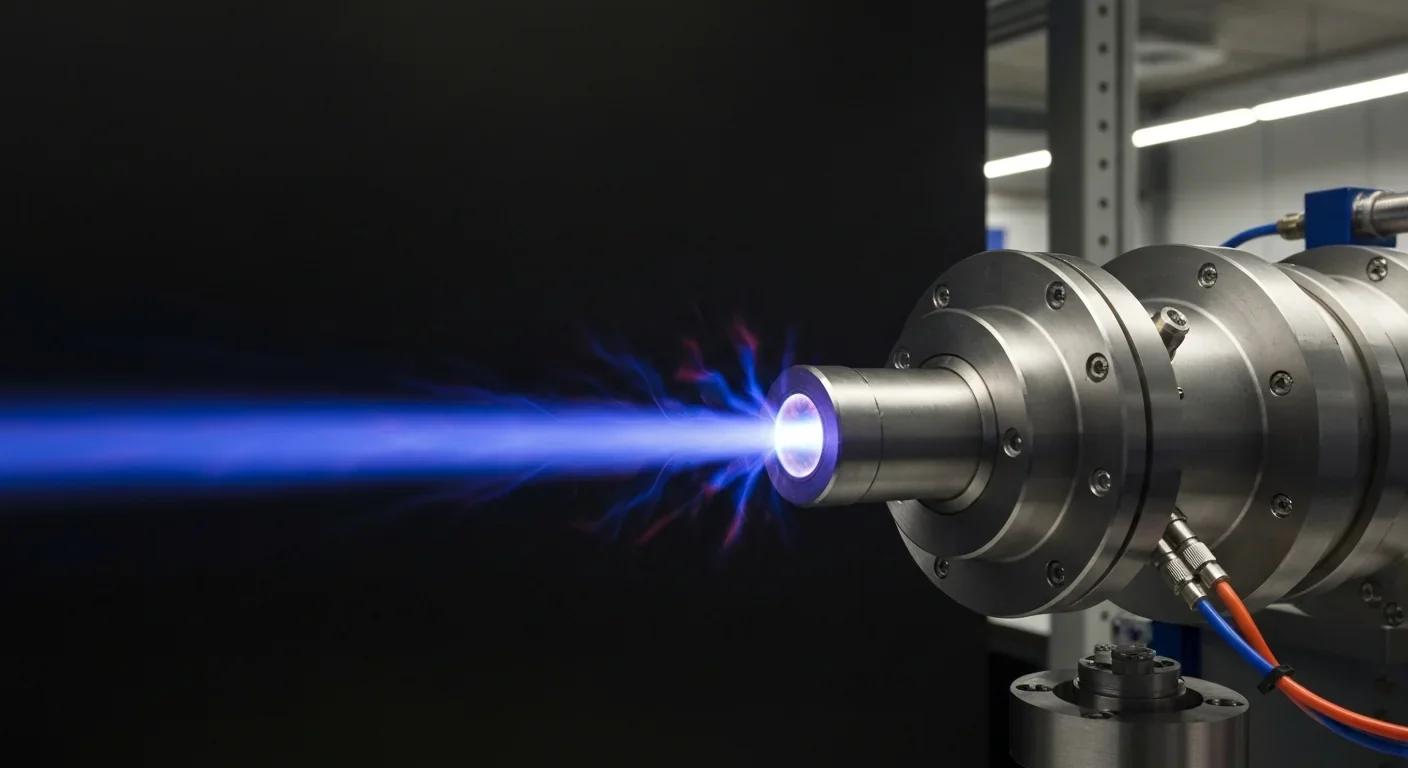
A quiet revolution in spaceflight has been running for decades, and most people have missed it entirely. Right now, more than 6,000 Starlink satellites are maneuvering through low Earth orbit using engines that trace their origins to Cold War-era Soviet laboratories. NASA's Psyche spacecraft is burning through interplanetary space toward a metallic asteroid using the same fundamental physics. And when NASA's Lunar Gateway finally takes its place in lunar orbit, it will be held there by a new generation of the same technology. Hall effect thrusters have quietly become the dominant propulsion technology in space, and a breakthrough in magnetic shielding is about to transform them from satellite workhorses into the primary engines for humanity's deepest adventures.
Understanding a Hall effect thruster doesn't require an advanced physics background, but it helps to appreciate just how clever the design is.
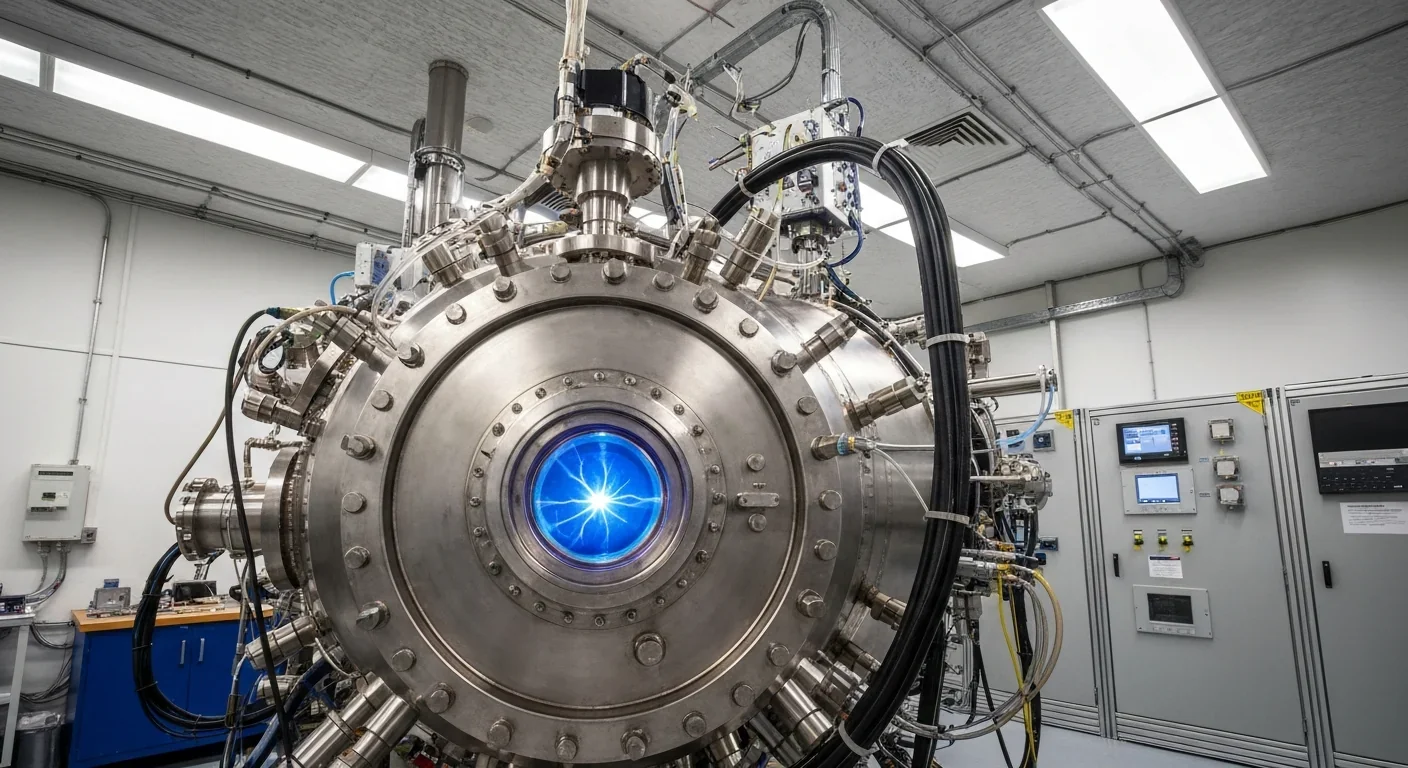
Imagine a small cylindrical channel, roughly the size of a coffee mug. A gas - typically xenon, krypton, or argon - flows into it. At one end, an electric field pulls electrons from a cathode. These electrons start moving toward the anode, but before they get there, a radial magnetic field perpendicular to their path stops them cold. The electrons get trapped, spiraling in circles in what's called the Hall current - the phenomenon that gives these thrusters their name.
Those trapped electrons then collide with propellant gas atoms, ripping off electrons to create ions. Unlike the electrons, those ions aren't trapped by the magnetic field - they're too massive - so the electric field accelerates them out the back of the thruster at extraordinary velocities. Standard Hall thrusters achieve exhaust speeds of 15 to 30 kilometers per second, with advanced high-voltage designs pushing toward 40 km/s. That's exhaust traveling at up to 108,000 kilometers per hour.
The result is what engineers call specific impulse - a measure of how much thrust you get per kilogram of propellant. Chemical rockets top out around 450 seconds of specific impulse. Hall thrusters routinely achieve 1,500 to 2,500 seconds, with the most advanced designs targeting 4,000 seconds. That gap represents a fundamental difference in mission economics: a Hall thruster delivers the same velocity change using a fraction of the propellant a chemical rocket would burn through.
Just as the printing press democratized information by making reproduction cheap, electric propulsion is democratizing deep space by making propellant cheap. But the technology's origins weren't about democratization - they were about military advantage.
Soviet engineers began developing Hall thrusters in the 1960s, initially as classified technology for spacecraft maneuvering. The first Hall thruster flew aboard a Soviet Meteor satellite in 1971, beginning a decades-long operational history that Western engineers initially knew almost nothing about. Soviet satellites used Hall thrusters from 1972 through the late 1990s, accumulating thousands of hours of operational data behind the Iron Curtain.
When the Cold War ended, the knowledge transfer proved to be one of the more consequential technology exchanges in aerospace history. Western engineers discovered that the Soviets had been quietly solving engineering problems that American researchers were only beginning to tackle. The first Hall thruster to fly on a Western satellite was actually a Russian D-55 unit built by TsNIIMASH, flown on the NRO's STEX spacecraft in 1998 - demonstrating the technology's readiness even before domestic Western designs had matured.
For the next two decades, Hall thrusters settled into a specific niche: satellite station-keeping. Every geostationary communications satellite needs periodic corrections to hold its orbital slot, and chemical rockets are heavy and expensive for this task. Hall thrusters offered a more efficient answer. By the early 2010s, they were standard equipment on commercial satellites.
The real transformation came when SpaceX began launching Starlink at scale. Not because the fundamental technology changed dramatically, but because the scale changed completely.
Before Starlink, Hall thrusters were precision instruments - expensive, carefully designed, flown in small numbers on high-value spacecraft. Then SpaceX began launching hundreds of Starlink satellites per mission, and everything changed.
Each Starlink satellite carries Hall effect thrusters for orbit raising, station-keeping, and de-orbiting at end of life. With thousands of satellites in the constellation, SpaceX needed Hall thrusters that were cheap, reliable, and manufacturable at industrial scale - and they achieved it largely by rethinking the propellant.
Traditional Hall thrusters used xenon, a noble gas that works extremely well but costs around $3,000 per kilogram. SpaceX first switched to krypton at roughly $300/kg, then made the more radical jump to argon, which costs approximately $3 per kilogram. The company's Starlink V2 Mini satellites use 4.2-kilowatt argon Hall thrusters, each weighing just 2.1 kilograms, with propellant costs of about $10 per satellite.
That's not a marginal cost reduction. That's an orders-of-magnitude economic transformation, achieved by solving engineering challenges that had previously made argon impractical. Argon has a higher ionization energy than xenon - 15.8 electron volts versus 12.1 eV - making it harder to efficiently ionize. SpaceX became the first company to fly argon-fueled Hall thrusters in space, and no competitor had managed this before them.
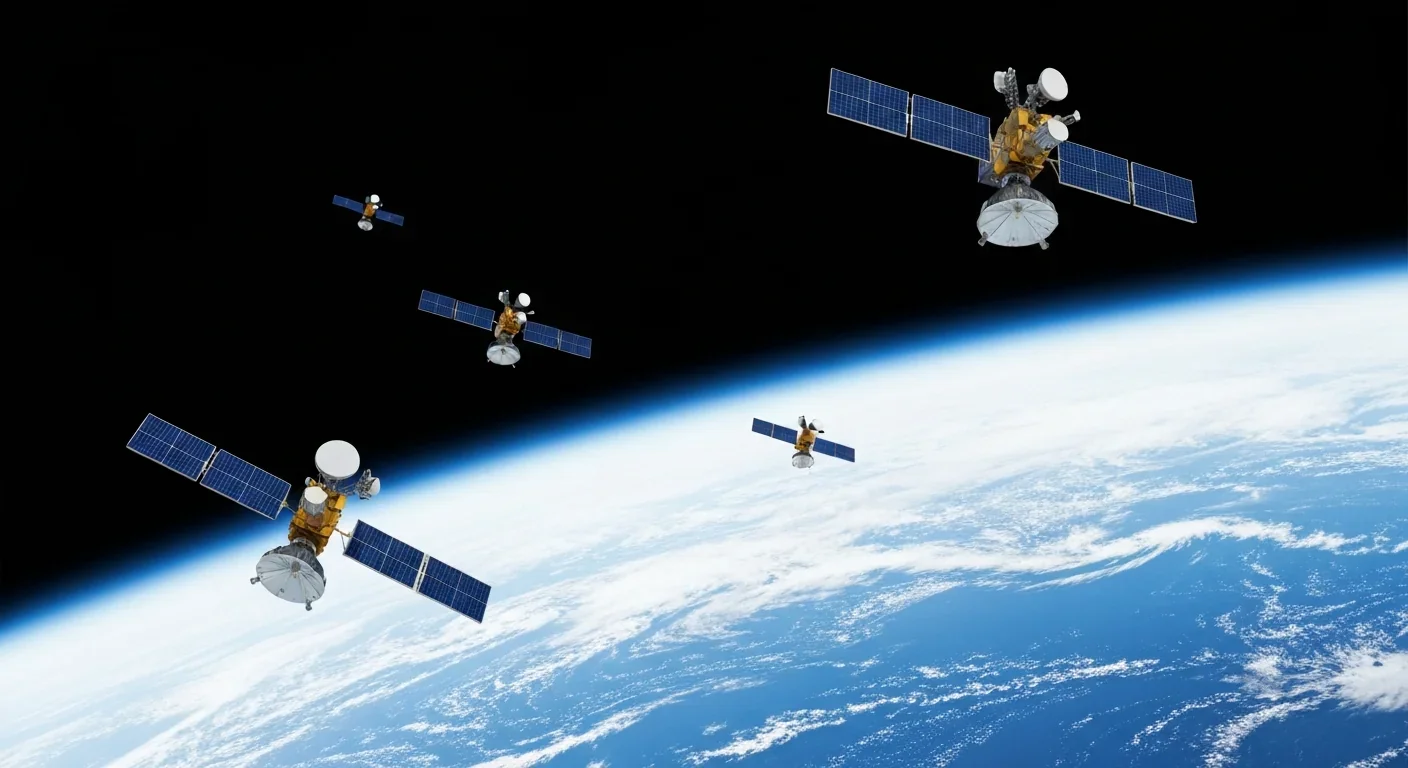
OneWeb has deployed over 100 Busek BHT-350 Hall thrusters across its broadband satellite constellation. Across the industry, Hall thrusters have ceased to be exotic technology. They're now factory-floor equipment manufactured in the thousands.
The shift from xenon to argon propellant reduced per-satellite fuel costs from thousands of dollars to roughly ten dollars - making Hall thruster technology viable for mega-constellations of thousands of spacecraft.
The most significant technical advance in Hall thruster development over the past decade isn't headline-grabbing. It's an elegant solution to a mundane problem: the walls wearing out.
The discharge channel of a Hall thruster takes a beating. Energetic plasma ions slam into the ceramic channel walls, gradually eroding the material through a process called sputtering. This has been the primary lifetime limiter since the technology's invention. A conventional Hall thruster can operate for around 10,000 hours before erosion becomes critical - impressive for most satellite missions, but nowhere near enough for decade-long deep space journeys.
Magnetic shielding changes this fundamentally. By carefully shaping the magnetic field so that it curves away from the channel walls near the exit, engineers prevent plasma ions from reaching the walls with enough energy to cause damage. The plasma follows the field lines away from the walls rather than into them - a counterintuitive but powerful fix.
Research on magnetically shielded designs demonstrated that these thrusters reduce discharge channel wall erosion by at least 10 times, and potentially over 100 times compared to unshielded designs. That's the difference between a thruster lasting one year and one operating for potentially decades of continuous use in deep space.
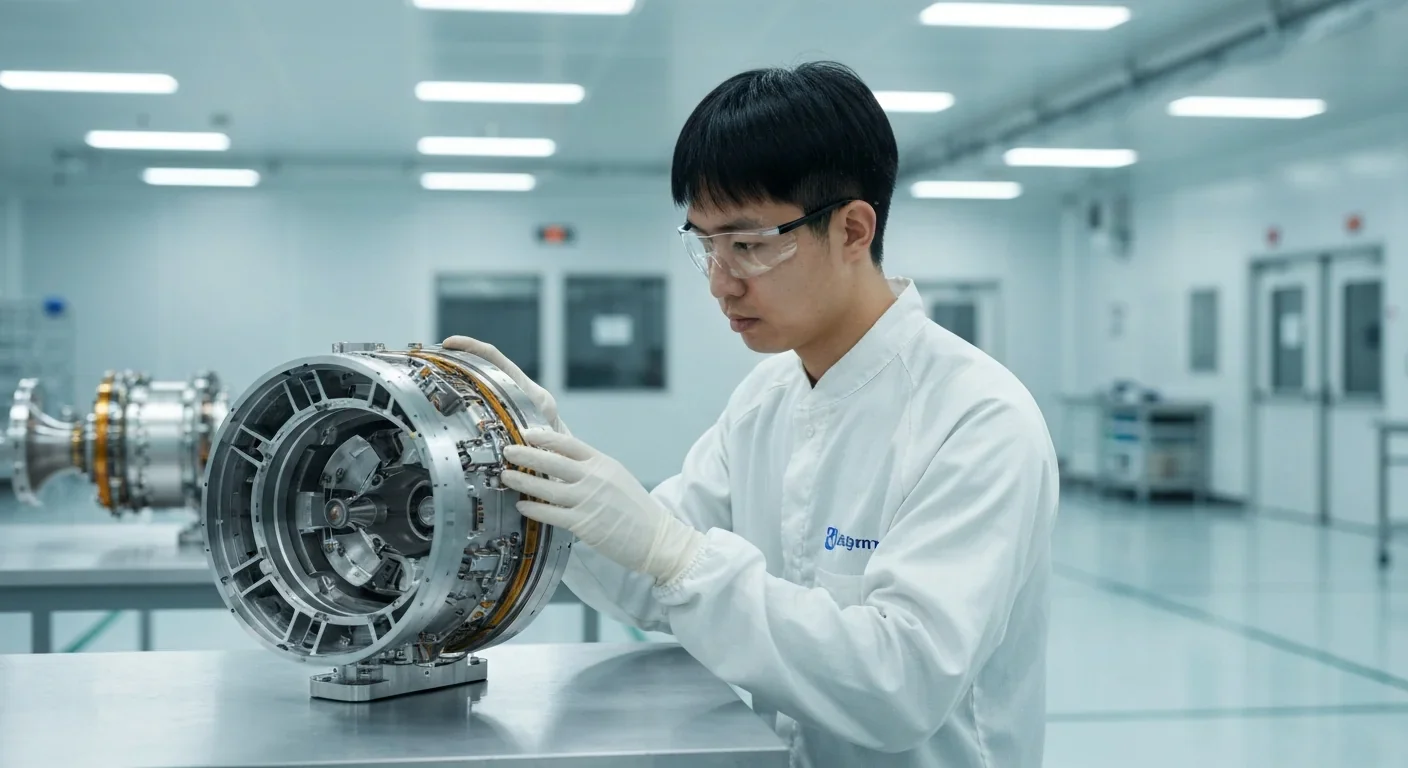
NASA's Advanced Electric Propulsion System program has taken this directly from the laboratory to flight hardware. The AEPS thruster - formally called the Hall Effect Rocket with Magnetic Shielding, or HERMeS - is designed with a half-life target of 23,000 hours and a full operational life target of 50,000 hours.
Three 12.5-kilowatt AEPS flight units were delivered to NASA by L3Harris Technologies in 2025, destined for the Lunar Gateway's Power and Propulsion Element. At 12.5 kW each, they are more than twice as powerful as any Hall thruster previously flown in space.
"Electric thrusters offer significantly higher fuel efficiency over conventional chemical propulsion systems, making them ideal for Gateway and other long-duration missions."
- Kristin Houston, President of Space Propulsion and Power Systems, L3Harris Technologies
The 50,000-hour target deserves honest context. It's a design goal, not yet a demonstrated result - the AEPS program has accumulated around 5,000 testing hours so far. But the underlying physics of magnetic shielding strongly support the projection, and even half that figure would represent a generational leap in what electric propulsion can accomplish for deep space missions.
The performance numbers for Hall thrusters can feel abstract, so it's worth grounding them in mission reality.
A chemical rocket engine burns propellant in a controlled explosion, producing hot gas that expands through a nozzle. The thermodynamics of combustion limit exhaust velocity to roughly 4-5 km/s regardless of nozzle design. This ceiling determines everything: how much propellant you need, how heavy your spacecraft must be, how far you can realistically travel on a given fuel load.
Hall thrusters bypass this ceiling entirely because they're not using combustion - they're using electric fields to accelerate ions. High-voltage designs are pushing exhaust velocities toward 40 km/s, with specific impulse approaching 4,000 seconds. JPL's H10 thruster has demonstrated 76% efficiency at 10 kilowatts, a new benchmark for converting electrical power to kinetic energy in space.
The trade-off is thrust. A 12.5-kilowatt Hall thruster produces around 600 millinewtons of force - roughly the weight of a tennis ball. Chemical rockets produce millions of newtons. You can't use a Hall thruster to launch from a planetary surface. What you can do is push a spacecraft continuously for months or years, accumulating velocity in a way no chemical rocket can match.
A Hall thruster producing tennis-ball-level thrust can, if given enough time, propel a spacecraft faster than any chemical rocket could - because it never stops pushing.
NASA's Psyche mission proved this for interplanetary travel. JPL operators fired the Psyche spacecraft's Hall Effect thrusters in November 2023, marking the first time Hall thrusters had been used for interplanetary propulsion. The SPT-140 thrusters aboard Psyche had logged over 10,371 hours in ground testing. The journey to the metallic asteroid 16 Psyche would have required far more propellant with chemical propulsion; with Hall thrusters, the mass budget becomes tractable.
The Lunar Gateway's Power and Propulsion Element will combine four 6-kilowatt BHT-6000 Busek Hall thrusters with three 12-kilowatt AEPS units, for a total electric propulsion output approaching 50 kilowatts. This configuration gives the station the ability to perform significant orbital maneuvers and long-duration station-keeping entirely without chemical propulsion - a first for a crewed orbital facility.
The real vision extends far beyond the Moon. The AEPS program was explicitly designed to demonstrate technology that, when paired with nuclear power sources rather than solar arrays, could enable entirely new mission classes. L3Harris has highlighted a robotic grand tour of Jupiter and its moons, and large cargo transport to Mars, as near-term applications for this propulsion architecture.
Nuclear electric propulsion changes the calculation dramatically. Solar power falls off as you move away from the Sun - at Jupiter's distance, you're working with about 4% of the solar flux available at Earth. Nuclear reactors don't have this problem. A high-power reactor paired with AEPS-class Hall thrusters could, in principle, move cargo to Mars far faster than conventional chemical missions, with dramatically reduced propellant mass.
Asteroid mining represents another frontier where Hall thrusters provide compelling advantages. A mining spacecraft could match orbits with a near-Earth asteroid, operate in proximity for months while extracting material, and return payload to cislunar space - all without the propellant mass penalty that would make the same mission prohibitive with chemical propulsion.
The geopolitics of Hall thruster development mirrors broader competition for space leadership. American researchers are decisively ahead in magnetic shielding, with JPL and NASA Glenn Research Center leading global development. European companies like Safran and Sitael operate mature Hall thruster product lines. Russian technology - once the foundation of the entire field - has been largely cut off from Western collaboration since 2022, a significant self-imposed setback for a nation that pioneered the technology.
China has been aggressively developing domestic Hall thruster capability for its satellite constellation programs and has demonstrated designs in power ranges that would theoretically support crewed mission scenarios. The race to develop high-power, long-life electric propulsion is now explicitly part of the broader geopolitical competition for space leadership.
"NASA will be able to pair the AEPS thrusters with nuclear power sources to help enable new classes of exploration missions, such as a robotic grand tour of Jupiter and its moons or transporting large cargo vessels to Mars."
- Kristin Houston, L3Harris Technologies
What makes this moment genuinely different is the convergence of three separate breakthroughs arriving simultaneously. Magnetic shielding is extending operational lifetimes by orders of magnitude. Industrial-scale manufacturing driven by commercial satellite constellations is making the technology cheaper and more reliable. And nuclear power is emerging as a partner technology that removes the solar distance constraint entirely. Hall thrusters spent half a century getting to this inflection point. The next decade could see them serving as the primary propulsion for humanity's first genuine steps into the outer solar system.
The quiet revolution is about to get much louder.
Project Orion was a real 1960s program to reach other stars by detonating 800 nuclear bombs behind a spacecraft. The physics worked and the engineering was feasible, but the 1963 nuclear test ban treaty killed it. It remains the most credible interstellar spacecraft ever designed.

The locus coeruleus, a tiny brainstem structure, degenerates decades before Alzheimer's symptoms appear. Its loss cripples the brain's inflammation control, waste clearance, and sleep regulation. New imaging tools and noradrenergic therapies offer hope for early detection and prevention.
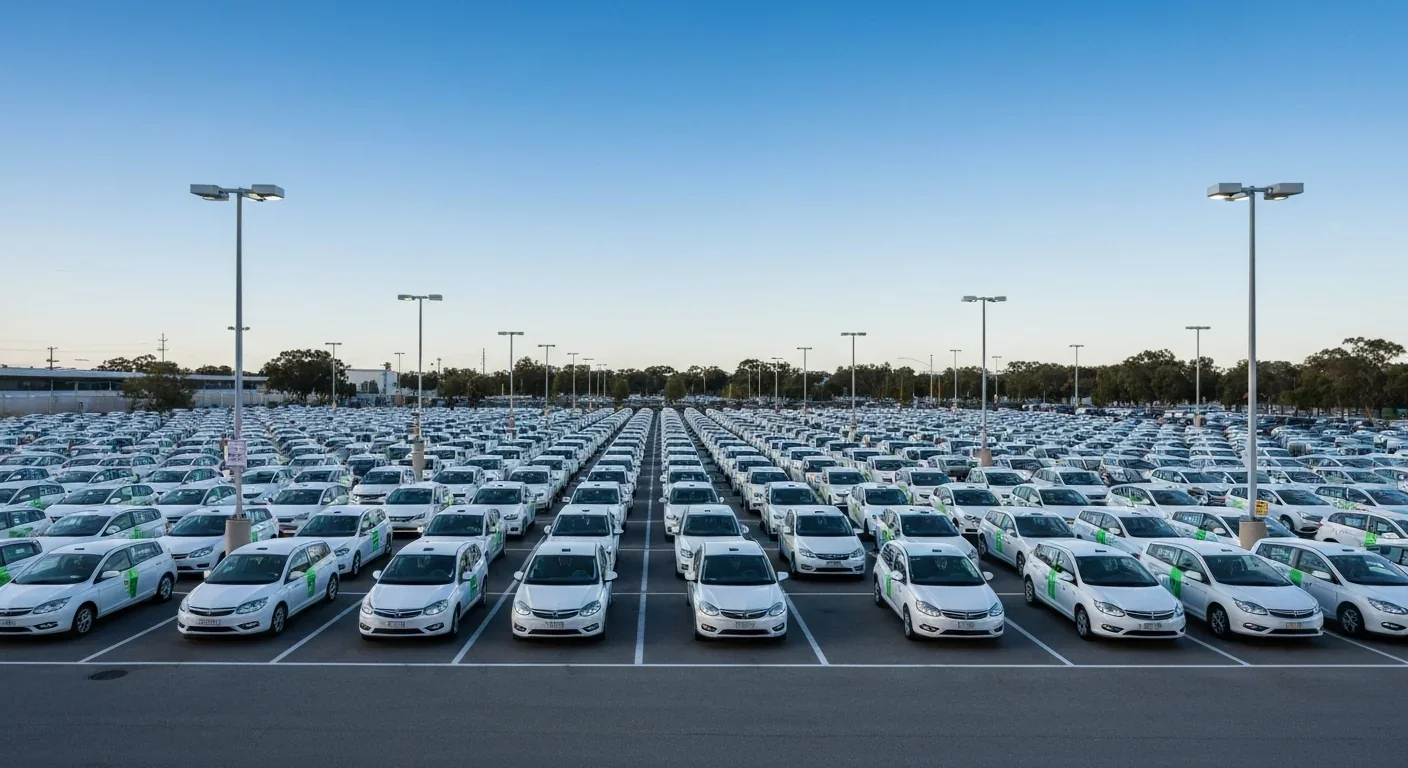
Research shows the sharing economy often increases total resource consumption through the Jevons paradox and rebound effects. Ride-sharing adds billions of vehicle miles, co-working spaces use more energy per worker, and diffused responsibility erodes conservation behavior. Breaking the paradox requires congestion pricing, accountability design, and matching sharing models to appropriate resource types.

Psychological reactance theory explains why banning or restricting things makes people want them more. From Prohibition to the Streisand effect to scarcity marketing, research shows that threatening people's freedom reliably backfires, and autonomy-supportive communication is far more effective.

A carnivorous pitcher plant in Borneo evolved to house bats instead of trapping insects, gaining up to 95% of its nitrogen from bat guano. The plant even built an ultrasonic reflector to help bats find it, revealing that carnivory in plants is a flexible spectrum.

The quantified self movement began as a hacker-ethos pursuit of personal insight, but corporate wearables now funnel biometric data to employers, insurers, and data brokers. With 81% of Americans wrongly believing health apps are HIPAA-protected, a regulatory void enables health data to be sold for pennies while generating anxiety instead of empowerment.
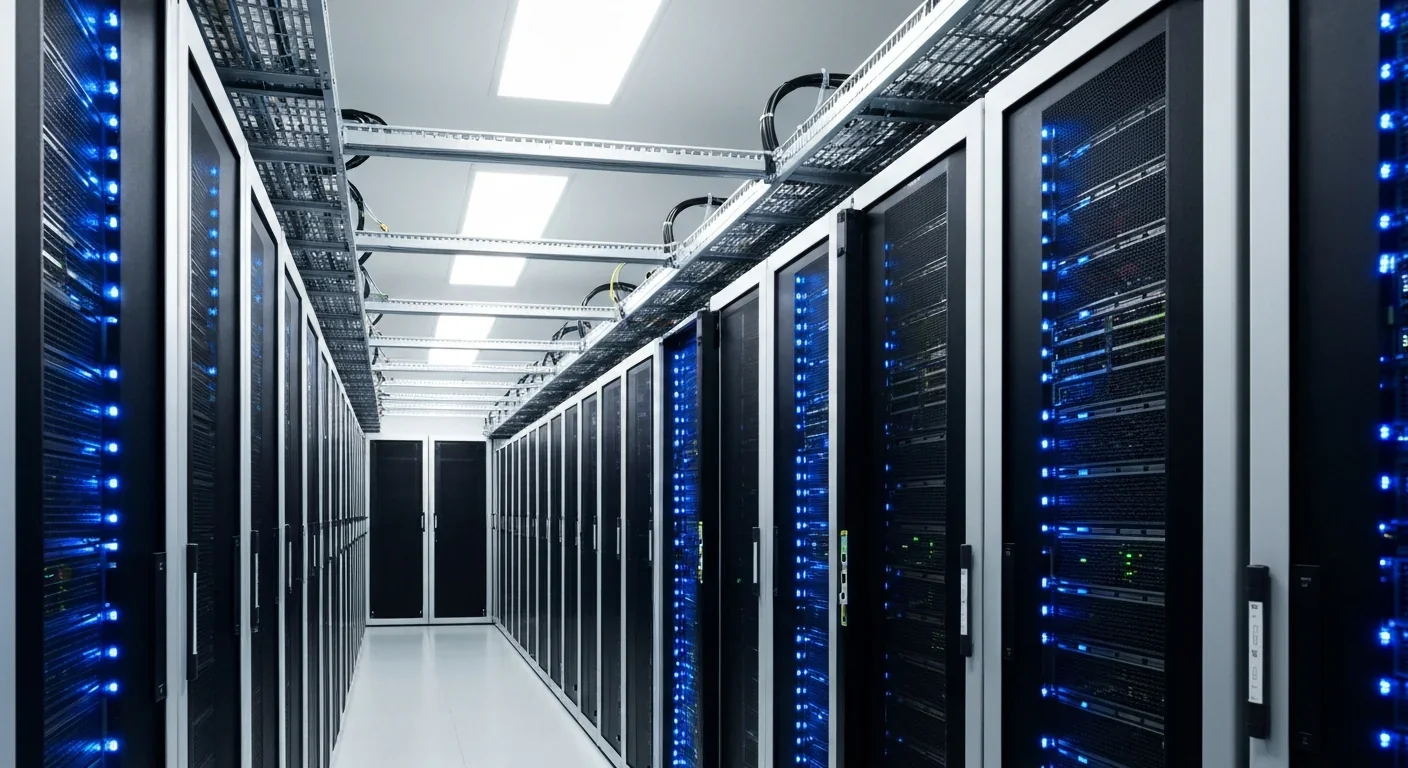
CXL memory pooling lets servers dynamically share DRAM over a cache-coherent interconnect, eliminating the 40% stranded memory waste in data centers. With commercial hardware now shipping and Azure deploying CXL cloud instances, this technology promises to cut memory costs by 50% while enabling composable infrastructure.

Loading featured articles...