Project Orion: Nuclear Bomb Starship That Almost Was
Project Orion: Nuclear Bomb Starship That Almost Was
Europa Clipper Radiation Vault: Surviving Jupiter
VASIMR Plasma Engine: Could It Transform Mars Travel?
Iapetus Equatorial Ridge: The Solar System's Strangest Mountain

Titan's Hidden Ocean: Ammonia Keeps Water Liquid
Mimas: How Saturn's Death Star Moon Hides an Ocean
TL;DR: Mercury's mysterious hollows are bright, shallow depressions actively forming today as volatile minerals evaporate from the planet's surface under extreme solar heating. The 2025 Emran study and upcoming BepiColombo mission are revealing what these features tell us about Mercury's surprisingly volatile-rich composition.
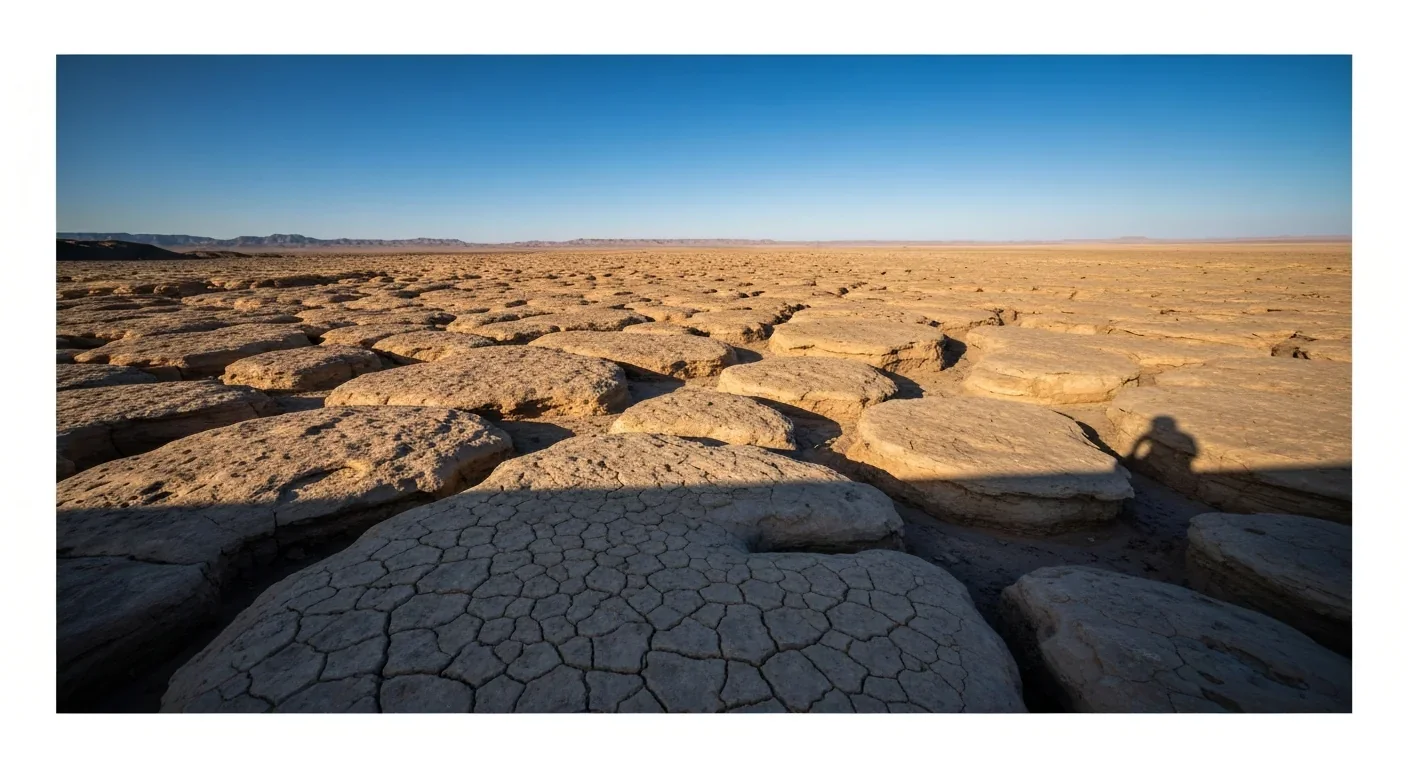
Something is eating Mercury's surface right now. Not an asteroid impact, not tectonic forces, but something far stranger: the planet's own rocks are evaporating into space. The bright, shallow pits called "hollows" that NASA's MESSENGER spacecraft first spotted in 2011 have become one of planetary science's most compelling puzzles, and with ESA/JAXA's BepiColombo mission approaching orbital insertion in 2026, scientists are closer than ever to cracking the case. What they find could reshape how we understand the formation of every rocky world in our solar system.
When MESSENGER entered orbit around Mercury in March 2011, scientists expected to map a dead world. Mercury, after all, sits closest to the Sun, bakes at dayside temperatures approaching 700 Kelvin, and had always been assumed to be a geologically inert ball of iron and rock. The spacecraft was supposed to confirm what decades of theory had predicted: a cratered, battered surface with no active processes worth mentioning.
Instead, the imaging team found something that made them do a double-take. Scattered across crater floors, central peaks, and walls were thousands of bright, irregularly shaped depressions that looked nothing like impact craters. They had sharp, crisp rims with no superimposed craters. Their interiors glowed unusually bright. And halos of high-albedo material surrounded them like strange planetary bruises. The team called them "hollows," and they were some of the youngest features ever identified on Mercury's ancient surface.
"They look like where something has evaporated. They look like Swiss cheese, like that terrain at the south pole of Mars where the CO2 cap is evaporating."
- Emily Lakdawalla, planetary science communicator
Emily Lakdawalla described the initial reaction vividly, comparing the hollows to Swiss cheese terrain on Mars. But unlike Mars, Mercury has no carbon dioxide ice, no water ice on its sunlit surface, no atmosphere to speak of. Whatever was creating these features had to be solid rock vaporizing under the Sun's relentless bombardment.
To understand why hollows matter so much, you need to appreciate just how wrong our assumptions about Mercury turned out to be. For most of the space age, the innermost planet was treated as an afterthought. It was too close to the Sun for easy observation, too small to hold an atmosphere, and seemingly too hot to retain any of the volatile compounds that make geology interesting on other worlds.
The thinking went something like this: when the solar system formed roughly 4.6 billion years ago, the intense heat near the young Sun should have boiled away any lightweight, easily vaporized elements from the materials that built Mercury. Sulfur, sodium, chlorine, potassium: these should all have been stripped from the protoplanetary disk in Mercury's neighborhood. What remained should be dense, refractory rock and metal, nothing more. Mercury's enormous iron core, occupying roughly 60% of the planet's volume, seemed to confirm this picture of a world built almost entirely from the heavy stuff.
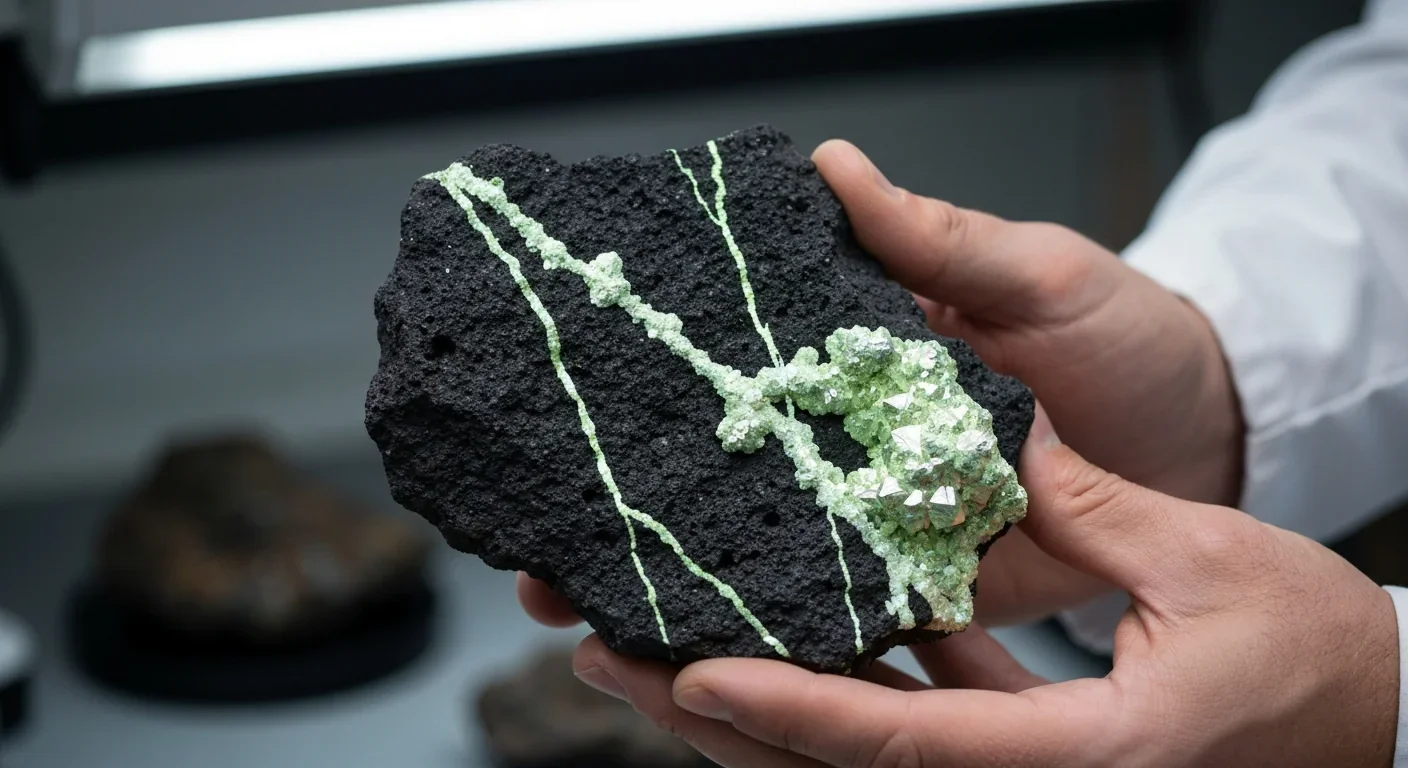
But MESSENGER's instruments told a different story. The spacecraft's X-ray Spectrometer detected sulfur concentrations on Mercury's surface reaching 4% by weight, roughly 100 times higher than Earth's crust. Sodium, potassium, and chlorine all showed up in unexpectedly high abundances. The planet's exosphere, a tenuous envelope of atoms barely clinging to the surface, contained hydrogen, helium, oxygen, sodium, calcium, magnesium, and even water vapor.
Mercury's sulfur concentrations reach 4% by weight on its surface, roughly 100 times higher than Earth's crust. The planet scientists assumed was volatile-depleted turned out to be volatile-rich.
Mercury wasn't volatile-depleted at all. It was volatile-rich, hiding a chemical inventory that nobody had predicted. And the hollows were the most dramatic visible evidence of that hidden wealth.
The leading explanation for hollows is straightforward in concept but fascinating in its details. When an asteroid impact punches through Mercury's crust, it exposes buried layers that contain volatile-rich minerals, compounds that are stable underground but become unstable when subjected to the brutal conditions on Mercury's sunlit surface. Once exposed, these minerals begin to break down through sublimation or thermal decomposition, converting directly from solid to gas and escaping into space.
As PSI Senior Scientist Deborah Domingue put it: "These features would not form without the presence of volatiles." The process hollows out the surface rock, leaving behind the bright, shallow depressions that MESSENGER photographed.
Research from the Planetary Science Institute has revealed that Mercury even has something resembling salt glaciers, formed from deeply buried volatile-rich layers that asteroid impacts have uncovered. As researcher Alexis Rodriguez explained, these "Mercurian glaciers originate from deeply buried Volatile Rich Layers exposed by asteroid impacts," and the glaciers themselves are "marked by a complex configuration of hollows that form widespread (and very young) sublimation pits."
The fact that hollows appear specifically on Sun-facing slopes is powerful evidence for solar-driven sublimation. Researcher Valentin Bickel's analysis of MESSENGER data found that bright streaks called slope lineae stream from hollows on the sunward sides of crater walls. As Bickel noted, "The fact that lineae are on slopes that are facing the Sun implies that insolation might play a role in activating the process." His team identified 402 individual lineae from more than 112,000 MESSENGER images using machine learning, finding patterns invisible to human eyes.
So what exactly is evaporating? This is where the science gets really interesting, and where significant debate remains.
A 2025 study by Emran and colleagues analyzed hollows inside Dominici crater using spectral modeling, and found that the active hollow predominantly comprises silicates like augite and albite, with trace amounts of graphite and calcium sulfide (CaS). The volatile culprits appear to be sulfide minerals, primarily magnesium sulfide (MgS) mixed with CaS, that decompose under Mercury's extreme heat.
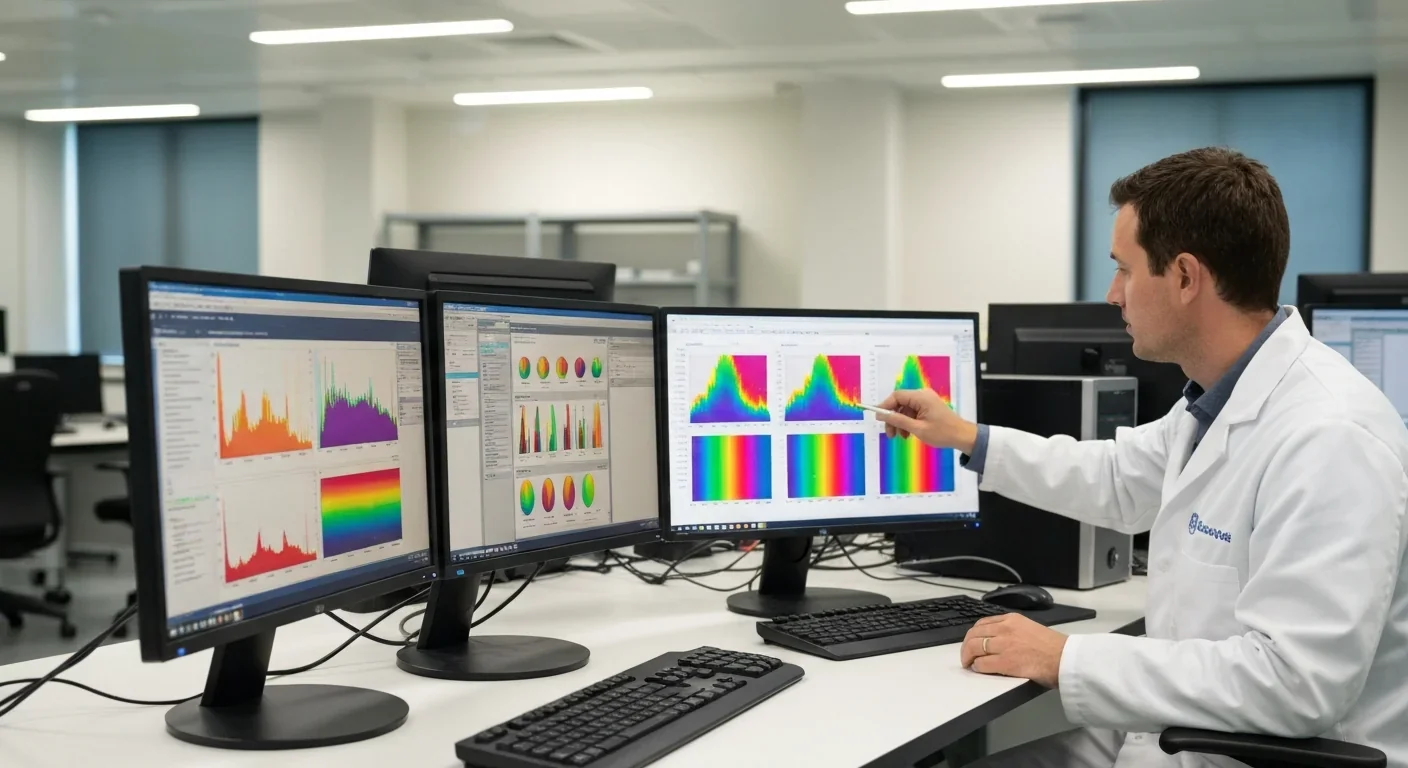
What makes Dominici crater especially revealing is that it contains hollows at different stages of their lifecycle. Active hollows on the crater's rim and walls show about 70% silicate content in their spectra, while waning hollows near the center have dropped to around 50%. This spectral shift tells scientists that as volatile minerals break down and escape, what's left behind is an increasingly silicate-rich residue that eventually becomes too depleted to support further collapse.
"The active hollow predominantly comprises silicates (augite and albite), with a trace amount of graphite and CaS."
- Emran et al. (2025), arXiv:2503.19116
The volatile candidates extend beyond sulfides. Chlorides, sodium compounds, and possibly water-bearing minerals all remain on the table. And research on protoplanetary disk chemistry suggests that the stability of sulfide phases like CaS and MgS depends heavily on conditions in the original disk where Mercury formed, including pressure, metallicity, and the carbon-to-oxygen ratio. Mercury's volatile inventory may be a direct fingerprint of the conditions in the inner solar nebula 4.6 billion years ago.
Perhaps the most striking thing about hollows is that they aren't ancient relics. Multiple lines of evidence suggest they're actively forming on Mercury's surface today.
The hollows show crisply defined edges with no superimposed craters, which on a body like Mercury, constantly pelted by micrometeorites, means they must be geologically very young. They are some of the youngest features on Mercury. Their bright halos suggest ongoing material exposure and volatile loss. And their widespread distribution across craters like Raditladi, Tyagaraja, Hopper, and Sander indicates that volatile-bearing material is far more globally distributed beneath Mercury's surface than anyone suspected.
Mercury is one of only a handful of bodies in the solar system where scientists can observe active geological surface modification happening in something close to real time, not through tectonics or volcanism, but through the slow evaporation of rock into space.
This makes Mercury one of only a handful of bodies in the solar system where we can observe active geological surface modification happening in something close to real time. It's not plate tectonics. It's not volcanism. It's something entirely different: a planet slowly losing its chemical building blocks to the vacuum of space, one sublimating molecule at a time.
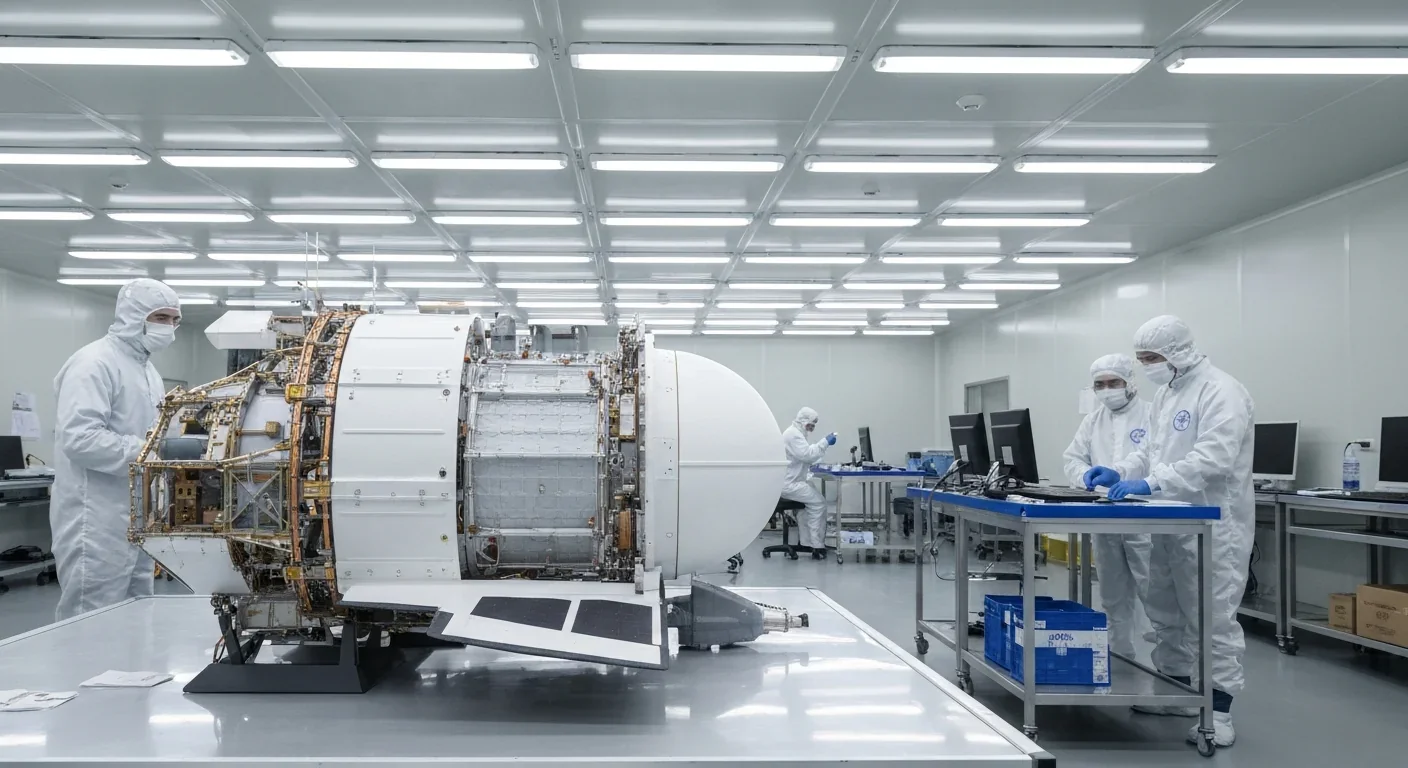
Everything we know about hollows comes from MESSENGER's data, which collected over 291,000 images during its 2011-2015 mission. But MESSENGER's instruments had limitations. Now, with BepiColombo approaching orbital insertion in 2026, planetary scientists are anticipating a leap in understanding.
The mission's Mercury Planetary Orbiter carries 11 instruments, including the SIMBIO-SYS camera suite for higher-resolution imaging and the MIXS X-ray spectrometer for precise elemental mapping. Where MESSENGER could detect hollows, BepiColombo should be able to map their mineralogy in detail.
As Susan Conway of CNRS noted, BepiColombo will also "image the whole surface at a resolution that would enable us to see most slope lineae" and may capture repeat snapshots that reveal whether the streaks have changed since MESSENGER last observed them. If scientists can document changes in hollow morphology over the decade between missions, it would provide direct measurement of active volatile loss rates.
While researchers in Japan and Europe collaborate through BepiColombo, American scientists continue mining MESSENGER's vast archive with modern data science approaches. As Valentin Bickel observed, "We have these modern data science approaches now, machine learning, deep learning, that help us look into all those old data sets and find completely new science discoveries."
Mercury's hollows aren't just a curiosity for planetary scientists. They carry implications that ripple outward to some of the biggest questions in solar system science.
If Mercury retained significant volatile compounds despite forming in the hottest part of the solar nebula, then our models of how planets acquire and lose volatile elements need serious revision. The protoplanetary disk conditions that allowed sulfides and other volatiles to survive near the Sun may have been very different from what standard models assume. Understanding Mercury's volatile budget could change how we think about water and organic delivery to Earth and other inner planets.
For now, every orbit BepiColombo completes around Mercury brings us closer to answering the question that has puzzled scientists since 2011: how does the most scorched planet in our solar system still manage to have rocks that evaporate before our eyes? The answer, whatever it turns out to be, will tell us something fundamental about the chemistry of planet building, and about how much we still don't know about the worlds closest to home.
Project Orion was a real 1960s program to reach other stars by detonating 800 nuclear bombs behind a spacecraft. The physics worked and the engineering was feasible, but the 1963 nuclear test ban treaty killed it. It remains the most credible interstellar spacecraft ever designed.
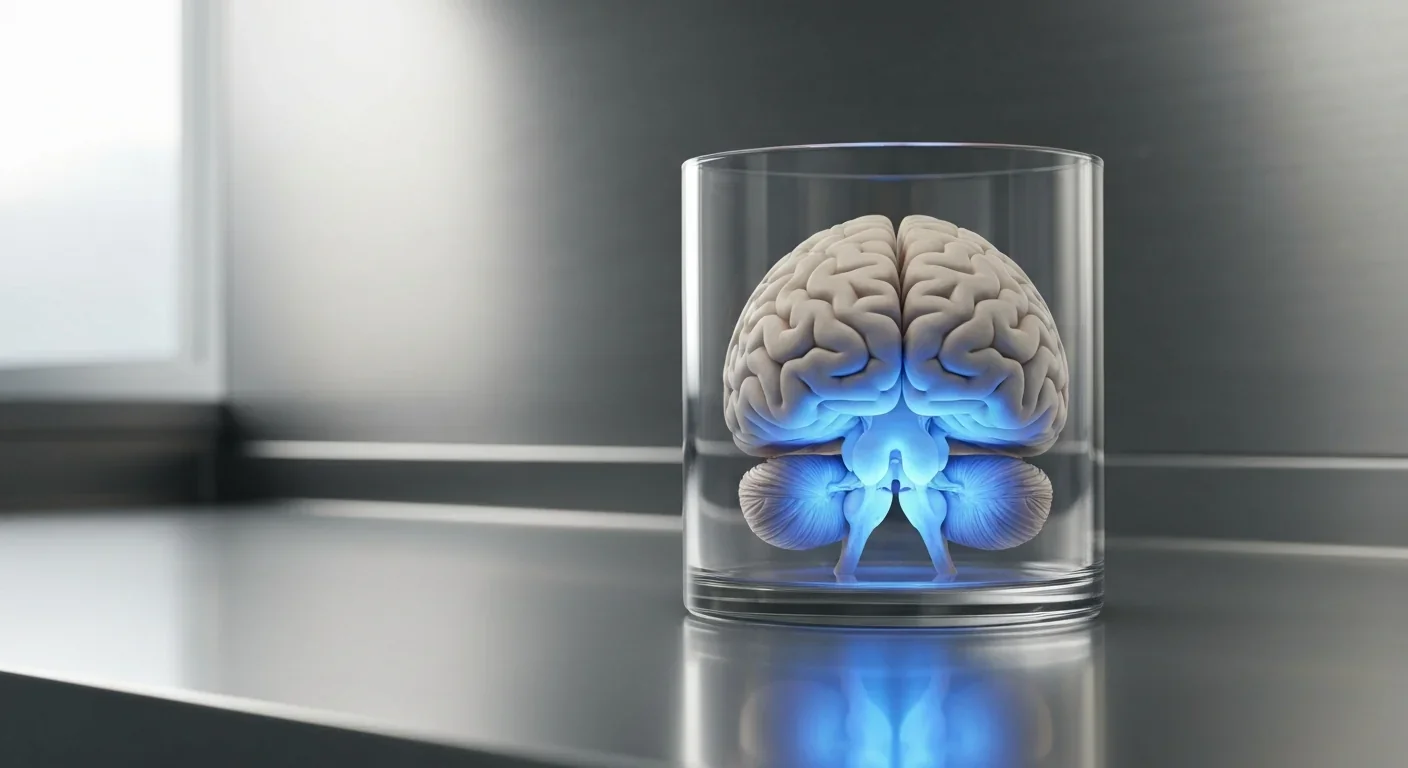
The locus coeruleus, a tiny brainstem structure, degenerates decades before Alzheimer's symptoms appear. Its loss cripples the brain's inflammation control, waste clearance, and sleep regulation. New imaging tools and noradrenergic therapies offer hope for early detection and prevention.

Research shows the sharing economy often increases total resource consumption through the Jevons paradox and rebound effects. Ride-sharing adds billions of vehicle miles, co-working spaces use more energy per worker, and diffused responsibility erodes conservation behavior. Breaking the paradox requires congestion pricing, accountability design, and matching sharing models to appropriate resource types.

Psychological reactance theory explains why banning or restricting things makes people want them more. From Prohibition to the Streisand effect to scarcity marketing, research shows that threatening people's freedom reliably backfires, and autonomy-supportive communication is far more effective.

A carnivorous pitcher plant in Borneo evolved to house bats instead of trapping insects, gaining up to 95% of its nitrogen from bat guano. The plant even built an ultrasonic reflector to help bats find it, revealing that carnivory in plants is a flexible spectrum.

The quantified self movement began as a hacker-ethos pursuit of personal insight, but corporate wearables now funnel biometric data to employers, insurers, and data brokers. With 81% of Americans wrongly believing health apps are HIPAA-protected, a regulatory void enables health data to be sold for pennies while generating anxiety instead of empowerment.

CXL memory pooling lets servers dynamically share DRAM over a cache-coherent interconnect, eliminating the 40% stranded memory waste in data centers. With commercial hardware now shipping and Azure deploying CXL cloud instances, this technology promises to cut memory costs by 50% while enabling composable infrastructure.

Loading featured articles...