Project Orion: Nuclear Bomb Starship That Almost Was
Project Orion: Nuclear Bomb Starship That Almost Was
Europa Clipper Radiation Vault: Surviving Jupiter
VASIMR Plasma Engine: Could It Transform Mars Travel?
Iapetus Equatorial Ridge: The Solar System's Strangest Mountain
Titan's Hidden Ocean: Ammonia Keeps Water Liquid
Mimas: How Saturn's Death Star Moon Hides an Ocean
TL;DR: Olympus Mons, the solar system's tallest volcano at 22 km high, is slowly collapsing on its northwest side due to a lubricating clay layer beneath its base. Scientists have mapped massive landslide deposits stretching 750 km, and evidence suggests the volcano may still be geologically active.
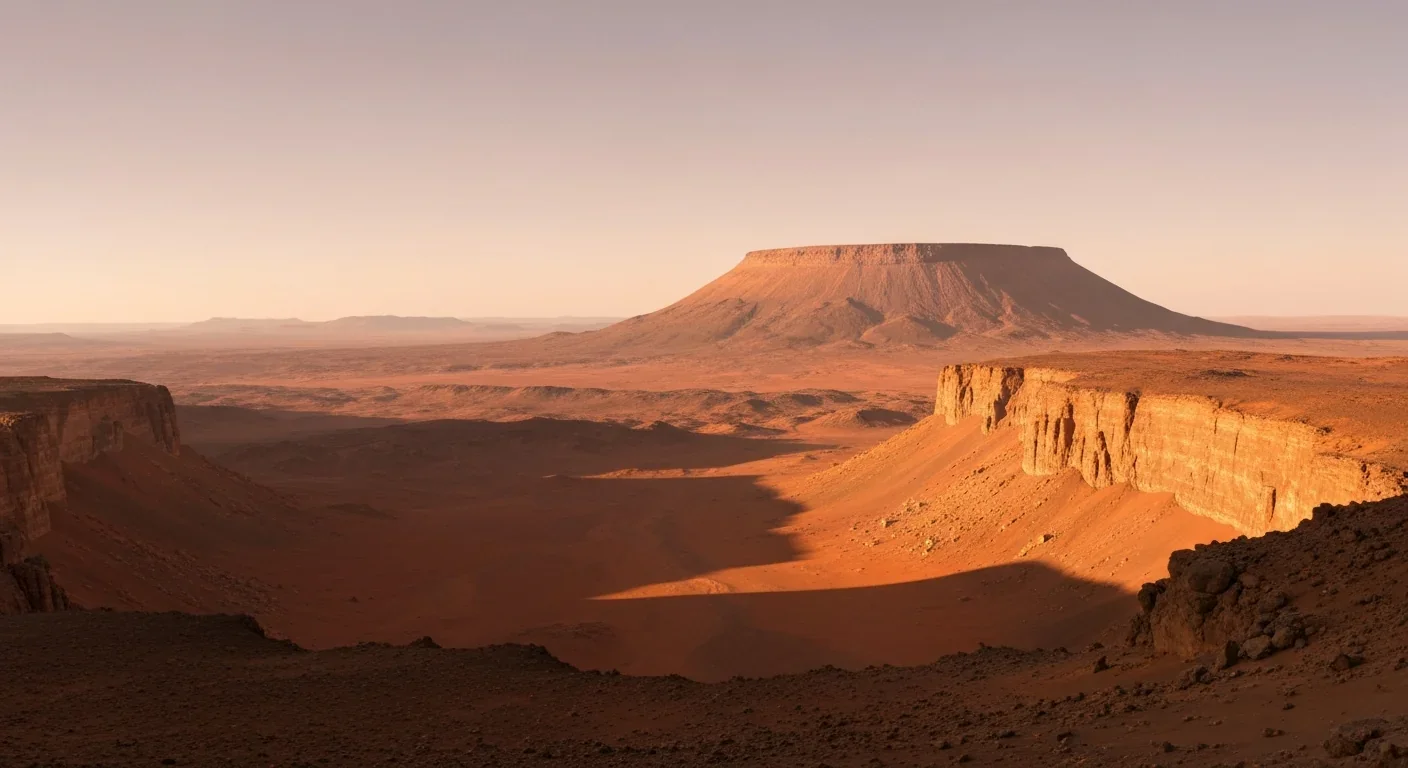
Imagine standing on a cliff taller than the cruising altitude of a commercial jet, looking out over a debris field that stretches farther than the distance from London to Paris. That cliff is real. It wraps around the base of Olympus Mons, the tallest volcano in the solar system, and the debris field tells a story of catastrophic collapse that scientists are still piecing together. This isn't ancient history in the way we usually think about geology. Some of the evidence suggests the mountain may not be done falling apart.
Olympus Mons rises roughly 22 kilometers above the Martian surface, with its summit towering as much as 26 kilometers above the surrounding plains. That's about two and a half times the height of Mount Everest. Its base sprawls across 600 kilometers in diameter, an area comparable to the state of Arizona or the entire country of France. And yet, for all its enormity, the volcano has a problem. It's lopsided. Its northwest flank has partially collapsed, leaving behind a massive ring of landslide debris called an aureole that extends up to 750 kilometers from the summit. Understanding why this happened, and whether it's still happening, has become one of the most compelling detective stories in planetary science.
The first thing to understand about Olympus Mons is why it got so absurdly large in the first place. Two factors conspired to build something that simply couldn't exist on our planet.
First, Mars has no plate tectonics. On Earth, the crust is broken into moving plates that slide over the mantle. When a volcano forms above a hotspot, the plate eventually carries it away from the magma source, shutting off the eruption. That's why Hawaii has a chain of islands rather than one impossibly enormous mountain. Mars doesn't play by those rules. Its crust sits fixed over a stationary hotspot, and lava has been pouring out at the same location for billions of years. The volcano just keeps growing.
Second, Mars's gravity is only about 38% of Earth's, roughly 3.72 meters per second squared compared to our 9.81. Lower gravity means a growing volcanic pile can reach much greater heights before the weight of the rock above starts to exceed the strength of the rock below. Hawaiian shield volcanoes, Earth's closest analogs to Olympus Mons, only manage about 10 kilometers from the ocean floor to their summits. That's less than half the height of their Martian cousin.
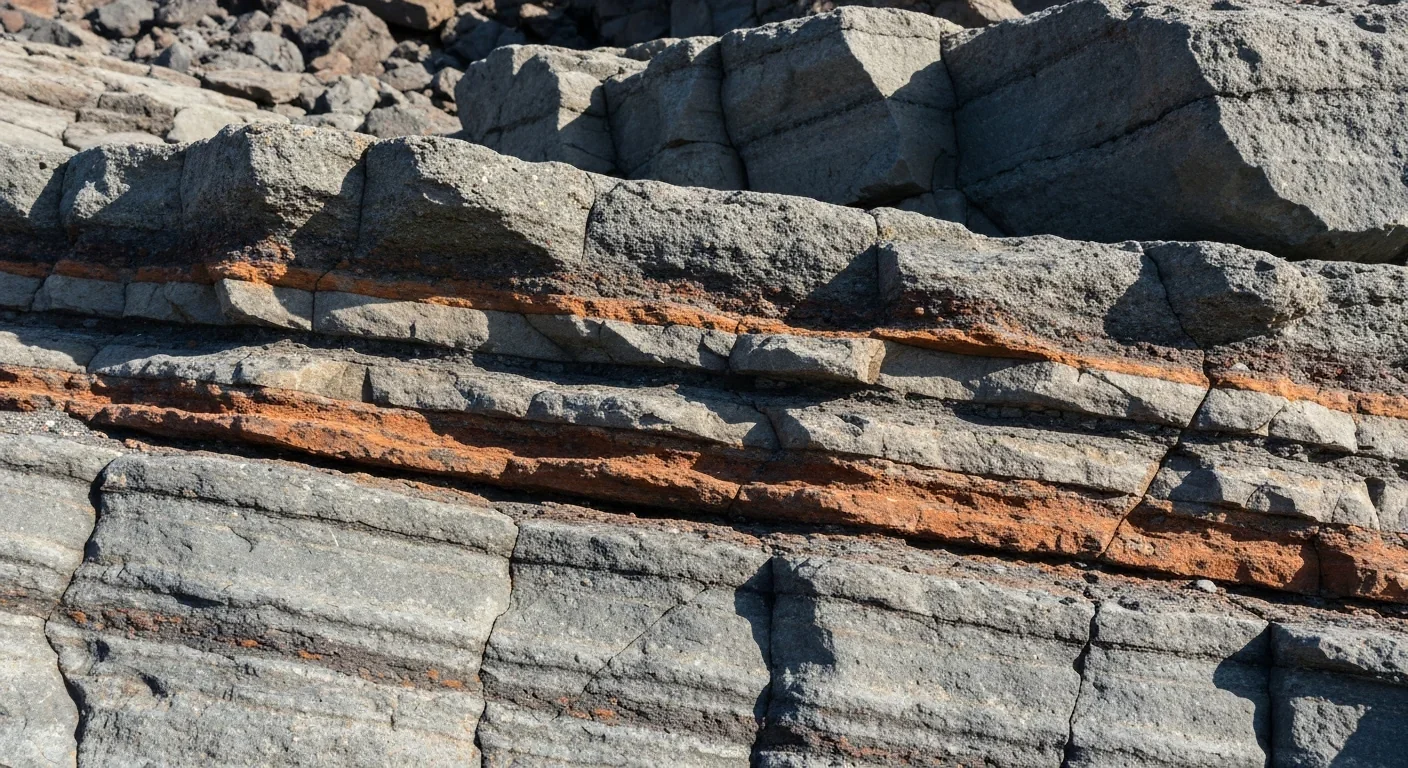
The result is a shield volcano built from thousands of basaltic lava flows over an immense period, with six nested calderas at its summit spanning roughly 60 by 80 kilometers, and a magma chamber estimated to sit about 32 kilometers below the caldera floor. The volcano sits at the western edge of the Tharsis plateau, the largest volcanic province on Mars, a region roughly 2,400 miles across that contains 12 large shield volcanoes and has a total mass comparable to the dwarf planet Ceres.
Olympus Mons covers an area of about 300,000 square kilometers, roughly the size of Italy, making it not just the tallest but one of the most massive single structures in the entire solar system.
But growing tall comes with consequences. The most dramatic evidence sits on the northwest flank of the volcano, where a basal escarpment rises 6 to 8 kilometers above the surrounding terrain, with some estimates putting the drop as high as 10 kilometers in places. This isn't a gentle slope. It's a cliff face taller than the flight ceiling of most aircraft, and it formed because enormous chunks of the volcano broke away and slid outward.
The debris from these collapses forms the Olympus Mons aureole, a vast apron of landslide deposits consisting of gigantic ridges and blocks. Some sources describe the aureole extending up to 1,000 kilometers from the summit, with evidence connecting its formation to glacial activity. One of the most significant collapse events occurred several hundred million years ago, when a massive section of the volcano broke off and spread across the plains.
New images from ESA's Mars Express have shown how lava flows created extremely sharp cliffs, as high as 7 kilometers in some areas, that then collapsed in what scientists describe as mind-boggling landslides. The mechanism appears to involve hot lava flowing down the volcano and encountering bedrock rich in ice and water. The superheated lava melted the ice, destabilizing the base, and the rocky rim broke away.

The real breakthrough in understanding Olympus Mons's lopsided shape came from researchers at Rice University. Patrick McGovern and Julia Morgan built computer models using discrete particle simulations and found that basaltic material could spread to Olympus-sized dimensions only when a low-friction clay layer was present beneath the edifice.
Their key finding was that a layer of water-saturated clay sediment beneath the volcano acts as a lubricating surface. This clay layer is thicker on the northwest side and thinner to the southeast, which explains the volcano's asymmetric shape. The faulting patterns confirm this: the southeast sector shows compression while the northwest sector shows extension, exactly what you'd expect if the base were slippery on one side and sticky on the other.
"If we stood on the northwest side of Olympus Mons and started digging, we'd eventually find clay sediment deposited there billions of years ago, before the mountain was even a molehill."
- Patrick McGovern, Rice University / Lunar and Planetary Institute
Morgan noted that clay's friction-reducing effect, a phenomenon also observed at volcanoes in Hawaii, allows volcanic material to spread to Olympus-sized proportions. ESA's Mars Express has found abundant evidence of clay deposits across Mars, supporting the hypothesis. And the Phoenix lander detected subsurface ice in the Martian highlands, suggesting that ice could be present beneath Olympus Mons, adding additional fluid to the clay layer and amplifying the weakening effect.
A separate study from Freie Universitat Berlin, published in the Journal of Geophysical Research, used High Resolution Stereo Camera data from Mars Express to create a terrain model. Their simulations confirmed that gravity combined with low frictional resistance in the subsurface is the dominant factor driving the observed deformations, including the arched terraces and steep drop-off at the volcano's base.
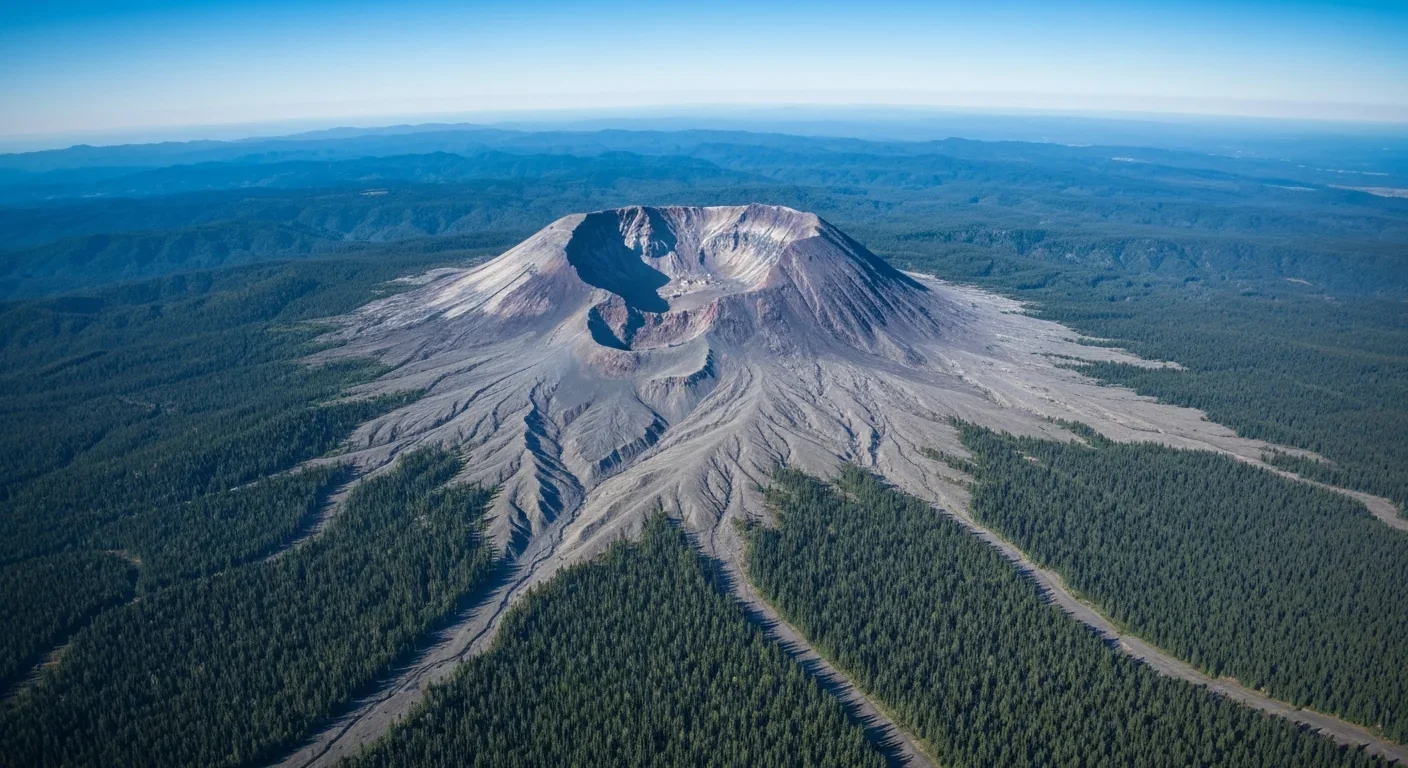
To appreciate how Olympus Mons compares to what happens on Earth, consider Mount St. Helens. Its 1980 eruption triggered the largest landslide in recorded human history, flattening 200 square miles of forest. The eruption began when the volcano's entire north face slid away, releasing the pressurized magma underneath. That collapse was catastrophic and sudden.
But volcanic flank collapses are actually common across all types of volcanic edifices. Research by Lucia Capra and colleagues has documented how lateral collapse typically leaves a scar on the volcano's flank and produces a corresponding debris avalanche deposit. The process involves both intrinsic factors like internal weakening from hydrothermal alteration and extrinsic factors like basement composition and tectonic stresses.
The Hawaiian shield volcanoes and Canary Islands have experienced similar flank collapses, though on a much smaller scale. The largest volcanic landslides on Earth come from submarine volcanoes, reaching volumes of 900 cubic kilometers. But even these pale in comparison to the Olympus Mons aureole, where debris fields stretch across hundreds of kilometers of Martian plain.
The largest submarine volcanic landslides on Earth reach 900 cubic kilometers. The Olympus Mons aureole dwarfs even these, with debris deposits extending up to 1,000 kilometers from the summit.
What makes Olympus Mons fundamentally different is scale and time. On Earth, plate tectonics redistribute volcanic material and limit how much mass can pile up in one location. On Mars, without that safety valve, the Tharsis region's volcanoes erupted at the same spots for billions of years, accumulating so much lava that the crust itself structurally failed under the weight. The discrete particle models also suggest that gravitational spreading can evolve through many small slip planes rather than requiring a single cataclysmic landslide, meaning the collapse may have been gradual in geological terms.
This is where the story gets genuinely provocative. Crater counting by Mars Express shows that lava flows on the northwestern flank range in age from 115 million years to just 2 million years old. Some analyses suggest the most recent large eruption occurred about 25 million years ago, and there are signs of isolated volcanism within the past few million years, implying the volcano may be dormant rather than extinct.
NASA's InSight lander detected a magnitude 5 marsquake in May 2022, and analysis determined it was likely a natural seismic event rather than an impact. Marsquakes could originate from hotspots such as Olympus Mons or the Tharsis Montes, suggesting that internal magmatic processes may persist beneath the volcano.
ESA's Mars Express and NASA's Mars Reconnaissance Orbiter continue to provide high-resolution topographic data and subsurface radar imagery. These instruments have revealed lava tubes, layered deposits, and the detailed structure of the escarpments. A 2024 study found that Mars's equatorial volcanoes contain frost equivalent to 60 Olympic swimming pools, hinting at ongoing water and ice processes that could influence flank stability.
"The gravitational failure of volcanic slopes, starting with landsliding and generating volcanic debris avalanches, is a natural phenomenon that has been recognized on volcanoes worldwide, and in extraterrestrial examples such as Olympus Mons on Mars."
- Lucia Capra, Volcano Flank Instabilities and Lateral Collapse
Olympus Mons isn't just a Martian curiosity. It's a natural laboratory for understanding how volcanic edifices behave under radically different conditions. On Mars, lower atmospheric pressure means eruptions were likely less explosive, allowing lava to spread more gradually and build the gentle slopes characteristic of shield volcanoes. The interplay of low gravity enabling extreme height while simultaneously making steep basal cliffs more susceptible to failure when lubricated by ice creates a paradox: the same conditions that let the volcano grow record-tall also make it tear itself apart.
The Tharsis region's radial graben and compression belts show that the combined mass of these volcanic provinces has stressed and deformed the surrounding crust, creating fracture networks that mirror tectonic structures on Earth's volcanic islands. Researchers have even proposed that Tharsis itself may function as a single gigantic spreading volcano, a concept that frames the entire region's behavior in terms of gravitational spreading.
The possibility of trapped water beneath Olympus Mons raises astrobiology questions too. McGovern and Morgan suggest that a deep reservoir warmed by geothermal gradients could potentially support thermophilic organisms, similar to deep-sea hydrothermal vents on Earth. Whether or not life exists beneath a Martian volcano, the mere fact that the geology supports the hypothesis shows how much we still have to learn from this lopsided giant.
The solar system's tallest volcano is falling apart under its own weight, slowly, on a timescale that makes human civilization look like a camera flash. But the mechanisms driving that collapse, clay lubrication, ice melting, gravitational spreading, are the same ones that threaten volcanic islands on our own planet. The difference is scale. And on Mars, everything is bigger, slower, and stranger than we ever expected.
Project Orion was a real 1960s program to reach other stars by detonating 800 nuclear bombs behind a spacecraft. The physics worked and the engineering was feasible, but the 1963 nuclear test ban treaty killed it. It remains the most credible interstellar spacecraft ever designed.

The locus coeruleus, a tiny brainstem structure, degenerates decades before Alzheimer's symptoms appear. Its loss cripples the brain's inflammation control, waste clearance, and sleep regulation. New imaging tools and noradrenergic therapies offer hope for early detection and prevention.

Research shows the sharing economy often increases total resource consumption through the Jevons paradox and rebound effects. Ride-sharing adds billions of vehicle miles, co-working spaces use more energy per worker, and diffused responsibility erodes conservation behavior. Breaking the paradox requires congestion pricing, accountability design, and matching sharing models to appropriate resource types.

Psychological reactance theory explains why banning or restricting things makes people want them more. From Prohibition to the Streisand effect to scarcity marketing, research shows that threatening people's freedom reliably backfires, and autonomy-supportive communication is far more effective.
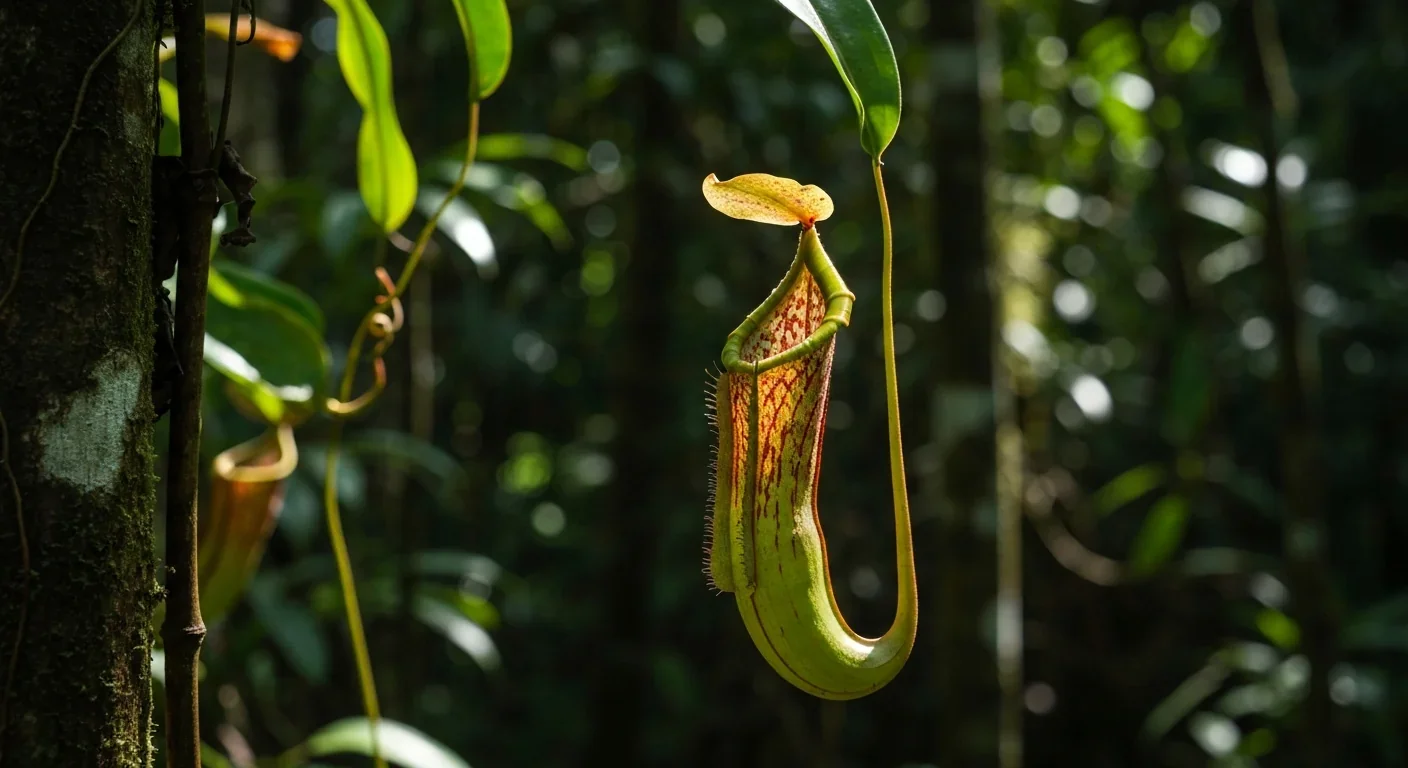
A carnivorous pitcher plant in Borneo evolved to house bats instead of trapping insects, gaining up to 95% of its nitrogen from bat guano. The plant even built an ultrasonic reflector to help bats find it, revealing that carnivory in plants is a flexible spectrum.

The quantified self movement began as a hacker-ethos pursuit of personal insight, but corporate wearables now funnel biometric data to employers, insurers, and data brokers. With 81% of Americans wrongly believing health apps are HIPAA-protected, a regulatory void enables health data to be sold for pennies while generating anxiety instead of empowerment.

CXL memory pooling lets servers dynamically share DRAM over a cache-coherent interconnect, eliminating the 40% stranded memory waste in data centers. With commercial hardware now shipping and Azure deploying CXL cloud instances, this technology promises to cut memory costs by 50% while enabling composable infrastructure.

Loading featured articles...