Project Orion: Nuclear Bomb Starship That Almost Was
Project Orion: Nuclear Bomb Starship That Almost Was
Europa Clipper Radiation Vault: Surviving Jupiter
VASIMR Plasma Engine: Could It Transform Mars Travel?
Iapetus Equatorial Ridge: The Solar System's Strangest Mountain

Titan's Hidden Ocean: Ammonia Keeps Water Liquid

Mimas: How Saturn's Death Star Moon Hides an Ocean
TL;DR: Thorne-{ytkow objects - neutron stars embedded inside red supergiant envelopes - were theoretically predicted in 1977 but remain unconfirmed. Recent simulations prove they can form and estimate 5-200 exist in our galaxy, identifiable through unique chemical signatures and potentially multi-messenger astronomy combining gravitational waves, neutrinos, and spectroscopy.
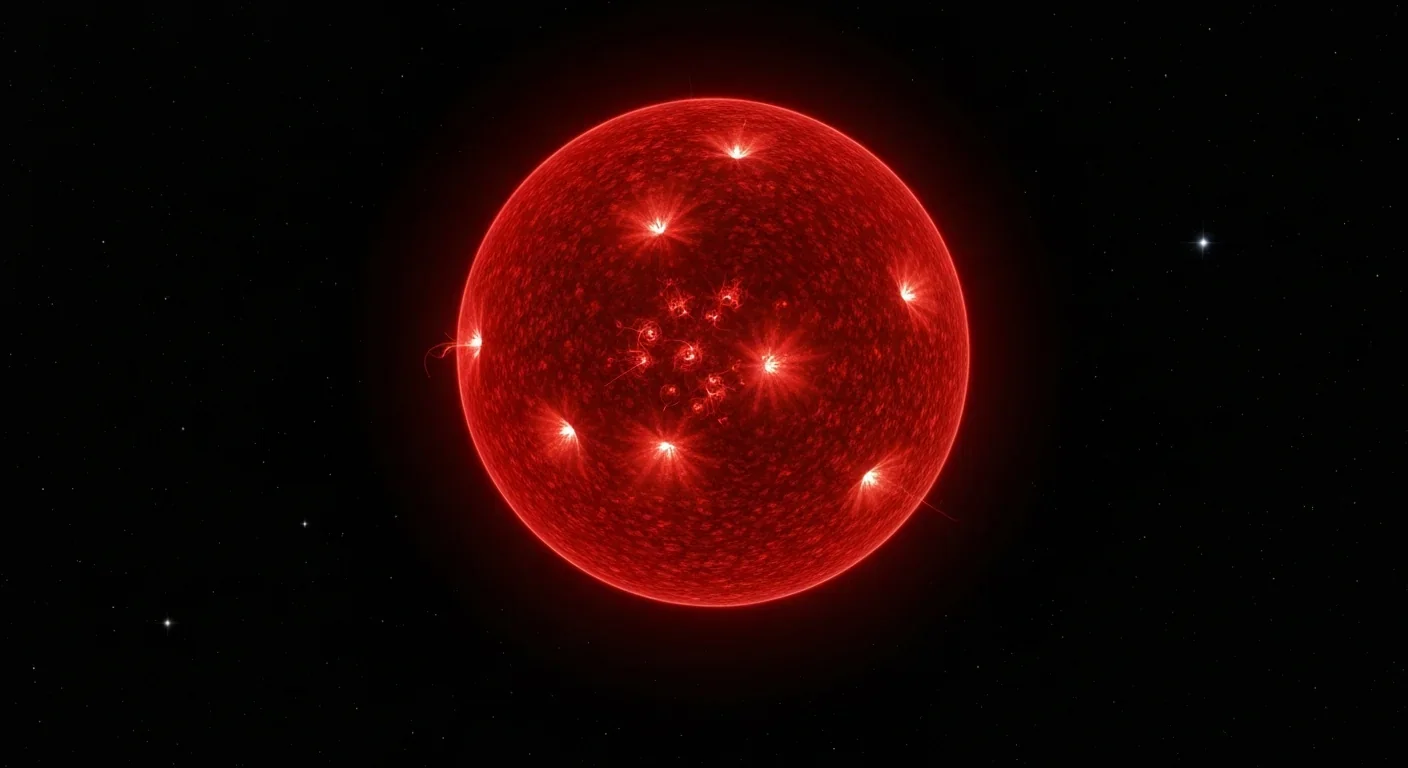
Somewhere in the universe right now, there might be a star eating a dead one from the inside out. Not metaphorically - literally. A red supergiant, hundreds of times wider than our sun, concealing at its core a neutron star: an object so dense that a teaspoon would weigh a billion tons on Earth. This isn't science fiction. It's a Thorne-Żytkow object, and in 2014, astronomers thought they'd finally spotted one after searching for nearly four decades.
The discovery candidate, a star called HV 2112 in the Small Magellanic Cloud, showed exactly the chemical fingerprints theorists predicted: bizarre excesses of lithium, molybdenum, and rubidium forged in nuclear reactions that shouldn't happen in normal stars. Then, four years later, another team looked again and found... nothing unusual. The case went cold.
But here's what makes this story compelling: whether HV 2112 is the real deal or not, we now know these cosmic chimeras must exist. Recent simulations published in the Astrophysical Journal in 2024 confirm that neutron stars can indeed stably nest inside stellar envelopes, and they're probably out there right now - between 5 and 200 of them in our galaxy alone, depending on whose calculations you trust. We just haven't definitively identified one yet.
Between 5 and 200 Thorne-Żytkow objects probably exist in the Milky Way right now. We can predict them mathematically, simulate their formation, calculate their chemical signatures - but we still can't definitively point to one in the sky and say "that's it."
That gap between "must exist" and "can't quite find" tells us something profound about our place in the universe: there are objects so strange, so counterintuitive, that we can predict them mathematically decades before we develop the tools to see them clearly. And when we finally do find them, they'll rewrite textbooks about how stars live, die, and sometimes fuse in ways that make Frankenstein's monster look subtle.
To understand what a Thorne-Żytkow object actually is, imagine this: you're a neutron star - a 20-kilometer sphere containing 1.4 times the sun's mass, spinning hundreds of times per second, with gravity so intense that atoms can't even exist on your surface. You're cruising through space when suddenly you encounter a red supergiant, a star perhaps 1,000 times wider than the sun but considerably less dense than you are.
What happens next depends on geometry and violence.
If you hit the red giant head-on - what astronomers call a "stellar collision" - you punch through its outer layers like a bullet through fog. The star's envelope, mostly hydrogen and helium, can't stop you because you're made of neutrons pressed together until they touch. Within hours, friction and gravity slow you down, and you spiral inward toward the star's core.
Or maybe you're in a binary system, orbiting this red supergiant for millions of years. When your companion expands into its red giant phase, its outer layers engulf you in what's called a "common envelope" scenario. You drag through the star's atmosphere, losing orbital energy, spiraling inward over thousands of years until you settle at the center.
Either way, you end up where you shouldn't be: inside another star, still intact, still a neutron star - but now feeding.
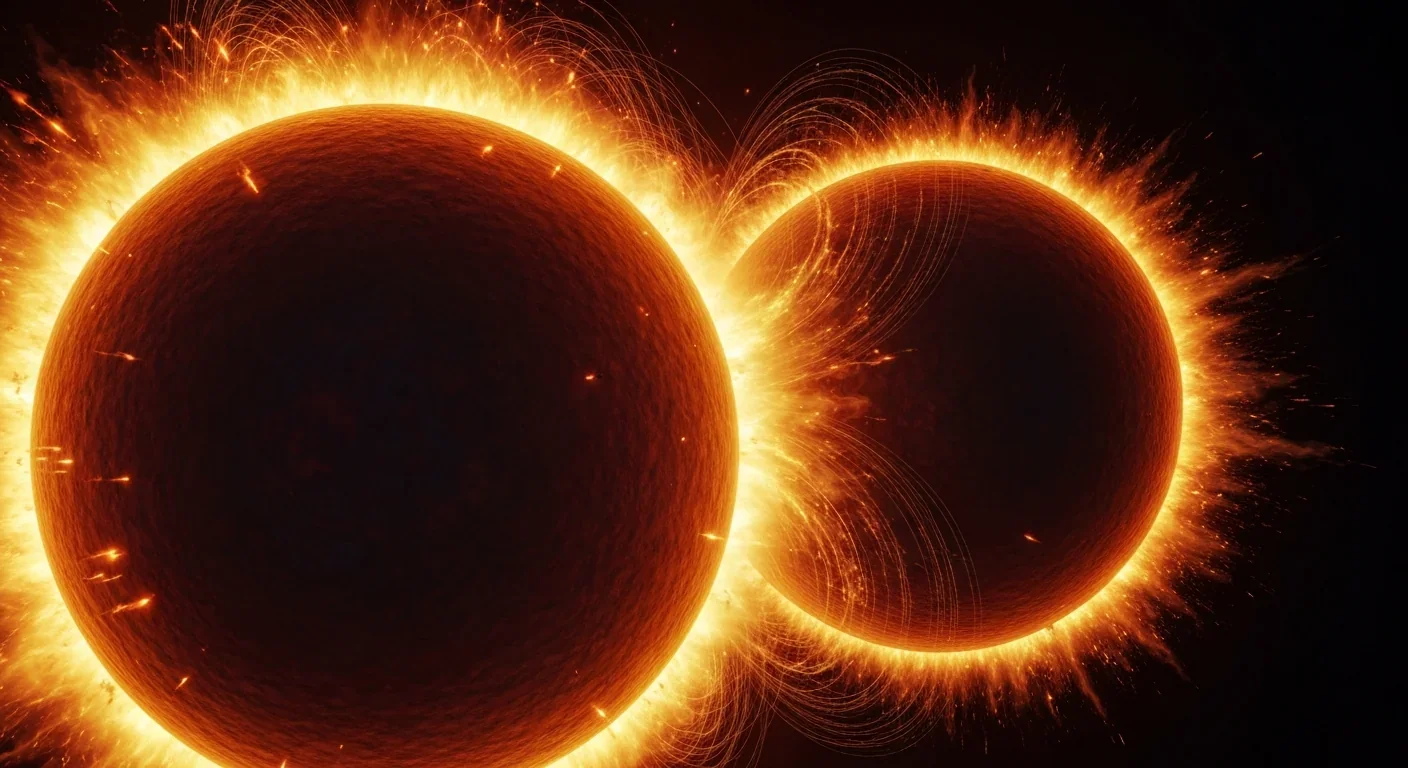
The red supergiant's matter rains down onto your surface at incredible rates, and here's where things get weird. Your gravity compresses this infalling material so violently that temperatures exceed a billion degrees Kelvin. At these extremes, nuclear fusion operates differently than in normal stars. Instead of the slow, orderly fusion that powers the sun, you trigger something called "rapid proton capture" nucleosynthesis.
This process can create elements that shouldn't exist in cool red supergiants: lithium, rubidium, molybdenum. These elements become the chemical signature, the smoking gun that might let us identify these objects from thousands of light-years away.
From the outside, though? A Thorne-Żytkow object would look almost exactly like an ordinary red supergiant. Same color, same temperature, same enormous size. That's the problem.
Kip Thorne would later win the Nobel Prize for detecting gravitational waves, but in 1977, he was thinking about stranger things. Working with Anna Żytkow at Cambridge, he asked a simple question: what if you put a neutron star inside a red giant?
The question emerged from binary star evolution theory. Astronomers knew that massive stars in binary systems could go supernova and leave behind neutron stars, and they knew that the surviving companion could later expand into a red giant. If the orbit was tight enough, could the dead star end up inside the living one?
Their calculations, published in the Astrophysical Journal, said yes - under specific circumstances. The neutron star would have to survive the plunge without disrupting the giant's envelope completely. The system would need just the right mass ratio, the right orbital parameters, the right moment in the giant's evolution.
"The prediction went into the theoretical astronomy file labeled 'things we'll check when we get better telescopes.' It stayed there for 37 years."
But if it happened, Thorne and Żytkow predicted something extraordinary: a stable configuration where the neutron star's accretion luminosity would power the red giant's outer layers, creating an equilibrium that could last 100,000 to a million years. Not forever in cosmic terms, but long enough that several should exist in our galaxy right now if the formation rate was even remotely reasonable.
They also predicted the chemical anomalies - elements created by the rapid proton capture process occurring in the accretion flow onto the neutron star's surface. These elements would dredge up through the star's convective envelope and appear in its spectrum, providing a potential observational signature.
The paper was elegant, rigorous, and completely untestable with 1977 technology. Spectrographs weren't sensitive enough to detect subtle chemical anomalies in distant supergiants. Astronomers couldn't systematically survey thousands of red giants to find the handful of weird ones. The prediction went into the theoretical astronomy file labeled "things we'll check when we get better telescopes."
It stayed there for 37 years.
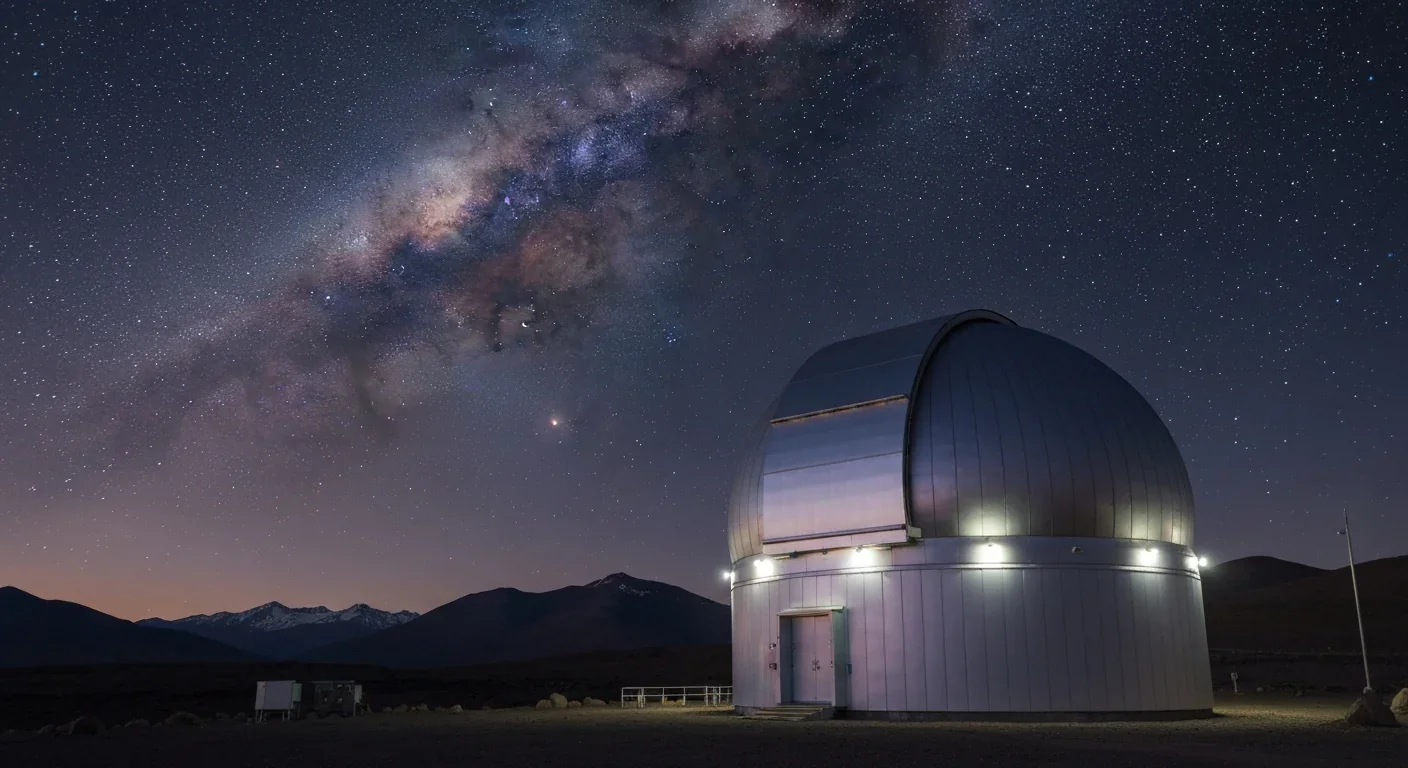
Emily Levesque remembers the moment clearly. She was a postdoc at the University of Colorado Boulder, analyzing spectra from the Magellan Clay Telescope in Chile, when she saw the numbers: HV 2112, a red supergiant in the Small Magellanic Cloud, showed lithium levels four times higher than expected, molybdenum levels that were off the charts, and rubidium abundances that made no sense for a star of its type.
She pulled up the Thorne and Żytkow paper. The chemical signature matched.
In August 2014, her team published their findings in the Monthly Notices of the Royal Astronomical Society, cautiously suggesting that HV 2112 might be the first confirmed Thorne-Żytkow object. The astronomy community erupted with excitement. After decades of theoretical predictions, was this finally proof that these cosmic cannibals existed?
The problem with extraordinary claims is that they invite extraordinary scrutiny.
Within months, other teams requested telescope time to observe HV 2112 again. By 2018, Emma Beasor and collaborators published a reanalysis using improved spectroscopic techniques and better atmospheric models. Their conclusion was blunt: they found "no evidence for unusual abundance patterns beyond lithium" and determined that HV 2112's luminosity was too low to match TŻO predictions. The star looked like a perfectly normal red supergiant, they argued, possibly with some unusual evolutionary history, but probably not harboring a neutron star.
Even the original anomalies became suspect. Proper motion measurements suggested HV 2112 might not even be in the Small Magellanic Cloud - it could be a foreground star in our own galaxy, which would completely change the luminosity calculations that made it look unusual in the first place.
But here's where the story gets philosophically interesting: negative results don't mean the theory is wrong. They mean this particular candidate probably isn't what we hoped. The hunt continues.
What would it take to confirm a Thorne-Żytkow object unambiguously? Two simultaneous detections: gravitational waves from the rotating neutron star embedded inside the envelope, and an optical spectrum showing the bizarre chemical abundances. We don't have instruments that can do both yet.
What would it actually take to confirm a Thorne-Żytkow object unambiguously? According to recent theoretical work, you'd need two simultaneous detections: gravitational waves from the rotating neutron star embedded inside the envelope, and an optical spectrum showing the bizarre chemical abundances. Both signals together would provide ironclad proof.
We don't have instruments that can do both yet. LIGO can detect gravitational waves, but only from extremely violent events like merging black holes. A slowly accreting neutron star inside a red giant produces gravitational wave signals too faint for current detectors. Next-generation observatories might have the sensitivity, but they're decades away.
So we're left with chemistry as our only clue, and chemistry can be ambiguous.
If observations couldn't settle the question, maybe computation could. In October 2024, a team led by researchers at Hebrew University published simulations in the Astrophysical Journal that finally answered a fundamental question: can neutron stars actually survive being swallowed by giant stars, or would they just rip the giant apart?
Using hydrodynamic simulations that tracked the collision in millisecond-by-millisecond detail, they modeled what happens when a 1.4-solar-mass neutron star hits a main-sequence star at various impact angles. The results were definitive: for "periastron distances" less than one stellar radius - basically any orbit that brings the neutron star close enough to graze or penetrate the giant's outer layers - merger happens and TŻOs form.
Moreover, the merged objects were "dynamically stable." That's code for "they don't immediately explode or collapse," which was genuinely uncertain before this simulation. The neutron star settles into the giant's core, and the whole system reaches a new equilibrium that can last for cosmologically significant timescales.
The simulations also calculated formation rates. Depending on assumptions about binary star populations and stellar evolution, they estimated between 20 and 200 TŻOs should currently exist in the Milky Way. A separate 2025 paper in Astronomy & Astrophysics using population synthesis techniques arrived at a lower estimate: approximately 5 TŻOs present in our galaxy at any given time, with a formation rate of one every 25,000 years.
Those numbers might sound small until you realize that astronomers have surveyed only a tiny fraction of the galaxy's red supergiants. We know of maybe a few thousand of them total. If TŻOs make up even 0.5% of red supergiants, we'd have barely begun to look.

The 2024 simulations revealed another fascinating detail: direct collisions create TŻOs much faster than grazing encounters. A head-on impact produces a merged object within 22 hours. A grazing collision where the neutron star skims the giant's outer edge takes about 84 hours. Both timeframes are cosmologically instantaneous - you could, in principle, watch a TŻO form in real-time if you happened to be observing a stellar collision when it occurred.
Nobody has witnessed that yet, but it's theoretically possible.
The existence of Thorne-Żytkow objects - confirmed or not - forces us to rethink some comfortable assumptions about how stars die.
Standard stellar evolution theory treats stars as solitary objects that burn through their fuel, expand, and either explode as supernovae or quietly shed their outer layers as planetary nebulae. Binary stars complicate the picture with mass transfer and tidal interactions, but even binary evolution models typically assume that once a star goes supernova, its compact remnant either gets ejected from the system or remains in orbit as an X-ray binary.
TŻOs represent a third option: the compact remnant merges with its companion, creating something that's neither a normal star nor a dead one but both simultaneously. This "star within a star" configuration shouldn't just be a curiosity - it might be a regular stage in binary evolution for certain mass ranges and orbital parameters.
Recent population synthesis studies suggest that 92% of TŻO progenitors experience mass transfer and stellar rejuvenation before their formation event. That means TŻOs aren't formed from pristine, single-star evolution but from complex binary interactions that shuffle mass back and forth multiple times over millions of years. The companion star might have already been reshaped by earlier mass transfer when it finally swallows (or gets swallowed by) the neutron star.
"TŻOs represent a third option: the compact remnant merges with its companion, creating something that's neither a normal star nor a dead one but both simultaneously."
This matters for understanding stellar populations in general. If TŻO formation is even moderately common, it creates an evolutionary pathway that removes some red supergiants from the normal supernova track. Those stars won't explode the way isolated supergiants would. Instead, they'll undergo mass loss driven by the neutron star's accretion luminosity, eventually shedding their hydrogen envelopes and leaving behind either an isolated pulsar with an accretion disk or, if enough matter falls onto the neutron star, potentially collapsing the neutron star itself into a black hole.
Yes, a neutron star can eat enough to become a black hole. There's a mass limit - about 2 to 2.5 solar masses, though the exact number is still debated - above which neutron degeneracy pressure can't support the object anymore, and it collapses into a singularity. If a TŻO's neutron star accretes enough material from the giant's envelope, it might push past that limit.
So you'd have a black hole formed not from a supernova but from a neutron star slowly gaining weight inside a red giant. That's a formation channel for stellar-mass black holes that most astrophysicists didn't seriously consider until TŻOs became theoretically viable.
The chemical signature of TŻOs also has implications for galactic chemical evolution. Elements like molybdenum and rubidium are traditionally explained through supernova nucleosynthesis and s-process fusion in asymptotic giant branch stars. If TŻOs exist in significant numbers, they add another production site for these elements, potentially altering our understanding of how galaxies accumulate their chemical inventory over time.
The HV 2112 controversy highlighted a fundamental challenge: identifying TŻOs from chemical abundances alone is ambiguous. Red supergiants naturally show chemical variations depending on mass, metallicity, rotation, and mass-loss history. Claiming a star is special requires ruling out all conventional explanations, and that's notoriously hard when you're working from a single spectrum.
Future searches will need to be more systematic and multi-faceted. Here's what astronomers are planning:
Large-scale spectroscopic surveys: Projects like SDSS-V and upcoming surveys with the Vera C. Rubin Observatory will obtain spectra for millions of stars, including thousands of red supergiants. Instead of looking at candidates one at a time, astronomers will statistically analyze the entire population, searching for stars with abundance patterns that can't be explained by known processes.
Time-domain astronomy: If a TŻO's neutron star experiences an accretion instability or suddenly gains mass from a convective plume in the envelope, the star might brighten temporarily. Surveys that monitor millions of stars continuously, like TESS and Rubin, could catch these transient events.
Neutrino detection: A 2024 paper in Physical Review Letters pointed out that super-Eddington accretion onto a neutron star inside a TŻO would produce MeV-range neutrinos detectable by current and planned neutrino observatories. A months-long neutrino signal correlated with a red supergiant's position would be compelling evidence.
Gravitational wave follow-up: Once next-generation gravitational wave detectors like Cosmic Explorer and Einstein Telescope come online in the 2030s, they might be sensitive enough to detect continuous gravitational waves from rapidly rotating neutron stars embedded in stellar envelopes. Correlating these signals with optical observations would provide the "smoking gun."
The most promising near-term strategy is probably a combination of chemistry and statistics. Instead of claiming that any single star is definitely a TŻO, astronomers will look for a population of stars with abundance patterns consistent with TŻO predictions and inconsistent with other explanations. If you find five stars with the right chemical signature, and they're all in the right luminosity range, and none of them fit alternative models, you've made a statistical case even without confirming any individual object.
This is how science often works when individual measurements are ambiguous: you build a statistical argument from patterns in the data. It's less dramatic than pointing a telescope at a star and saying "that's definitely a Thorne-Żytkow object," but it's often more robust.
On the surface, the search for Thorne-Żytkow objects might seem like an esoteric corner of astrophysics, relevant only to specialists who care about exotic stellar configurations. But the story reveals something deeper about how we understand complex systems.
TŻOs exist in a theoretical space that makes them simultaneously mundane and revolutionary. Mundane because the physics is all well-established: we understand neutron stars, we understand red giants, and we understand accretion. There's nothing about a TŻO that requires new physics. Revolutionary because the combination produces phenomena - chemical abundances, neutrino signatures, gravitational wave signals - that challenge our ability to observe and interpret.
The challenge isn't always understanding the fundamental laws. It's understanding what happens when those laws interact in complex, nonlinear ways. TŻOs remind us that the universe is under no obligation to make rare objects easy to find.
This pattern repeats across science. Quantum computers don't require new physics - quantum mechanics has been understood for a century - but engineering systems that exploit quantum effects is extraordinarily difficult. Protein folding follows known chemical laws, but predicting how a protein will fold from its amino acid sequence was computationally impossible until recently. Climate models are based on well-understood thermodynamics and fluid dynamics, but projecting those models forward decades involves wrestling with chaotic systems and feedback loops.
The challenge isn't always understanding the fundamental laws. It's understanding what happens when those laws interact in complex, nonlinear ways.
TŻOs also remind us that the universe is under no obligation to make rare objects easy to find. If only 5 to 200 of these objects exist in a galaxy of 100 billion stars, and they look almost identical to common red supergiants from the outside, they might remain elusive for decades even though we're certain they exist. Nature doesn't optimize for human convenience.
That has implications for how we think about other rare phenomena: fast radio bursts, dark matter candidates, biosignatures on exoplanets. In each case, we're searching for signals that might be intrinsically rare, ambiguous, or easily confused with more common phenomena. The tools we develop for one search often help with others.
The search for TŻOs is also a case study in the value of theoretical prediction. Thorne and Żytkow published their paper in 1977, nearly four decades before technology caught up enough to test it. During those decades, the prediction sat in the literature, waiting. Some physicists might have considered it a waste of time - why theorize about objects we can't observe?
But when Levesque pointed her telescope at HV 2112 in 2014, she knew what to look for because the theory existed. When computational astrophysicists designed their 2024 simulations, they knew which scenarios to model. Theory doesn't just explain observations; it tells us where to look.
If you could visit a Thorne-Żytkow object - not that you'd survive the radiation and gravity, but let's pretend - you'd see something profoundly weird.
From space, approaching the star, it would look unremarkable: a dull red sphere, perhaps 700 times wider than the sun, glowing softly in the infrared. You'd see no hint of the monster inside.
Descending through the outer layers, you'd pass through hundreds of thousands of kilometers of thin, hot hydrogen and helium, gradually increasing in density and temperature. Eventually, you'd reach the star's convective envelope, where enormous cells of plasma churn upward and downward, carrying heat from the core to the surface.
And then, at the center, you'd encounter something that shouldn't be there: a sphere only 20 kilometers across, containing more mass than the sun, spinning perhaps a hundred times per second, with gravity so intense that spacetime itself is noticeably curved.
Material from the envelope spirals down toward this neutron star in a disk, heating to billions of degrees as it falls. Some of it undergoes rapid nuclear fusion, creating isotopes that rise back up through the convective zone and appear in the star's atmosphere. Some of it crashes onto the neutron star's surface in relativistic impacts that release more energy per gram than any other process in the universe except matter-antimatter annihilation.
The system shouldn't be stable - the tidal forces should rip the giant apart, the neutron star should sink and disrupt the core - but it is stable, for a while at least, held together by a delicate balance between gravity, pressure, and energy transport.
This is not a science fiction scenario. This is something that almost certainly exists, right now, somewhere in our galaxy. We just haven't confirmed which stars they are.
That fact - that reality contains structures this strange, and we're only now developing the tools to find them - should reshape how we think about what's possible. The universe doesn't care about our intuitions. It follows rules, but those rules permit configurations that would seem absurd if we didn't have mathematics to prove they can exist.
In the next few decades, we'll probably confirm the first TŻO definitively. Maybe it'll be through a neutrino signal detected by IceCube or its successor. Maybe it'll be through a population study that identifies a dozen chemically anomalous red supergiants that can't be explained any other way. Maybe it'll be through a gravitational wave detection correlated with optical follow-up.
When it happens, it won't just be a triumph for the astronomers who spent careers searching. It'll be validation of a deeper principle: that we can understand the universe not just by observing it but by reasoning about what must be possible, even when those possibilities sound impossible.
Stars within stars. Cosmic cannibals. Neutron star cores inside red giant envelopes, creating elements through nuclear processes that occur nowhere else.
They're out there. And soon, we'll know exactly where.
Project Orion was a real 1960s program to reach other stars by detonating 800 nuclear bombs behind a spacecraft. The physics worked and the engineering was feasible, but the 1963 nuclear test ban treaty killed it. It remains the most credible interstellar spacecraft ever designed.

The locus coeruleus, a tiny brainstem structure, degenerates decades before Alzheimer's symptoms appear. Its loss cripples the brain's inflammation control, waste clearance, and sleep regulation. New imaging tools and noradrenergic therapies offer hope for early detection and prevention.

Research shows the sharing economy often increases total resource consumption through the Jevons paradox and rebound effects. Ride-sharing adds billions of vehicle miles, co-working spaces use more energy per worker, and diffused responsibility erodes conservation behavior. Breaking the paradox requires congestion pricing, accountability design, and matching sharing models to appropriate resource types.

Psychological reactance theory explains why banning or restricting things makes people want them more. From Prohibition to the Streisand effect to scarcity marketing, research shows that threatening people's freedom reliably backfires, and autonomy-supportive communication is far more effective.

A carnivorous pitcher plant in Borneo evolved to house bats instead of trapping insects, gaining up to 95% of its nitrogen from bat guano. The plant even built an ultrasonic reflector to help bats find it, revealing that carnivory in plants is a flexible spectrum.

The quantified self movement began as a hacker-ethos pursuit of personal insight, but corporate wearables now funnel biometric data to employers, insurers, and data brokers. With 81% of Americans wrongly believing health apps are HIPAA-protected, a regulatory void enables health data to be sold for pennies while generating anxiety instead of empowerment.

CXL memory pooling lets servers dynamically share DRAM over a cache-coherent interconnect, eliminating the 40% stranded memory waste in data centers. With commercial hardware now shipping and Azure deploying CXL cloud instances, this technology promises to cut memory costs by 50% while enabling composable infrastructure.

Loading featured articles...