Project Orion: Nuclear Bomb Starship That Almost Was

Project Orion: Nuclear Bomb Starship That Almost Was
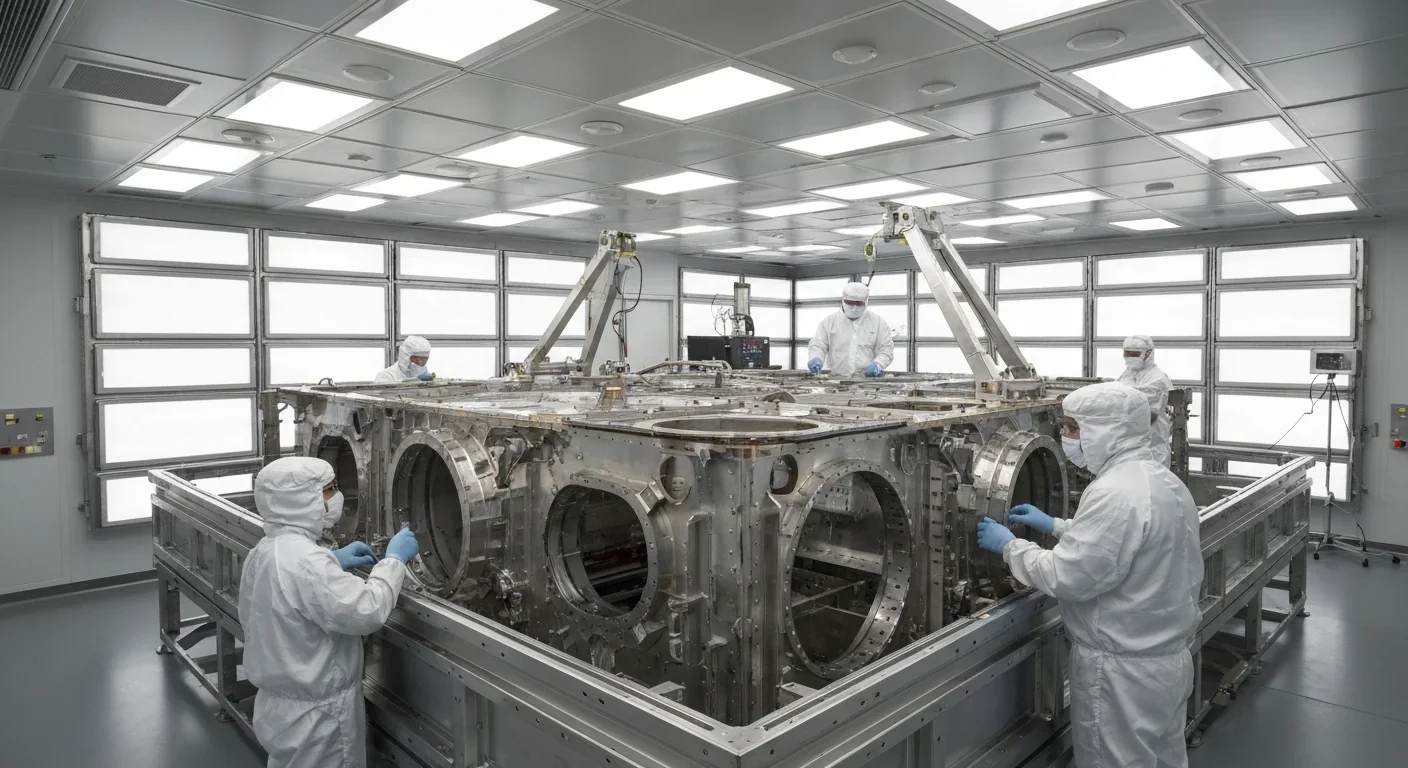
Europa Clipper Radiation Vault: Surviving Jupiter
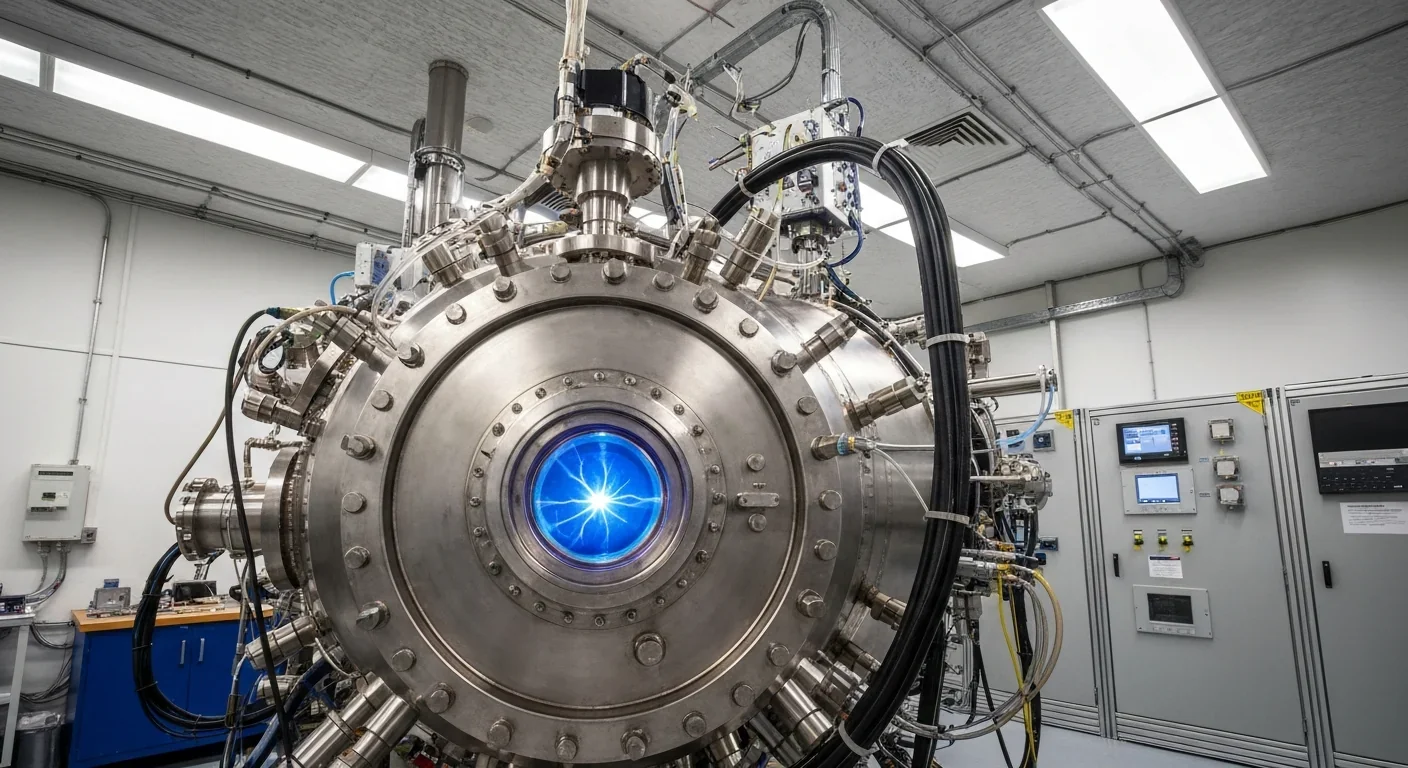
VASIMR Plasma Engine: Could It Transform Mars Travel?

Iapetus Equatorial Ridge: The Solar System's Strangest Mountain

Titan's Hidden Ocean: Ammonia Keeps Water Liquid

Mimas: How Saturn's Death Star Moon Hides an Ocean
TL;DR: Scientists have confirmed a decades-old prediction: dying stars crystallize into cosmic diamonds. Gaia mission data reveals white dwarfs transforming their carbon-oxygen cores into Earth-sized crystalline spheres, fundamentally changing how we measure cosmic time and understand stellar death - including our Sun's ultimate fate.
By 2050, scientists predict we'll have identified hundreds of thousands of crystallizing white dwarfs across our galaxy - stellar remnants the size of Earth but with masses approaching that of our Sun, their carbon and oxygen cores freezing into structures more precious than any gemstone on our planet. This transformation, once purely theoretical, is now being observed in real-time thanks to satellites like Gaia, fundamentally changing how we measure the age of the cosmos and understand what happens when stars die.

When the Gaia mission catalogued over 359,000 white dwarf candidates, astronomers noticed something unexpected: a curious pile-up of stars at specific brightness and color ranges that didn't match normal cooling models. These stars were staying warmer longer than they should, as if something inside was releasing extra energy. The answer? Crystallization.
Think about what happens when water freezes. It releases heat - that's why your freezer works harder when you first load it with warm food. Now imagine that same phase change, but instead of water molecules, you have carbon and oxygen nuclei packed at densities of one million grams per cubic centimeter, pressures millions of times greater than Earth's atmosphere. When these stellar cores begin to solidify below about 10 million Kelvin, they release enormous amounts of latent heat, slowing the star's cooling by one to two billion years.
Crystallization in white dwarf cores releases enough energy to delay cooling by 1-2 billion years - forcing astronomers to revise age calculations for ancient star clusters and the universe itself.
This wasn't just a neat physics curiosity. It meant that every white dwarf age calculation ever made needed revision. Stars we thought were 8 billion years old might actually be 6.5 billion. Globular clusters dated by their coolest white dwarfs? Potentially younger than we believed. The universe's timeline, written in these stellar clocks, suddenly became more complicated.
The breakthrough came when researchers compared Gaia's precise measurements with theoretical models. The excess population appeared exactly where crystallization should begin affecting cooling rates. After decades of waiting for confirmation of a 1960s prediction, astronomers finally had direct observational evidence that dying stars turn into cosmic gemstones.

To understand white dwarf crystallization, you need to appreciate just how violent and transformative stellar death can be.
Stars like our Sun spend billions of years fusing hydrogen into helium in their cores. But hydrogen doesn't last forever. When it runs out, the core contracts and heats up while the outer layers expand dramatically - the red giant phase. For several hundred million years, the star becomes a bloated, unstable version of its former self, fusing helium into carbon and oxygen while shedding mass through stellar winds.
Eventually, for stars up to about eight times the Sun's mass (which represents roughly 97% of all stars), nuclear fusion simply stops. There's no more fuel, and the core isn't massive enough to ignite carbon fusion. What remains collapses under its own gravity until electron degeneracy pressure - a quantum mechanical effect that prevents electrons from occupying the same state - halts the compression.
You're left with an object that's paradoxical by everyday standards: a stellar core with 0.5 to 1.4 times the Sun's mass compressed into something the size of Earth. A teaspoon of white dwarf material would weigh about 15 tons. The surface gravity is roughly 350,000 times Earth's - you'd weigh as much as a destroyer ship.
But here's the beautiful part: this incredibly dense plasma of carbon and oxygen nuclei swimming in a sea of degenerate electrons begins to cool. There's no more fusion to generate energy, so the white dwarf slowly radiates away its residual heat over billions of years. And as it cools, something remarkable happens.
At temperatures below about 10 million Kelvin - still far hotter than the Sun's core - the carbon and oxygen nuclei in a white dwarf's interior begin to lock into a crystalline lattice. This isn't the random atomic motion of a gas or the loose structure of a liquid. It's an ordered, three-dimensional arrangement: specifically, a body-centered cubic lattice, the same structure found in certain metals and, yes, in diamonds.
The comparison to diamonds isn't just poetic. Diamond is crystallized carbon. White dwarf cores are crystallized carbon and oxygen under extreme pressure. The lattice spacing is smaller, the energies are vastly different, but the underlying physics - atoms arranging themselves in the most energy-efficient configuration - is identical.
"The unexpected gap in the colour - magnitude diagram detected by Gaia DR3 suggests that interior phase transitions, potentially crystallization, alter the cooling rates of white dwarfs."
- Research analysis from Gaia mission data
This crystallization doesn't happen all at once. It begins at the center, where densities and pressures are highest, and gradually works its way outward. A white dwarf might have a fully crystallized core while its outer layers remain fluid for billions of years. Recent asteroseismic studies of pulsating white dwarfs suggest that ultra-massive examples can have cores that are roughly 70% crystallized.
And here's the crucial point: when those nuclei snap into their lattice positions, they release energy. Lots of it. Enough to significantly slow the star's cooling. This is the "white dwarf cooling anomaly" that Gaia detected - the pile-up of white dwarfs that are taking longer to cool than simple models predicted.
But it gets even more interesting. The crystallization process doesn't just release latent heat. It also triggers something called "gravitational settling" or "distillation." Heavier elements, like neon-22 in some white dwarfs, can sink toward the center as the crystal forms, releasing additional gravitational energy. In massive white dwarfs, this distillation process can extend cooling times by up to 10 billion years - longer than the current age of the universe.
Before Gaia, astronomers had decent distance measurements for fewer than 300 white dwarfs. You can't study stellar populations if you don't know how far away the stars are. Distance determines luminosity, which determines temperature, which determines age. Without precise parallax measurements, white dwarf science was limited to nearby, bright objects and statistical inferences.
Gaia changed everything. By measuring the positions of over a billion stars with unprecedented precision, it provided parallax distances for hundreds of thousands of white dwarfs. Suddenly, researchers had a population large enough to detect subtle evolutionary features that were invisible in smaller samples.
The crystallization pile-up emerged from Gaia's second and third data releases. Researchers plotted white dwarfs on color-magnitude diagrams - essentially graphs of brightness versus temperature - and saw an unmistakable excess of stars at specific evolutionary stages. The excess matched theoretical predictions for when crystallization should release enough energy to noticeably delay cooling.
Gaia's catalogue of over 359,000 white dwarfs - a tenfold increase over previous surveys - finally provided the statistical power needed to detect the subtle cooling delays caused by crystallization.
This wasn't just confirming old theory. It opened new avenues of research. If crystallization delays cooling in predictable ways, then white dwarfs become even more powerful cosmic clocks. By measuring a white dwarf's temperature and luminosity, astronomers can now estimate not just how long it's been cooling, but whether crystallization has begun and how far the process has progressed.
This has profound implications for understanding galactic history. The oldest white dwarfs in a star cluster represent stars that formed early in the cluster's history. By accurately dating these white dwarfs, we can date the cluster itself. The oldest white dwarfs known, found in the globular cluster M4, are 12 to 13 billion years old - nearly as old as the universe.

But crystallization introduces uncertainty. The cooling delay varies depending on the white dwarf's mass and composition. Researchers now estimate that systematic uncertainties in white dwarf ages can reach 0.8 billion years for cool, crystallizing white dwarfs. That's not a measurement error - that's fundamental uncertainty in the physics of how crystallization releases energy.
One white dwarf has captured the public imagination more than any other: BPM 37093, affectionately nicknamed Lucy - after the Beatles song "Lucy in the Sky with Diamonds."
Discovered in the 1990s and studied intensively ever since, Lucy sits roughly 50 light-years from Earth in the constellation Centaurus. It has a mass of about 1.1 solar masses - heavier than the average white dwarf, which clusters around 0.6 solar masses. This extra mass means higher internal pressures and faster crystallization. Lucy is the fastest crystallizing white dwarf currently under observation.
Asteroseismology - studying stellar vibrations much like geologists study earthquakes - allows astronomers to probe Lucy's interior structure. The star pulsates with periods of a few minutes, and by analyzing these oscillations, researchers have determined that a substantial fraction of Lucy's core has already crystallized into a carbon-oxygen lattice. That makes Lucy, in a very real sense, a diamond the size of Earth weighing about 5 million trillion trillion kilograms.
That's not metaphor. That's physics.
Lucy represents our future. Not personally, of course - we'll be long gone. But our Sun will eventually join the ranks of crystallizing white dwarfs. In about 5 billion years, the Sun will exhaust its hydrogen, swell into a red giant, and eventually shed its outer layers. What remains will be a white dwarf with roughly half the Sun's current mass, composed primarily of carbon and oxygen, cooling slowly over billions of years.
And billions of years after that, the Sun's remnant will begin to crystallize.
The transformation of a star into a white dwarf is catastrophic for any planetary system. When the Sun becomes a red giant, it will likely engulf Mercury and Venus, and possibly Earth. The intense radiation and stellar winds will strip away atmospheres and scorch surfaces. Any life that hasn't migrated to the outer solar system will be obliterated.
But here's the twist: after the chaos subsides, after the star has shed its outer layers and settled into the white dwarf phase, there's a period - potentially lasting billions of years - when conditions might stabilize enough to support life again.
White dwarfs are hot when they first form, with surface temperatures exceeding 100,000 Kelvin. But they cool. And as they cool, there's a window when their radiation output matches the gentle warmth of a young Sun. Recent studies suggest that up to 7.6% of white dwarfs near the galactic center could maintain habitable zones - regions where liquid water could exist on a planet's surface - for billions of years.
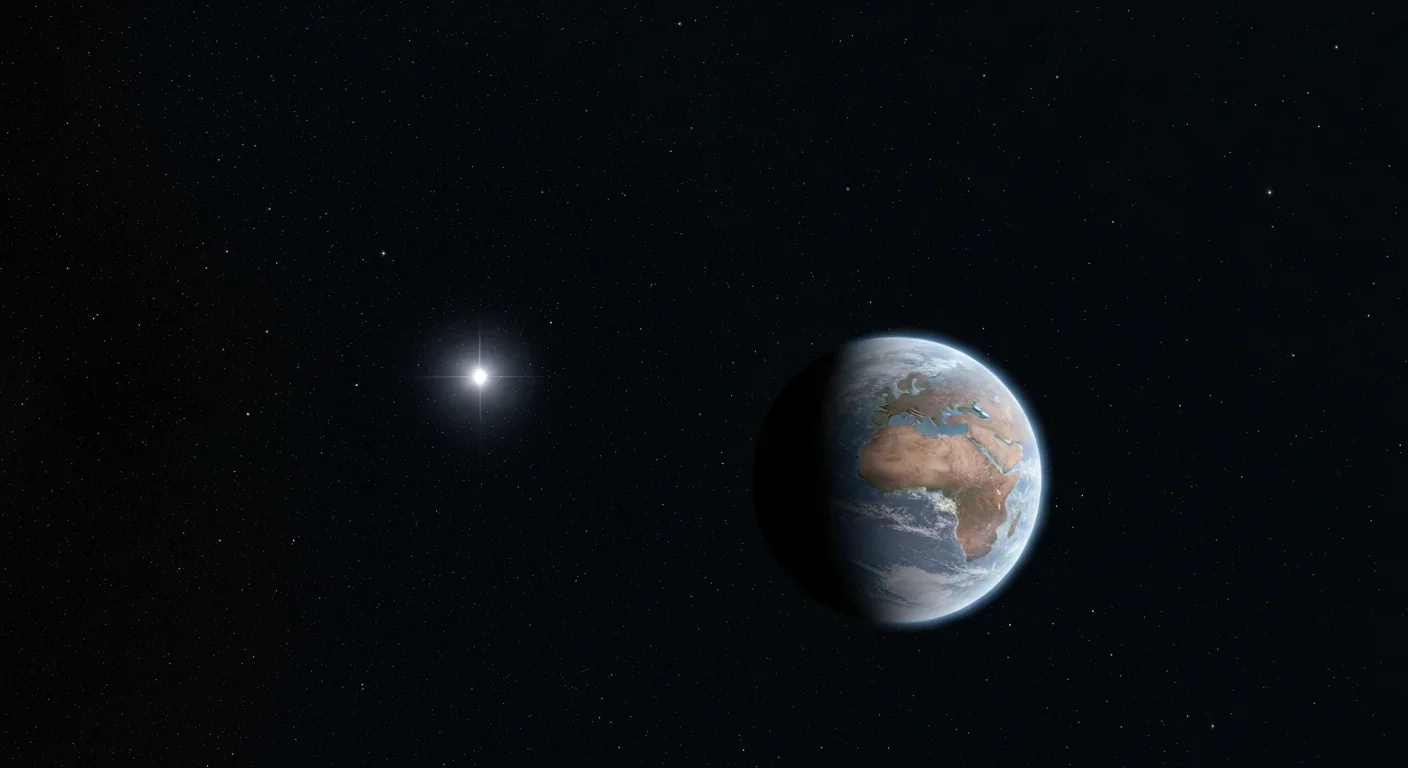
Crystallization extends these habitable windows. By slowing cooling, the energy released during crystallization keeps the white dwarf warmer longer. A planet orbiting at the right distance could, in principle, enjoy a stable climate for an immense span of time. This doesn't mean humans will be around to colonize these worlds, but it does suggest that white dwarf systems might host biospheres we haven't yet considered.
It's a humbling thought. The death of a star might not be the end of everything. It might be a new beginning.
White dwarf crystallization isn't just about diamonds in space. It's about understanding matter under conditions we can't replicate on Earth. The pressures and temperatures in a white dwarf core are so extreme that the normal rules of chemistry break down. Electrons become degenerate, nuclei form crystal lattices despite temperatures that would vaporize any terrestrial material, and exotic physics governs cooling rates.
Studying white dwarfs teaches us about quantum mechanics, plasma physics, thermodynamics, and nuclear interactions in regimes that are otherwise inaccessible. The same physics that explains why white dwarfs crystallize also helps us understand neutron stars, the cores of giant planets, and the behavior of matter in the first moments after the Big Bang.
There's also a philosophical dimension. White dwarfs represent the endpoint for the vast majority of stars. Our Sun, Sirius, Alpha Centauri, Procyon - all will become white dwarfs. Understanding this process is understanding the ultimate fate of most of the visible universe. It's looking forward to a time when the galaxy will be populated not by bright, vigorous stars, but by slowly cooling embers, crystallizing in the darkness.
"In the far future, crystallizing white dwarfs may be the only sources of warmth in a cold, expanding cosmos - releasing latent heat long after conventional stars have burned out."
- Implication of long-term stellar evolution models
And yet, those embers will endure for trillions of years. Long after the last conventional stars have burned out, white dwarfs will still be releasing the latent heat of crystallization. In the far future, they may be the only sources of warmth in a cold, expanding cosmos.
The next generation of telescopes and surveys will dramatically expand our understanding of white dwarf crystallization. The European Space Agency's Euclid mission and NASA's upcoming Nancy Grace Roman Space Telescope will identify millions more white dwarfs, allowing statistical studies of unprecedented precision. Ground-based surveys like SDSS-V are already cataloging hundreds of thousands of white dwarfs with detailed spectroscopic data.
Asteroseismology is becoming more sophisticated. By detecting and analyzing pulsations in white dwarfs, astronomers can create three-dimensional maps of stellar interiors, determining exactly how much of the core has crystallized and how composition gradients evolve during the phase transition. These observations test theoretical models of dense matter physics and crystallization dynamics.
There's also growing interest in finding the oldest, coolest white dwarfs - the ones that have been cooling for 10 billion years or more. These ancient objects are fully crystallized, representing the final stage of white dwarf evolution before they cool into theoretical "black dwarfs" - dark, cold remnants that emit no detectable light. No black dwarfs exist yet; the universe isn't old enough. But given enough time, every white dwarf will reach that state.
Understanding crystallization is crucial to finding and dating these ancient stars. If we misestimate cooling times, we'll misidentify the oldest white dwarfs, and we'll get galactic ages wrong. With improved models that account for crystallization delays, systematic uncertainties are being reduced, allowing more accurate cosmic chronologies.
It's worth pausing to appreciate the scale of what we're discussing. White dwarf crystallization happens over billions of years. The process began when physicists first predicted it in the 1960s, but the stars they were modeling had been cooling for eons before humans existed. And they'll continue cooling long after our species is gone.
In roughly 5 to 7 billion years, the Sun will run out of hydrogen and begin its red giant phase. Earth will likely be consumed. But the Sun's core - the part that's been fusing hydrogen for the past 4.6 billion years - will survive. It will contract, heat up, shed the star's outer layers in a planetary nebula, and settle into the white dwarf phase.
And then, slowly, inexorably, it will cool.
For billions of years, the Sun's white dwarf remnant will radiate away its stored thermal energy. Its surface will gradually shift from blue-white to yellow to red, dimming steadily. And somewhere around 10 million Kelvin in the core - still unimaginably hot by human standards - carbon and oxygen nuclei will begin snapping into crystalline order.
Our Sun's ultimate legacy: a crystallized carbon-oxygen sphere the size of Earth, slowly cooling over trillions of years - a cosmic diamond that will outlast virtually everything else in the universe.
The Sun will become a diamond.
Not immediately. Not all at once. The crystallization will start at the center and work outward, a growing sphere of solid matter in a sea of hot plasma. The process will release energy, slowing the cooling, extending the Sun's twilight for another billion or two years. Eventually, perhaps 15 billion years from now, the entire star will be crystallized - a solid sphere of carbon and oxygen, slowly radiating away the last vestiges of heat accumulated during its main-sequence lifetime.
By then, the universe will be unrecognizably different. Galaxies will have merged. Most star formation will have ceased. The cosmic microwave background will have redshifted into invisibility. And somewhere in the darkness, the crystallized remnant of our Sun will continue its slow fade toward absolute cold.
That's our legacy. Not monuments or civilizations or digital archives. Those will be vaporized when the Sun becomes a red giant. Our legacy is a diamond in space, a crystallized stellar core that will outlast almost everything else in the universe.
It's humbling. It's beautiful. And thanks to missions like Gaia and the work of dedicated astrophysicists, we're beginning to understand exactly how it happens.
Stand outside on a clear night and look up. Many of those stars - perhaps most of them - will eventually become white dwarfs. And given enough time, virtually all of them will crystallize. The galaxy of the far future will be a collection of slowly cooling diamonds, remnants of stellar furnaces that once lit the cosmos.
We're living in a brief, bright window when the universe is full of actively burning stars. But that's temporary. The longest phase of stellar evolution is the white dwarf phase, and within that phase, the longest period is the crystallized phase. In the grand scheme of cosmic time, 97% of all stars are destined to spend most of their existence as solid, crystalline spheres, cooling in the darkness.
This isn't a depressing thought - it's a profound one. It tells us that the universe is constantly transforming, that stellar death is not an ending but a transition into a new state, and that even in death, stars create structures of astonishing beauty and complexity.
The fact that we can observe this process, that we can detect the subtle signatures of crystallization in the light curves of distant white dwarfs, that we can measure the ages of the oldest stellar remnants and thereby constrain the age of the universe itself - this is one of humanity's great intellectual achievements.
We've gone from mythologizing stars as gods to understanding their life cycles in exquisite detail. We know what they're made of, how they evolve, how they die, and what happens to their remains over billions of years. We've watched them transform from glowing plasma into cosmic gemstones.
And in doing so, we've learned something fundamental about matter, energy, time, and the ultimate fate of everything around us.
That's the real treasure - not the diamonds themselves, but the knowledge that we can understand them.
Project Orion was a real 1960s program to reach other stars by detonating 800 nuclear bombs behind a spacecraft. The physics worked and the engineering was feasible, but the 1963 nuclear test ban treaty killed it. It remains the most credible interstellar spacecraft ever designed.

The locus coeruleus, a tiny brainstem structure, degenerates decades before Alzheimer's symptoms appear. Its loss cripples the brain's inflammation control, waste clearance, and sleep regulation. New imaging tools and noradrenergic therapies offer hope for early detection and prevention.

Research shows the sharing economy often increases total resource consumption through the Jevons paradox and rebound effects. Ride-sharing adds billions of vehicle miles, co-working spaces use more energy per worker, and diffused responsibility erodes conservation behavior. Breaking the paradox requires congestion pricing, accountability design, and matching sharing models to appropriate resource types.

Psychological reactance theory explains why banning or restricting things makes people want them more. From Prohibition to the Streisand effect to scarcity marketing, research shows that threatening people's freedom reliably backfires, and autonomy-supportive communication is far more effective.

A carnivorous pitcher plant in Borneo evolved to house bats instead of trapping insects, gaining up to 95% of its nitrogen from bat guano. The plant even built an ultrasonic reflector to help bats find it, revealing that carnivory in plants is a flexible spectrum.

The quantified self movement began as a hacker-ethos pursuit of personal insight, but corporate wearables now funnel biometric data to employers, insurers, and data brokers. With 81% of Americans wrongly believing health apps are HIPAA-protected, a regulatory void enables health data to be sold for pennies while generating anxiety instead of empowerment.

CXL memory pooling lets servers dynamically share DRAM over a cache-coherent interconnect, eliminating the 40% stranded memory waste in data centers. With commercial hardware now shipping and Azure deploying CXL cloud instances, this technology promises to cut memory costs by 50% while enabling composable infrastructure.

Loading featured articles...