Project Orion: Nuclear Bomb Starship That Almost Was
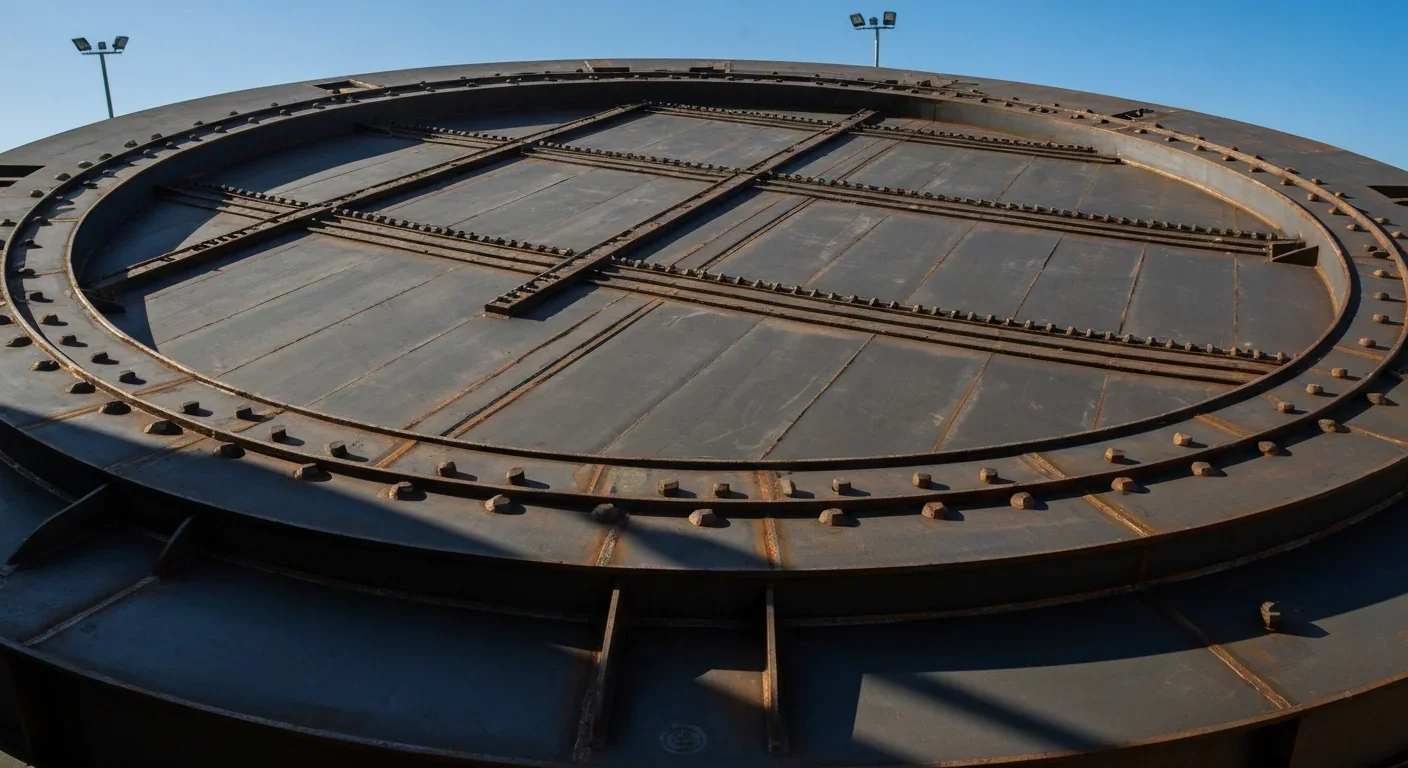
Project Orion: Nuclear Bomb Starship That Almost Was
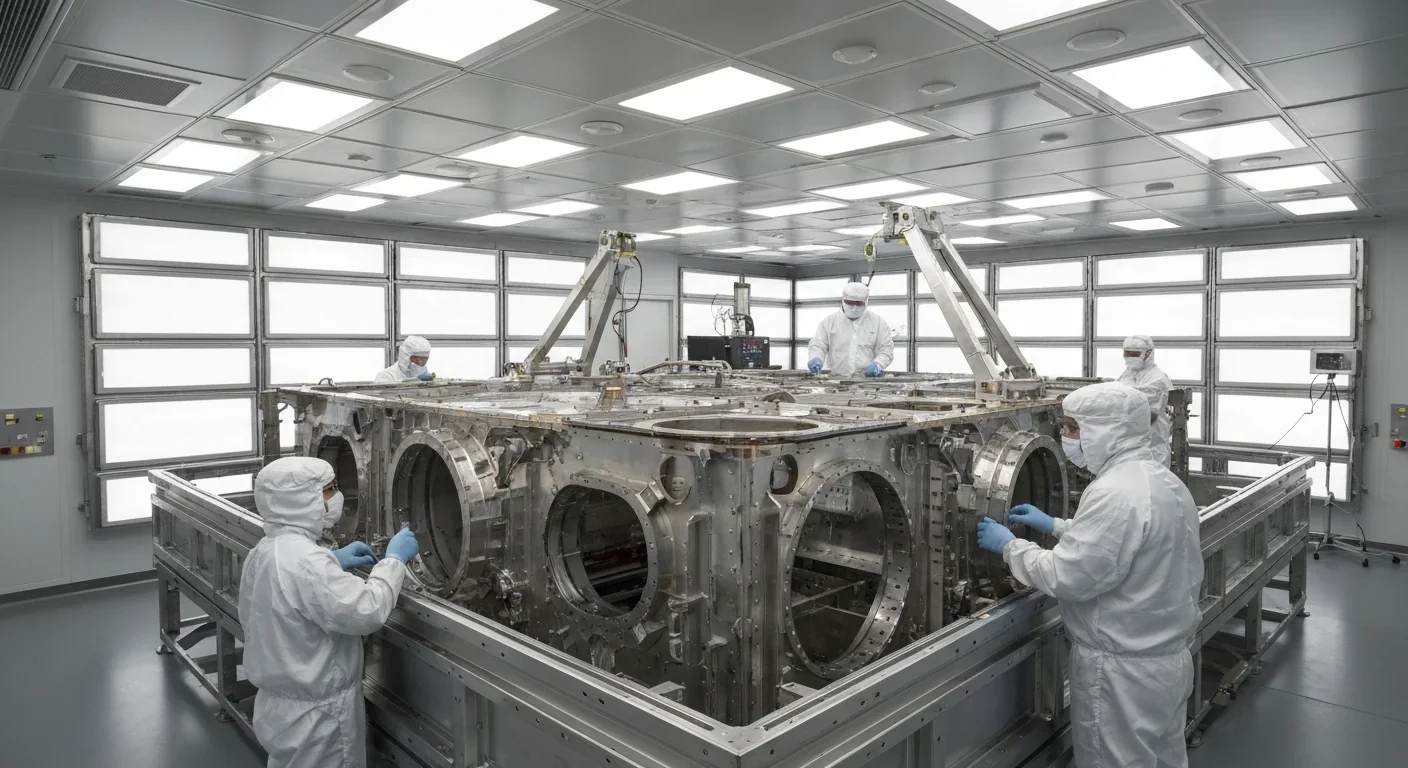
Europa Clipper Radiation Vault: Surviving Jupiter
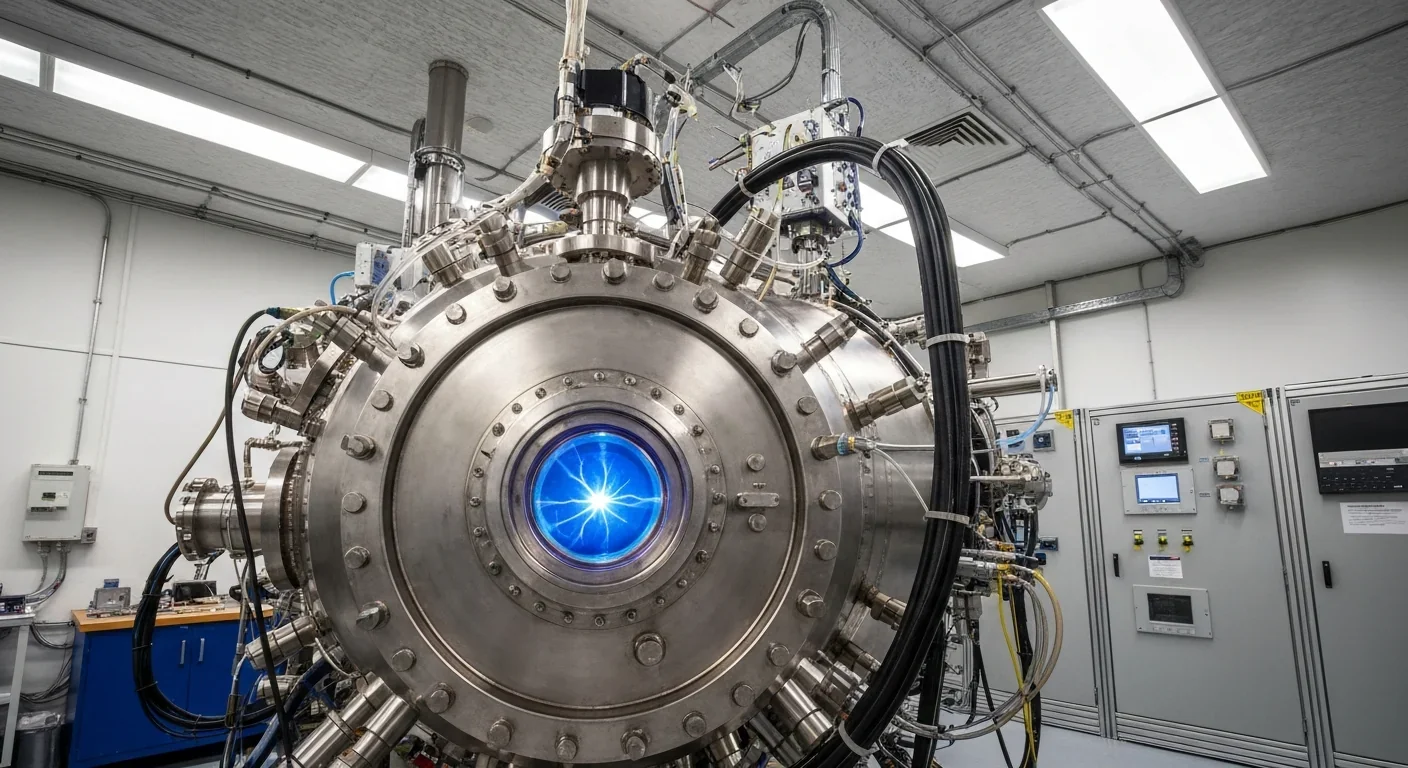
VASIMR Plasma Engine: Could It Transform Mars Travel?

Iapetus Equatorial Ridge: The Solar System's Strangest Mountain

Titan's Hidden Ocean: Ammonia Keeps Water Liquid

Mimas: How Saturn's Death Star Moon Hides an Ocean
TL;DR: Physicists are exploring three methods to extract energy from black holes - Hawking radiation, the Penrose process, and accretion disks - each offering extraordinary power potential but facing impossible engineering challenges that may take millennia to overcome.

Picture this: by 2050, physicists believe we could witness an exploding black hole firsthand, capturing the final flash of Hawking radiation from a primordial cosmic monster. It sounds like science fiction, but researchers at UMass Amherst now put the odds at 90% within the next decade. We're not talking about power generation yet, but we're inching toward understanding how the universe's most extreme objects might one day solve humanity's energy crisis.
Black holes sit at the cosmic throne of energy density. These gravitational behemoths warp spacetime so severely that not even light escapes, yet paradoxically, they represent one of the universe's richest energy reservoirs. The question keeping physicists awake isn't if black holes contain extractable energy but how we might ever hope to tap it.
Three primary mechanisms have emerged from decades of theoretical work. First, Hawking radiation predicts that black holes emit thermal radiation due to quantum effects near the event horizon. Second, the Penrose process could siphon rotational energy from spinning black holes. Third, accretion disks convert infalling matter into radiation with staggering efficiency, sometimes channeling 10-260% of a quasar's total luminosity into kinetic outflows.
The numbers are breathtaking. A stellar-mass black hole contains more extractable energy than our sun will produce in its entire 10-billion-year lifetime. If harnessed, a single black hole could theoretically power human civilization for billions of years.
Let's break down how each extraction method works. Hawking radiation arises because quantum fluctuations near the horizon create particle-antiparticle pairs. One falls in, the other escapes, and the black hole loses mass. As physicist Andrea Thamm explains, "The lighter a black hole is, the hotter it should be and the more particles it will emit". This creates a runaway process where shrinking black holes radiate faster until they explode.
The problem? For stellar-mass black holes, Hawking radiation is vanishingly faint. A black hole with the mass of our sun emits less power than a household lightbulb and takes 10^67 years to evaporate. Only primordial black holes, tiny relics from the Big Bang with masses around 5.6×10^14 grams, would be finishing their evaporation now.
Recent theoretical work adds an intriguing twist. If primordial black holes formed with a small "dark electric charge," they could enter a near-extremal plateau where evaporation stalls for billions of years before a final discharge. This dark-sector physics could boost observable explosion rates from 0.01 to 10,000 events per cubic parsec per year.
The Penrose process offers a more promising avenue. When particles enter the ergosphere surrounding a rotating black hole, they can split in a way that extracts rotational energy. One fragment falls into the black hole with negative energy, slowing its spin, while the other escapes with more energy than the original particle had. A recent study of Einstein-Born-Infeld black holes shows efficiencies can exceed the classical Kerr limit of 29% under specific conditions.
Accretion disks might be the real power source. When matter spirals into a black hole, gravitational compression heats it to billions of degrees, radiating across the electromagnetic spectrum. The Event Horizon Telescope's observations of M87*'s magnetic field reversals between 2017 and 2021 revealed how dynamic these environments are. Quasar accretion disks can shine as brightly as the Eddington limit, with massive kinetic outflows reaching velocities of 8,400 km/s.
Humanity has a history of turning cosmic phenomena into power sources. We've gone from burning wood to splitting atoms, each leap multiplying our energy access by orders of magnitude. The sun, a natural fusion reactor 93 million miles away, already provides all our solar power. Nuclear fission taps E=mc², converting mass to energy with 0.1% efficiency. Fusion promises several percent efficiency if we ever get it working reliably.
Black hole energy extraction would represent another quantum leap. Accretion disks convert matter to energy with 10-40% efficiency, vastly exceeding fusion. The Penrose process could theoretically extract 29% of a black hole's rotational mass-energy. For comparison, annihilating matter and antimatter achieves 100% conversion, but we can't produce antimatter at scale.
Historical analogies exist in hydroelectric power. Just as we position turbines to capture falling water, the Penrose process would position particles to capture rotational energy. Accretion disk harvesting resembles how we capture solar radiation, except the energy density would be trillions of times higher.
The Industrial Revolution was powered by coal. The 20th century ran on oil and nuclear fission. The 21st century is pivoting to renewables. Each transition took decades and required technological breakthroughs we couldn't foresee. Black hole energy represents a far more distant horizon, but the pattern holds: as civilizations advance, they tap progressively more concentrated energy sources.
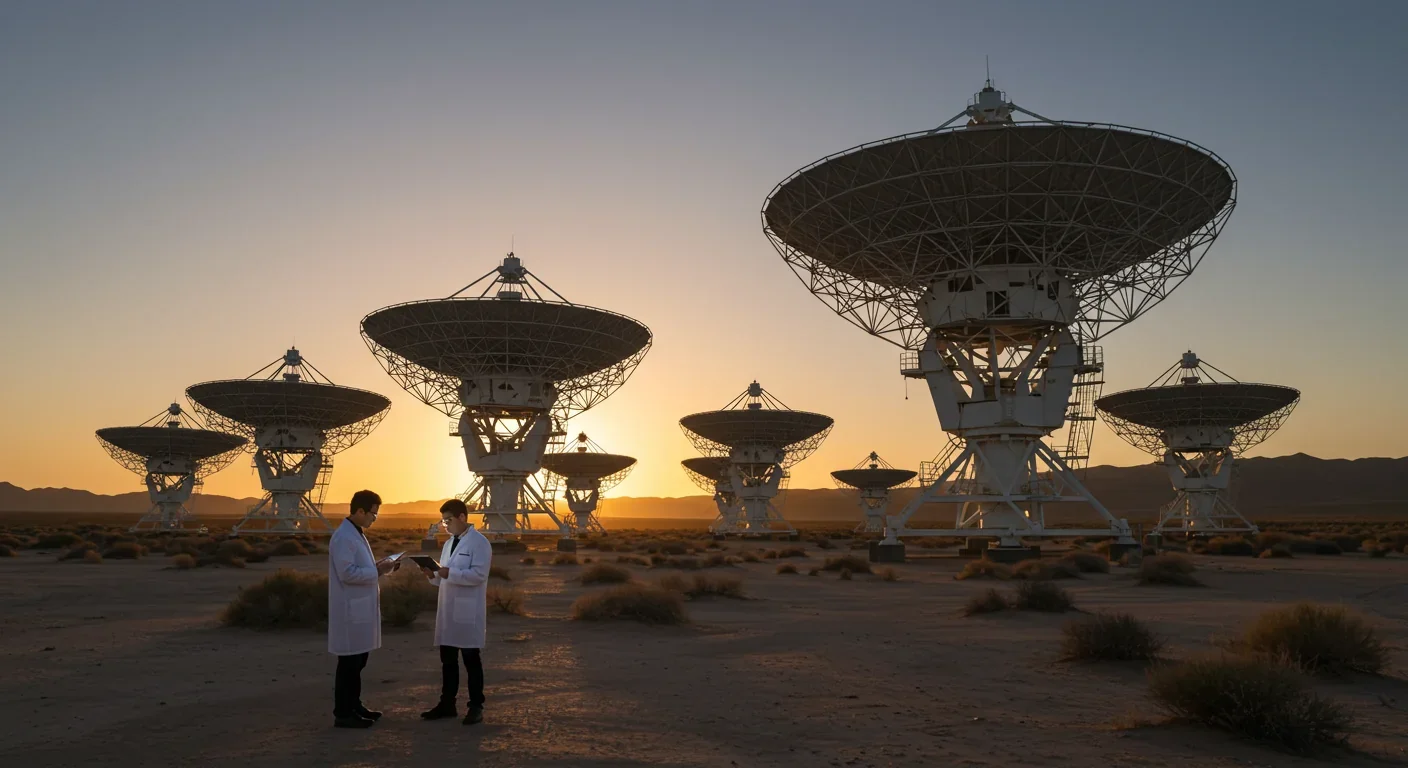
Here's where cosmic dreams collide with physical reality. The nearest known black hole, Gaia BH1, sits roughly 1,600 light-years away. With current propulsion, a one-way trip would take millions of years. Even if we achieved 10% light speed through some breakthrough, we're still talking 16,000 years.
Then there's the small matter of not dying. Tidal forces near a stellar-mass black hole would rip any spacecraft to atoms long before reaching the event horizon. Radiation from accretion disks would fry electronics and biology alike. Time dilation means mission controllers would age differently than the crew, creating coordination nightmares.
The rogue black hole discovered blazing through a dwarf galaxy at 300,000 solar masses shows both promise and peril. Its accretion disk produces jets "like a cosmic lighthouse," but those jets carry lethal radiation. Any energy-harvesting infrastructure would need to survive an environment where magnetic fields reverse unpredictably and plasma streams at near-light speed.
We don't have materials that can withstand such conditions. We don't have propulsion systems to get there. We don't have power transmission methods to send energy across light-years. We don't even have a clear picture of how to build a Dyson sphere around our own placid sun, let alone engineer structures near a black hole.
Creating artificial black holes presents its own impossibilities. To make one in a lab, you'd need to compress matter to densities beyond anything achievable with current technology. Even primordial black holes, if they exist, remain purely theoretical until we detect that first Hawking radiation burst.
If - and it's a titanic if - we somehow solved the engineering challenges, black hole energy would reshape civilization beyond recognition. Unlimited clean power would eliminate resource wars, end fossil fuel extraction, and enable technologies we can barely conceptualize.
Interstellar colonization becomes plausible when you can power starships with black hole energy. Manufacturing at molecular scales becomes trivial with unlimited energy budgets. Climate restoration, vertical farming, desalination, carbon capture - every energy-intensive solution to human problems becomes cheap.
But there's a darker possibility. Weaponizing black holes could end civilization as thoroughly as unlimited energy could save it. A civilization that can manipulate black holes possesses the power to destroy planets. The ethical frameworks we'd need don't exist yet.
The Kardashev scale, which classifies civilizations by energy use, places us at Type 0.7. A Type I civilization harnesses all energy reaching its planet from its star. Type II controls stellar output. Type III commands galactic energy. Black hole harvesting falls somewhere between Type II and Type III, suggesting it's literally beyond our current category as a species.
The geopolitical implications are staggering. If one nation cracked black hole energy first, it would achieve dominance so absolute that "superpower" becomes inadequate. Economic structures built on energy scarcity would collapse. The entire global order hinges on fossil fuels, rare earth metals, and uranium deposits. Black hole energy makes all of it obsolete.
Different cultures might approach this differently. Silicon Valley's "move fast and break things" ethos clashes with precautionary principles common in European regulation. Researchers in Tokyo, Boston, and Munich are all pursuing pieces of this puzzle through astrophysics research, but no coordinated global framework exists for managing such transformative technology.
There's also the question of access. Would black hole energy be a public good or a corporate asset? Space resources raise similar questions today, with some advocating for "commons of mankind" principles and others pushing for private exploitation rights. Black holes would amplify these debates exponentially.
Indigenous perspectives on cosmic resources, religious interpretations of manipulating such fundamental forces, and philosophical questions about humanity's right to harvest the universe's most extreme objects - all would demand consideration. We're not ready for these conversations because the technology seems impossibly distant.
The benefits are almost too vast to enumerate. Solving energy scarcity solves much of global poverty, famine, and conflict. Abundant clean energy accelerates every field of human endeavor. Scientific research, medical advances, space exploration, education - all become limited only by human creativity, not energy budgets.
Climate change, currently driven by fossil fuel combustion, becomes a solved problem. We could power carbon capture at scale, restore ecosystems, even terraform planets if we felt so inclined. The material abundance would rival post-scarcity scenarios in science fiction.
But the risks match the rewards in scale. Any technology powerful enough to extract energy from black holes is powerful enough to cause cosmic-scale destruction. Rogue actors, accidents, or unintended consequences could be catastrophic. If we're fumbling with forces we don't fully understand, the consequences won't be limited to one laboratory or one nation.
There's also the risk of stagnation. If one group monopolizes black hole energy, technological development could calcify. Competition drives innovation, and absolute power rarely encourages continued advancement. We might achieve one miraculous breakthrough and then coast for millennia.
The environmental impacts, ironically, might be positive. Black holes don't produce greenhouse gases, toxic waste, or radioactive byproducts. The main environmental concern would be side effects of construction, infrastructure, and energy transmission - not the black holes themselves.
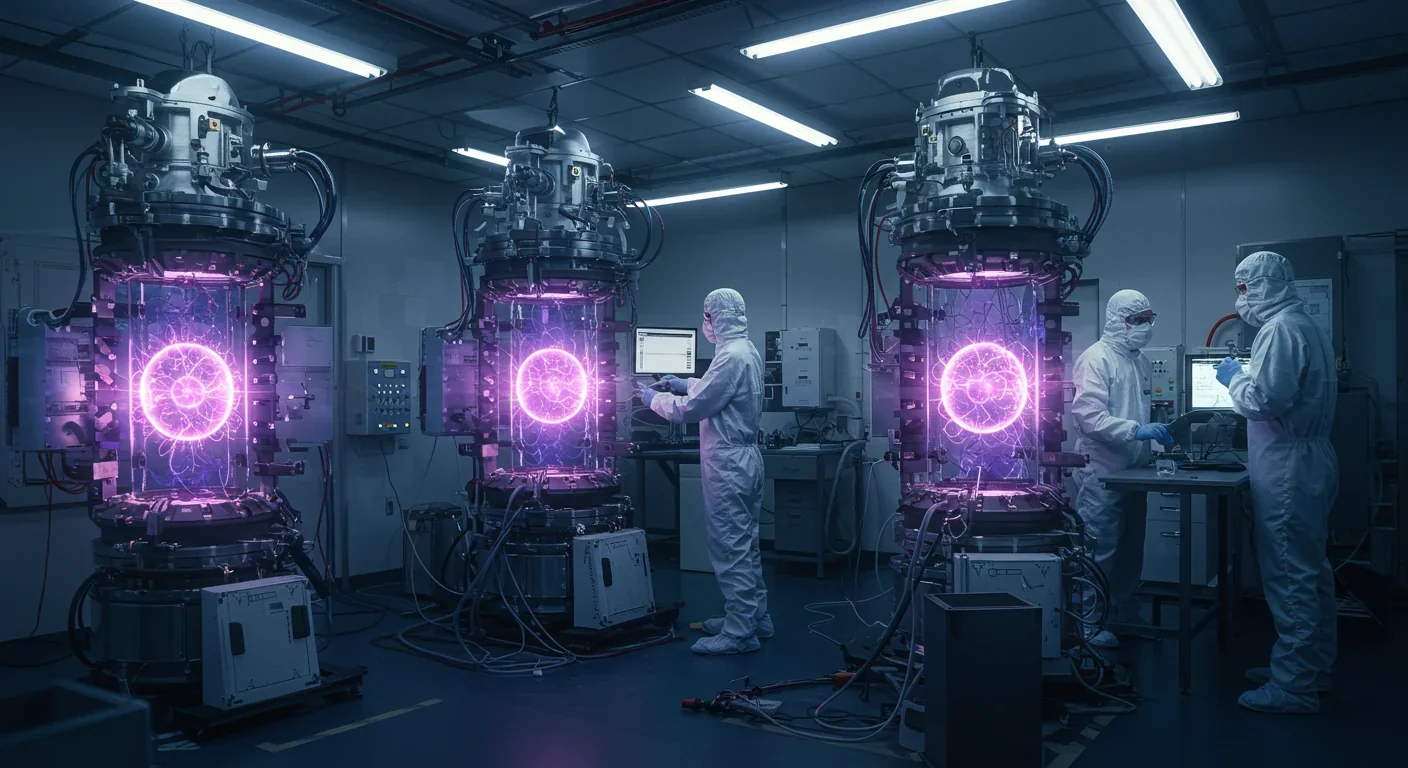
So how do we get from here to there? The roadmap has several stages, each one currently impossible but perhaps less so than the next.
First, we need to detect Hawking radiation. Aidan Symons and colleagues believe there's a 90% chance within the next decade if their dark-sector model is correct. Observatories like HAWC and LHAASO are watching for gamma-ray bursts from primordial black hole explosions. Confirming Hawking radiation exists would validate decades of theory and open new research directions.
Second, we need advances in fundamental physics. Understanding how quantum mechanics and general relativity interact at event horizons remains an open question. Developing a complete theory of quantum gravity would clarify what's theoretically possible versus impossible.
Third, we need propulsion breakthroughs. Fusion drives, antimatter engines, or something even more exotic would be required to reach black holes in less than geological timescales. Space elevator technology, nuclear pulse propulsion, laser sail arrays - all would be stepping stones.
Fourth, we need materials science miracles. Metamaterials that can withstand extreme gravity and radiation, self-repairing structures, or perhaps entirely different construction paradigms using electromagnetic fields instead of solid matter.
Fifth, we need energy transmission solutions. Beaming power across light-years via microwave, laser, or some form of quantum entanglement we haven't discovered yet. Or maybe we wouldn't transmit it - maybe we'd build civilizations at the black hole, making transmission unnecessary.
The timeline? Experts hesitate to guess. Joaquim Iguaz Juan notes that "the only black holes that can explode today or in the near future are these PBHs", implying practical harvesting remains far off. Conservative estimates place practical black hole energy extraction at least thousands of years away, possibly millions.
What should we do with this knowledge? First, support basic research in astrophysics, quantum mechanics, and materials science. The breakthroughs that make black hole energy possible will come from fundamental research with no immediate applications.
Second, develop ethical frameworks now. We can't wait until technology exists to decide how to govern it. Precedents set in current debates over AI, genetic engineering, and space resources will shape how we approach even more transformative technologies.
Third, foster international cooperation. No single nation will crack this alone, and competition could lead to catastrophic risks. The model should be more like CERN or the International Space Station than the Manhattan Project.
Fourth, educate the next generation differently. Today's students need to think across disciplines, spanning physics, engineering, ethics, and policy. The challenges ahead require polymaths who can navigate technical complexity and human values simultaneously.
Finally, maintain perspective. Black hole energy represents a possible future, not a guaranteed one. Focusing too heavily on distant possibilities can distract from near-term challenges like climate change, inequality, and nuclear proliferation. We should dream big while acting practically.
The notion of harvesting energy from black holes sits at the boundary between physics and philosophy, between engineering and imagination. It forces us to confront our place in the cosmos and our species' potential. We're pattern-seeking apes on a small planet, contemplating the manipulation of objects so extreme they break the laws of physics as we understand them.
Whether black holes ever power our cities matters less than what the pursuit teaches us. Reaching for impossible goals has always driven human progress. We learned to fly by dreaming of birds, reached space by imagining the moon, and built computers by modeling the human mind. Black hole energy is today's impossible dream, and somewhere in pursuing it, we'll discover truths we can't yet imagine.
As Boris Georgiev, part of the Event Horizon Telescope team, reflects on their persistent observations of M87*: "Without our persistent observations year after year, we would not be able to discover this remarkable behavior." The same persistence, applied across centuries or millennia, might one day illuminate how the universe's darkest objects become humanity's brightest hope.
The future isn't written yet. But if history teaches anything, it's that today's impossible becomes tomorrow's routine, given enough time, effort, and imagination. Black holes might remain forever out of reach, cosmic wonders we can only observe from afar. Or they might be the key that unlocks civilization's next great leap. Either way, the journey toward finding out will reshape us as profoundly as the destination.
Project Orion was a real 1960s program to reach other stars by detonating 800 nuclear bombs behind a spacecraft. The physics worked and the engineering was feasible, but the 1963 nuclear test ban treaty killed it. It remains the most credible interstellar spacecraft ever designed.

The locus coeruleus, a tiny brainstem structure, degenerates decades before Alzheimer's symptoms appear. Its loss cripples the brain's inflammation control, waste clearance, and sleep regulation. New imaging tools and noradrenergic therapies offer hope for early detection and prevention.

Research shows the sharing economy often increases total resource consumption through the Jevons paradox and rebound effects. Ride-sharing adds billions of vehicle miles, co-working spaces use more energy per worker, and diffused responsibility erodes conservation behavior. Breaking the paradox requires congestion pricing, accountability design, and matching sharing models to appropriate resource types.

Psychological reactance theory explains why banning or restricting things makes people want them more. From Prohibition to the Streisand effect to scarcity marketing, research shows that threatening people's freedom reliably backfires, and autonomy-supportive communication is far more effective.

A carnivorous pitcher plant in Borneo evolved to house bats instead of trapping insects, gaining up to 95% of its nitrogen from bat guano. The plant even built an ultrasonic reflector to help bats find it, revealing that carnivory in plants is a flexible spectrum.

The quantified self movement began as a hacker-ethos pursuit of personal insight, but corporate wearables now funnel biometric data to employers, insurers, and data brokers. With 81% of Americans wrongly believing health apps are HIPAA-protected, a regulatory void enables health data to be sold for pennies while generating anxiety instead of empowerment.

CXL memory pooling lets servers dynamically share DRAM over a cache-coherent interconnect, eliminating the 40% stranded memory waste in data centers. With commercial hardware now shipping and Azure deploying CXL cloud instances, this technology promises to cut memory costs by 50% while enabling composable infrastructure.

Loading featured articles...