Project Orion: Nuclear Bomb Starship That Almost Was

Project Orion: Nuclear Bomb Starship That Almost Was
Europa Clipper Radiation Vault: Surviving Jupiter
VASIMR Plasma Engine: Could It Transform Mars Travel?

Iapetus Equatorial Ridge: The Solar System's Strangest Mountain

Titan's Hidden Ocean: Ammonia Keeps Water Liquid

Mimas: How Saturn's Death Star Moon Hides an Ocean
TL;DR: Scientists are using AI, machine learning, and advanced telescopes to search for alien technosignatures across radio, optical, and infrared wavelengths. New techniques include hunting for megastructures around distant stars and analyzing millions of signals for patterns that indicate technological civilizations.

By October 3, 2025, scientists might have conclusive evidence of alien technology. An interstellar object called 3I/ATLAS will pass within 29 million kilometers of Mars, close enough for our orbiters to detect artificial signals if they exist. This isn't science fiction anymore - it's the cutting edge of a global effort to find technosignatures, the technological fingerprints that advanced civilizations leave across the cosmos.
For decades, we've been listening for radio beeps from the stars. Now we're doing something far more sophisticated, and the tools we're building could change everything we know about our place in the universe.
Here's what's different today: machines are learning to recognize patterns we never could. Breakthrough Listen, the largest search for extraterrestrial intelligence ever undertaken, is targeting one million stars closest to Earth using artificial intelligence and advanced digital signal processing. These aren't just bigger antennas pointing at space - they're smart systems that can sift through millions of signals and spot the needles in cosmic haystacks.
Traditional SETI relied on humans designing narrow search parameters, looking for specific radio frequencies we thought aliens might use. Machine learning flips that assumption. AI algorithms can detect complex patterns across broader frequency ranges, identifying signals that don't fit natural phenomena but might indicate technological activity. When researchers recently scanned the TRAPPIST-1 system for 28 hours, they winnowed 6 million potential signals down to 11,000 candidates worth investigating. That kind of filtering would take human analysts years.
The real breakthrough isn't just speed - it's sophistication. These systems learn what natural cosmic radio sources look like (pulsars, magnetars, stellar flares) and flag anything that deviates. They're trained on decades of astronomical data, so when something weird appears, the algorithm notices.
Radio searches assumed aliens would communicate like us. But what if they've moved beyond radio waves entirely? What if they're building on scales we can barely imagine?
Enter the search for Dyson spheres and other megastructures. The concept is simple but mind-bending: a sufficiently advanced civilization might construct enormous structures around stars to capture energy. We wouldn't see the structure itself, but we'd notice something strange in the star's light.
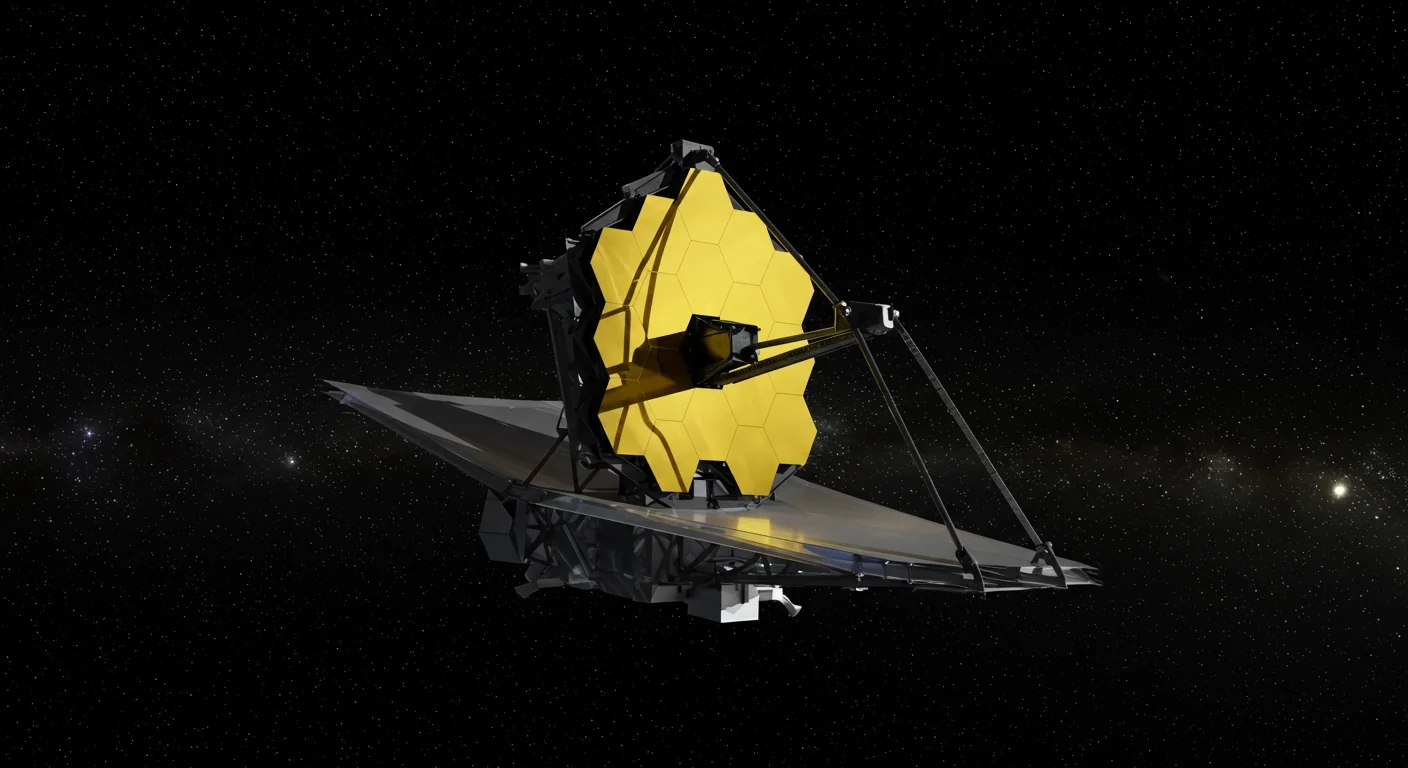
That's where transit photometry comes in. When a planet passes in front of its star, the star's brightness dips slightly. Telescopes like Kepler and TESS have found thousands of exoplanets this way. But some brightness dips don't match any known planetary explanation. The James Webb Space Telescope is now hunting for these anomalies, looking for infrared signatures that might indicate artificial structures harvesting stellar energy.
The most famous case remains Tabby's Star, which displayed bizarre, irregular dimming patterns unlike anything caused by planets. While natural explanations involving dust clouds now seem likely, the search sparked a revolution in how we think about technosignatures. We're no longer just listening - we're watching for the shadows of alien engineering projects.
While most people think of SETI as radio astronomy, optical SETI has quietly become one of the most promising frontiers. High-speed photometers can now detect nanosecond laser pulses from across the galaxy. If an alien civilization wanted to send a message, a powerful laser pulse would stand out against the steady glow of their star.
The technology here is remarkably sensitive. Modern detectors can register individual photons and measure their arrival times with extraordinary precision. A brief laser flash lasting billionths of a second would be distinguishable from the continuous light of a star. Several observatories now run optical SETI programs alongside traditional radio searches, scanning for these fleeting signals.
Think about our own trajectory: we went from radio to fiber optics in a century. It's not unreasonable to think advanced civilizations might prefer optical communication. Light travels at the same speed as radio waves but can carry far more information in a tighter beam.
The famous Wow! signal of 1977 captivated SETI researchers for decades - a powerful narrowband radio signal that lasted 72 seconds and never repeated. In 2025, scientists traced it to a natural astrophysical source, likely related to hydrogen clouds. The disappointment was real, but so was the lesson: we need repeatable, verifiable evidence.
That's why the TRAPPIST-1 research is so significant. Rather than waiting for chance detections, scientists used a clever technique called planet-planet occultations. This happens when one exoplanet passes in front of another from Earth's perspective. If two planets in that system were communicating via radio, signals might "leak" toward us during these alignments. Graduate student Nick Tusay explained the challenge: "Most searches assume some intent, like beacons, because our receivers have a sensitivity limit beyond anything we unintentionally send out."
Current equipment can detect deliberate transmissions, but picking up accidental radio leakage (like our TV broadcasts) from another star system remains beyond our reach. That's changing. Tusay notes, "With better equipment, like the upcoming Square Kilometer Array, we might soon be able to detect signals from an alien civilization communicating with its spacecraft."
The Square Kilometer Array, when completed, will be the world's largest radio telescope - a collection of thousands of antennas spread across continents, with a total collecting area of one square kilometer. Its sensitivity will dwarf anything we've built before.
Here's the uncomfortable truth: even the biggest technosignature projects operate on shoestring budgets. Breakthrough Starshot, an ambitious plan to send tiny laser-propelled probes to nearby star systems, is now on hold. Yuri Milner pledged $100 million, but the actual funding over several years was only about $4.5 million. Director Pete Worden has since transferred portions of the project to other entities.
The technical challenges were daunting. The laser array needed to propel those probes would require 100 gigawatts of power, and costs would need to plummet from $100 per watt to 5 cents per watt. Silicon nitride emerged as the most promising lightsail material, capable of withstanding 40,000 g acceleration and intense laser bombardment, but fabricating it at the necessary scales remains years away.
This funding gap affects everything. Breakthrough Listen runs one of the most comprehensive searches ever, but it's still a tiny fraction of what humanity spends on, say, social media advertising. SETI research has produced mountains of open data, advanced signal-processing algorithms, and trained a generation of radio astronomers, yet it survives largely on philanthropic donations and borrowed telescope time.
The contradiction is stark: we're on the verge of answering one of humanity's deepest questions, yet we're doing it with the equivalent of pocket change.

Harvard astronomer Avi Loeb argues that discovering alien technology wouldn't just give us new tools - it might unite our species. "Psychological studies show that humans cooperate when facing an external common threat," he writes. "Such a threat strengthens group identity and increases the motivation to protect its well-being."
An encounter with alien intelligence wouldn't necessarily be threatening, but it would be profoundly destabilizing to our worldview. Every major religion, political ideology, and philosophical framework assumes humans are either alone or at least special. Confirmation that we're one among many technological civilizations would reshape how we see ourselves.
Practically speaking, the immediate aftermath would be chaos - and verification. Any detection would be scrutinized by every astronomer on the planet. The signal would need to be repeatable, observable by multiple independent facilities, and pass countless tests to rule out human-made interference or natural phenomena. The scientific community learned from past false alarms, and the bar for claiming detection is now extremely high.
But imagine it passes every test. What then? The implications ripple outward in every direction.
We're not waiting for some future breakthrough to make technosignature detection possible. The tools exist today. Machine learning algorithms are refining signal detection daily. Webb and other next-generation telescopes are gathering data on thousands of exoplanets. Radio observatories are pushing toward sensitivities that could detect extraterrestrial airport radar.
The AI-powered space missions now being deployed will accelerate this process. Autonomous systems can make real-time decisions about where to point sensors, which signals warrant follow-up, and how to optimize observation strategies without waiting for instructions from Earth.
Even small observatories are joining the hunt, contributing to distributed networks that can monitor the entire sky simultaneously. This democratization of SETI means more eyes watching, more data being collected, and more opportunities for serendipitous discovery.
Looking forward, the technosignature search is entering a new phase. It's no longer about proving the search is worthwhile - it's about refining our methods and expanding our capabilities.
Within ten years, we'll have surveyed millions of star systems across multiple wavelengths. The Square Kilometer Array will be operational, giving us unprecedented sensitivity to radio signals. Next-generation space telescopes will analyze exoplanet atmospheres for industrial pollutants - another potential technosignature. And AI will have evolved from a useful tool to an essential partner in pattern recognition.
The philosophical implications are already reshaping how we think about intelligence and technology. If we find evidence of megastructures, it suggests civilizations can reach Kardashev Type II status (harnessing the full energy output of their star). If we detect radio signals, it tells us that electromagnetic communication remains useful even for advanced societies. If we find nothing despite comprehensive searches, that silence becomes its own kind of answer - and a far more troubling one.
This isn't your grandparents' SETI anymore. We've moved from listening for deliberate messages to hunting for any signs of technological activity. We're using AI to process data at scales that would overwhelm human analysts. We're searching across the electromagnetic spectrum, from radio waves to optical pulses to infrared anomalies.
Whether we find something tomorrow or a century from now, the search itself is transforming our capabilities. The signal-processing algorithms developed for SETI have applications in telecommunications, medical imaging, and environmental monitoring. The philosophical questions we're grappling with - what defines intelligence, how we'd recognize alien technology, whether consciousness is common or rare - are shaping fields from astrobiology to computer science.
We're living in the first generation with the tools to actually answer Fermi's famous question: Where is everybody? The answer might arrive as early as this October, or it might take another fifty years. But we're looking in the right places now, with the right tools, asking the right questions.
And when the answer comes, nothing will be quite the same.
Project Orion was a real 1960s program to reach other stars by detonating 800 nuclear bombs behind a spacecraft. The physics worked and the engineering was feasible, but the 1963 nuclear test ban treaty killed it. It remains the most credible interstellar spacecraft ever designed.

The locus coeruleus, a tiny brainstem structure, degenerates decades before Alzheimer's symptoms appear. Its loss cripples the brain's inflammation control, waste clearance, and sleep regulation. New imaging tools and noradrenergic therapies offer hope for early detection and prevention.

Research shows the sharing economy often increases total resource consumption through the Jevons paradox and rebound effects. Ride-sharing adds billions of vehicle miles, co-working spaces use more energy per worker, and diffused responsibility erodes conservation behavior. Breaking the paradox requires congestion pricing, accountability design, and matching sharing models to appropriate resource types.

Psychological reactance theory explains why banning or restricting things makes people want them more. From Prohibition to the Streisand effect to scarcity marketing, research shows that threatening people's freedom reliably backfires, and autonomy-supportive communication is far more effective.

A carnivorous pitcher plant in Borneo evolved to house bats instead of trapping insects, gaining up to 95% of its nitrogen from bat guano. The plant even built an ultrasonic reflector to help bats find it, revealing that carnivory in plants is a flexible spectrum.

The quantified self movement began as a hacker-ethos pursuit of personal insight, but corporate wearables now funnel biometric data to employers, insurers, and data brokers. With 81% of Americans wrongly believing health apps are HIPAA-protected, a regulatory void enables health data to be sold for pennies while generating anxiety instead of empowerment.

CXL memory pooling lets servers dynamically share DRAM over a cache-coherent interconnect, eliminating the 40% stranded memory waste in data centers. With commercial hardware now shipping and Azure deploying CXL cloud instances, this technology promises to cut memory costs by 50% while enabling composable infrastructure.

Loading featured articles...